Remix culture built house music's economy for forty years: a producer gets a track, flips it, and gets paid a separate remix fee and a separate royalty line for the work. Spotify's version of remixing, due in the first quarter of 2027, keeps the first word and throws out the second. The platform is readying an AI tool that lets any Premium subscriber turn a track into a different genre or hand it to a different artist's AI voice, according to mxdwn Music and RouteNote, who both report the feature sitting behind a new $4-5 monthly surcharge on top of a regular Premium plan.
Who actually gets paid when a fan "remixes" a track?
Here's the part that should worry anyone who has ever flipped a track for a fee. Spotify's structure routes every royalty generated by a fan's AI remix back to the original rights holder, the label or publisher that owns the source recording, not to the person (or the prompt) that did the transforming. Universal Music Group, Merlin and Believe have already signed licensing terms that make this work; Sony Music and Warner Music are still negotiating, per RouteNote's reporting as of late October 2026. That lineup matters because it is the majors, not working producers, who hold the back catalogue this tool is built to re-exploit. A remix economy that used to cut separate cheques to remixers becomes one where the catalogue owner collects twice: once for the stream of the original, once for every AI variation a fan generates from it.
Can labels use this to game the charts?
The mechanic that turns this from a curiosity into an industry story: streams of an AI remix count toward the chart performance of the original track, not the remix. A label sitting on a deep catalogue can, in theory, flood the feature with AI remix variants of a single song and watch every play roll up into that one track's chart position, no new release, no new rights clearance, no remixer to pay. Spotify has built in a consent layer, individual artists can opt out even when their label has a deal in place, but opting out protects an artist's own catalogue from being remixed, not the chart system itself from being gamed by whoever doesn't opt out.
The remix fee that used to go to a producer now has nowhere to land: the rights holder gets paid, the fan who pressed the button gets nothing, and the person who would once have done that job professionally isn't in the transaction at all.
Why does Deezer's rival tool look so different?
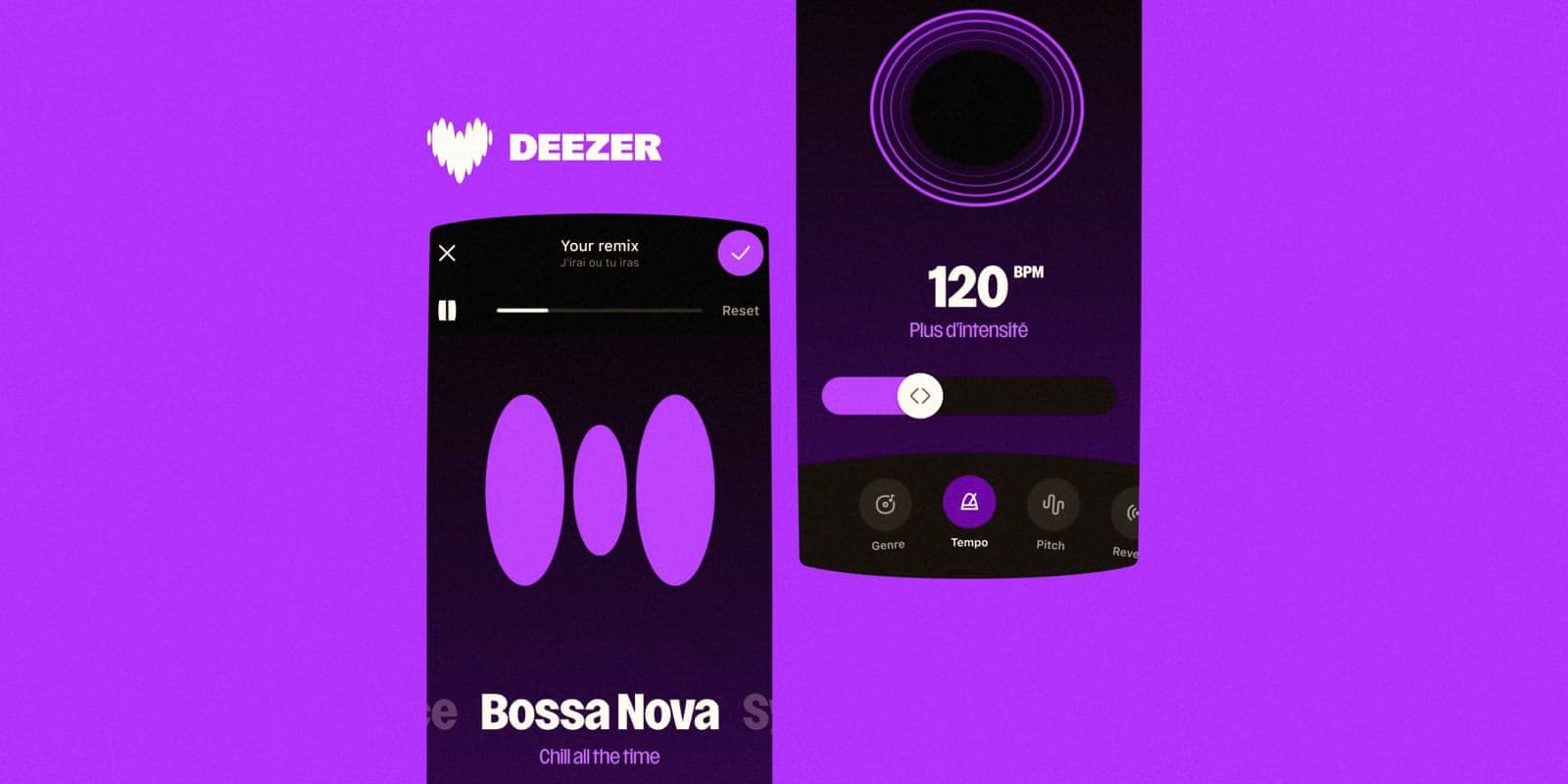
Spotify isn't building this in a vacuum. Deezer launched its own fan remix tool, Remix Lab, in June 2026, built on stem separation rather than AI generation, with artist consent required up front and royalties paid out per stream of the remix itself. Deezer's framing at the time was explicitly a contrast with Spotify, a human-controlled, no-AI alternative to exactly the kind of tool Spotify is now shipping. The two companies have landed on opposite answers to the same question: who gets to touch a track, and who gets paid when they do.
Why it matters: For house and electronic producers, remix work has always been a direct line of income and reputation, official versions, bootlegs, edits. An AI tool that routes every dollar to the catalogue owner and zero to the remixer, while letting that same catalogue owner's chart position inflate off remix volume, reshapes who the remix economy actually serves.
What we think: This is majors monetizing their back catalogue a second time, dressed up as a creativity feature for fans. The opt-out clause protects individual artists' masters, not the broader economics, and nothing here replaces the remix fee a producer used to earn for doing the same job by hand.