Why do so many Ableton sessions never leave the intro?
Every producer knows the session: a killer four-bar loop, a drum pattern that slaps, and then nothing. No drop, no breakdown, no idea where the track goes next. It is the single most common reason unfinished projects pile up in a Live folder, and it has almost nothing to do with sound design. It is an arrangement problem, and arrangement is the one part of production almost nobody formally teaches.
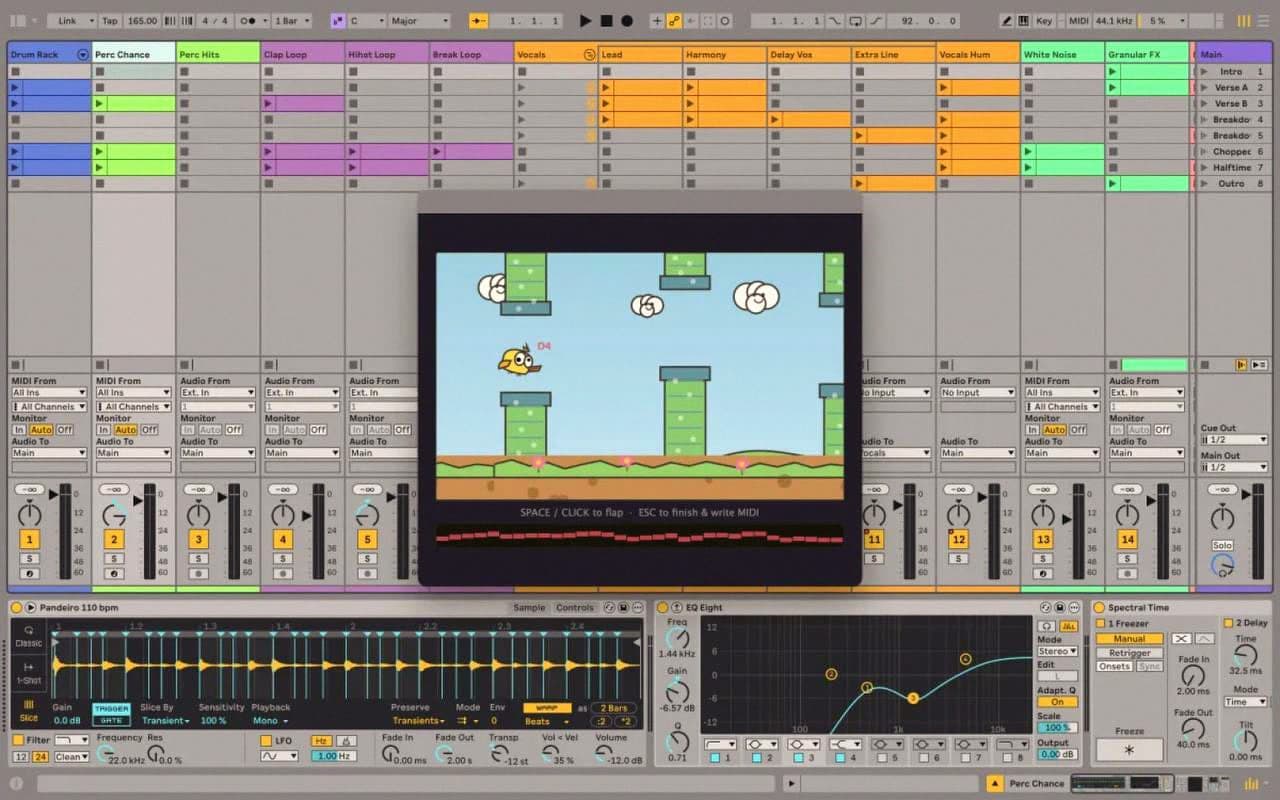
Color With Live, an LA-based music-education outfit, built its answer around that gap. Its new product, Stencils, ships empty color-coded Ableton Live sessions that map out the exact structure of an existing, released song, section by section, track by track, with nothing but silence sitting in the clips.
What's actually inside a Stencil?
Open one and there is no audio at all: no samples, no presets, no synth patches, just a fully labeled arrangement built from stock Ableton devices. Color With Live's own workflow runs in five steps: open the Stencil, load a reference version of the original track into keymapped channels, drag your own sounds into the marked slots, program your MIDI inside the defined sections, then layer in vocals against the provided map.
"You provide the melodies and chords, the sound design and the effects, but the Stencil helps you mould this material into a coherent layout based on a track that you love."
Co-founder Kevin Rea, who started the company with Grant Hunter, is explicit that the intent is not to hand producers a shortcut forever. "Our mission isn't for our stencil to be a crutch that you rely on for every song, but instead something that you can learn from and apply to future productions," he told MusicTech. Because a Stencil never contains a single note or sample lifted from the original recording, anything built inside one belongs entirely to the producer who made it, cleared for commercial release.
Which tracks are mapped, and what does it cost?
The free entry point is a three-Stencil pack covering Levity's "Flip It," Fisher's rework of Bob Sinclar's "World Hold On," and Dimension's "Once In A Lifetime," downloadable directly from Color With Live's site. Beyond that, the paid library has grown past 250 Stencils spanning house, tech house, dubstep, drum and bass, techno and hip-hop, mapped from tracks by Four Tet, Fred again.., Skrillex, Calvin Harris and Swedish House Mafia among 200-plus artists. Individual Stencils run $9.99, with tiered bundle pricing that knocks the per-unit cost down as low as $4.33 for a batch of fifteen.
Why it matters
Arrangement is the skill that separates a loop from a finished record, and it is rarely taught anywhere producers actually look, YouTube tutorials, sample-pack marketing and plugin demos all sell sound, not structure. A cheap, legally clean way to reverse-engineer how a hit is actually built section by section fills a real hole in the self-taught producer's toolkit, especially in dance genres where the drop-driven structure of a track is half the craft.
What we think
This is the rare gear story that is not really about gear. Stencils works because it refuses to give producers anything to hide behind, no sounds, no presets, just the bones of a track that already worked. The risk is the obvious one: leaning on someone else's arrangement forever instead of internalizing why it works. Used as flashcards rather than a template you reach for on every session, this is genuinely useful, and free is the right price for the entry point.