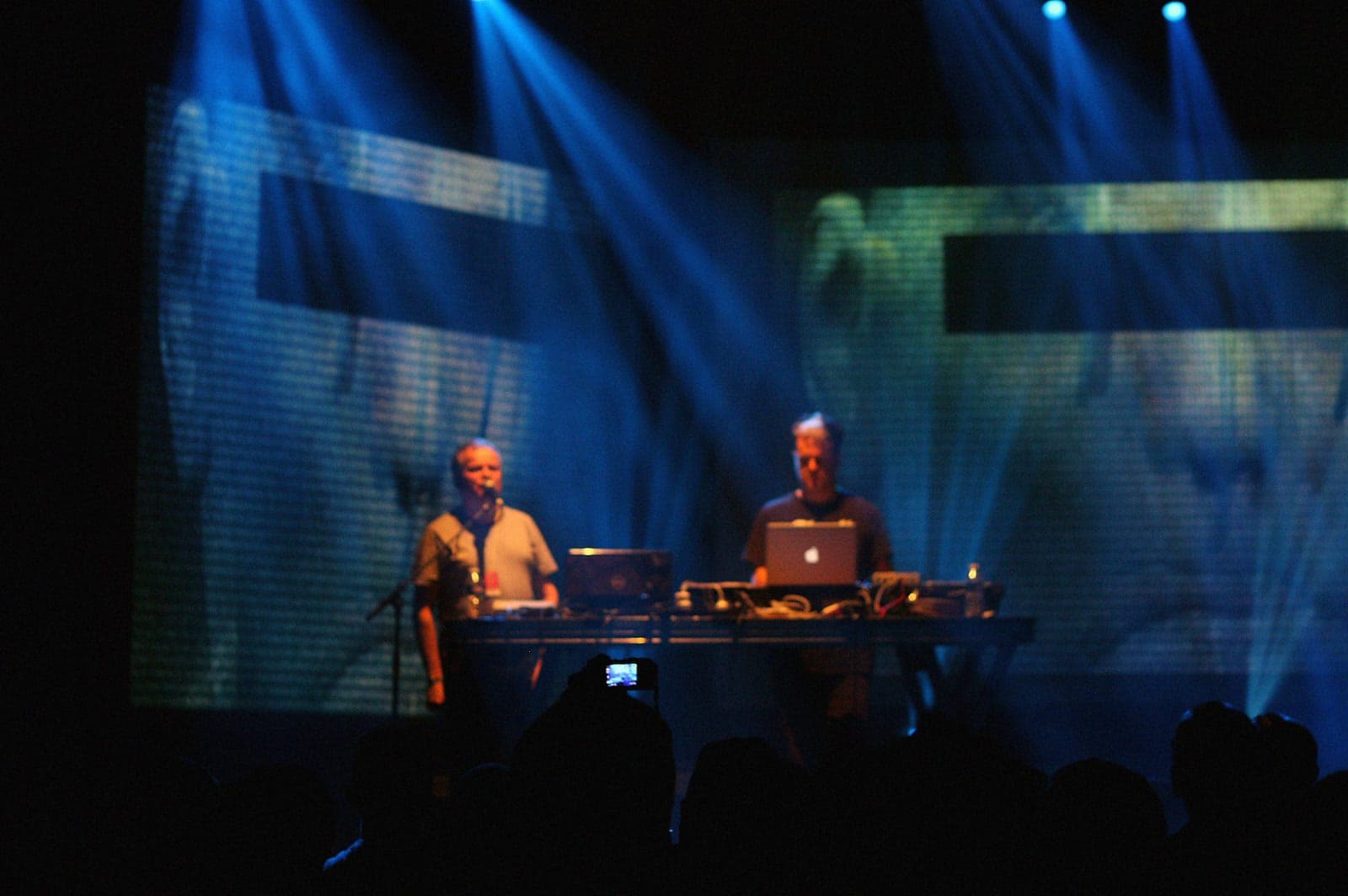
Stephen Raoul Jones never touched a drum machine on a Severed Heads record. His instrument was the picture. From 1982 to 1992, working alongside Tom Ellard, Jones built the custom analog video synthesizers that made the Sydney group's live shows something other bands of the era simply couldn't do: play the visuals in real time, as music, not as a slideshow bolted on after the fact.
Jones died on October 8 at Royal Prince Alfred Hospital in Sydney, two days after what his family's statement called a vicious assault outside his studio in Alexandria. He was 75. A suspect has been arrested and charged with manslaughter, appeared in court and is being held without bail. His family, who said he died surrounded by his brother Ian, his partner Wendy and friends, has asked the public to avoid speculation while the case proceeds. We're doing the same here: the facts above are what's confirmed, nothing more.
What did Stephen Jones actually build?
In the early 1980s there was no laptop VJ software, no plug-and-play video mixer. If you wanted live visuals that reacted to sound in real time, you built the hardware yourself. That's what Jones did, joining Severed Heads in 1982, a year after founders Richard Fielding and Andrew Wright had left Ellard as the group's only constant. Jones's video synthesizers ran the band's live shows and music videos through the 1985 album 'City Slab Horror' and the international chart reach of 1988's 'Greater Reward' and 1989's 'All Saints Day,' before he stepped away in 1992, a year after 'Cuisine (With Piscatorial).'
"With Severed Heads, he made video an instrument of live performance and toured internationally. As an artist, engineer, writer and historian, he helped shape Australian electronic art and preserve its history."
That's artist Ralph Kerle, one of several in Australia's arts community to pay tribute this week. San Francisco's Dark Entries Records, which has reissued Severed Heads material, called Jones "a huge part of Australian video history," pointing to his own Heuristic Video post-production house in Sydney and early work with Laughing Hands and SPK.
Why does a video artist matter to house and techno history?
Severed Heads were never a house act, or a techno one. They were industrial, abrasive, closer in lineage to early EBM than to anything built for a dancefloor in the Balearic sense. But the problem Jones solved, how to make visuals perform live alongside electronic music rather than just illustrate it, is the exact problem every VJ rig and every techno warehouse projection setup has been solving ever since. He was doing it with soldered-together hardware a decade before Resolume existed.
Beyond the band, Jones held a PhD in the history of Australia's electronic arts, scene from 1975 to 2025, and in 2011 published 'Synthetics: Aspects of Art and Technology in Australia, 1956-1975' through MIT Press's Leonardo series, now treated as the definitive account of how video synthesis developed in the country. Photographer Juno Gemes, a longtime friend, said this week that Jones was "seriously under-acknowledged for his pioneering genius by the art world in general in Australia," calling him a gentle giant too often missed in plain sight.
What happened in Alexandria?
Jones was attacked outside his own studio in the Sydney suburb of Alexandria on October 6. He was hospitalized and died two days later. A suspect is in custody, charged with manslaughter and held without bail; the case is before the courts and his family has asked that it stay that way, without public speculation, until it runs its course.


