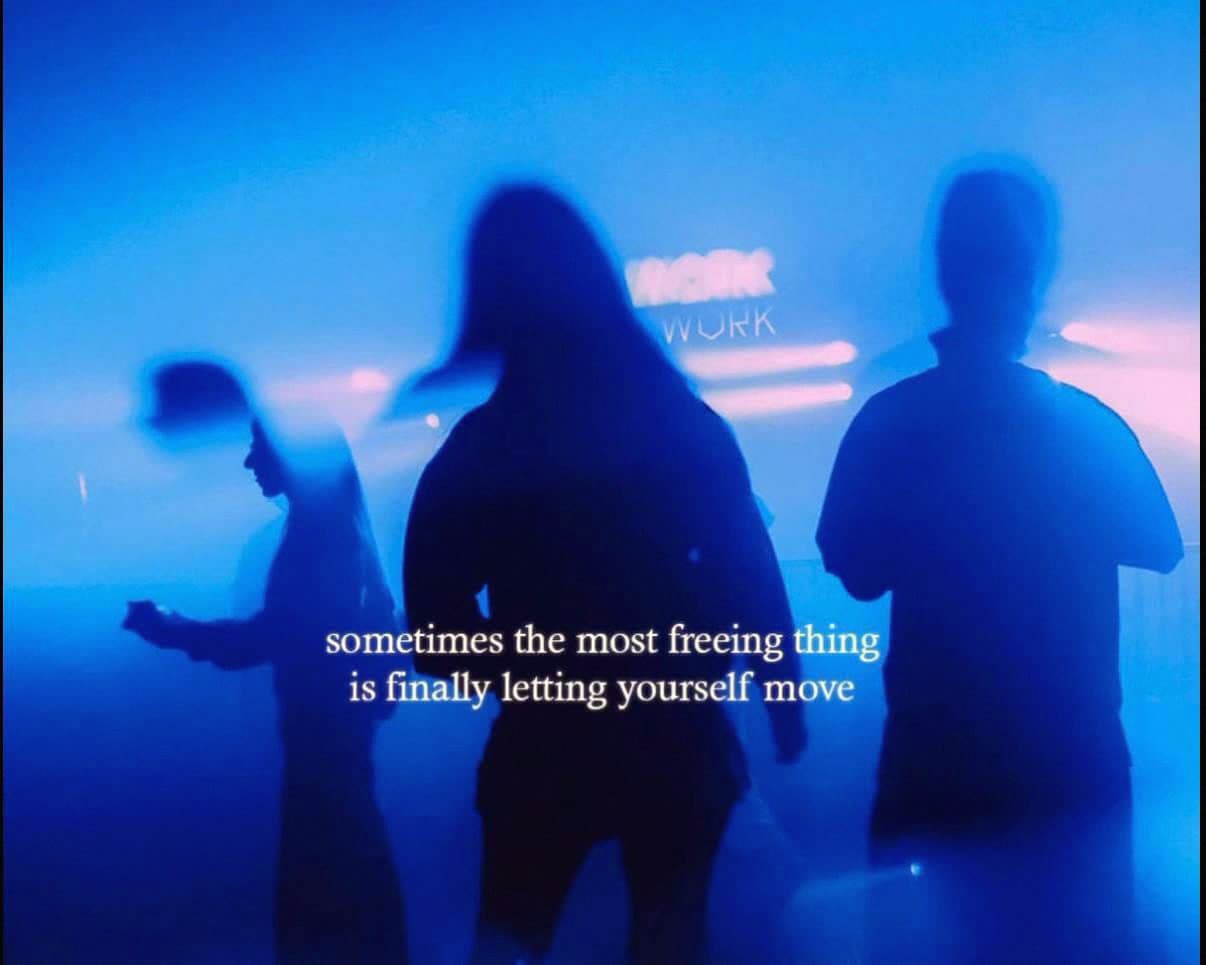
Making friends as a kid was almost effortless. You sat next to someone in class, played on the same football team, lived on the same street, and suddenly you were inseparable.
Then adulthood happens.
Work gets busy. People move cities. Relationships take up more space. Existing friendship groups become harder to break into. And unless you actively put yourself somewhere new, you can go weeks without having a meaningful conversation with anyone outside the people you already know.
Nobody really teaches us how to make friends as adults. But we still need them.
And strangely enough, one of the best places to start might be somewhere built around loud music, flashing lights and very little conversation: the dance floor.
The Dance Floor Removes The Awkward Part
Most adult social situations come with some kind of performance.
What do you do? Where are you from? Who do you know here? What are you working on?
On a dance floor, none of that really matters.
Someone makes eye contact. You both react to the same track. Someone starts dancing next to you. You laugh. They offer you some water. You lose your friends and temporarily get adopted by theirs.
Connection can begin before you've exchanged a single piece of biographical information.
There is already something to share: the music.
That removes one of the biggest obstacles to meeting people as adults, having to manufacture a reason to talk to each other.
You're Experiencing Something Together
A great dance floor creates a strange kind of temporary community.
Hundreds or thousands of people who may have absolutely nothing else in common are suddenly moving to the same rhythm, responding to the same drops and sharing the same little moments.
Sometimes the DJ plays that record and you turn to the complete stranger next to you with the expression of someone who has just witnessed a miracle.
For thirty seconds, you're best friends.
And sometimes thirty seconds becomes a conversation outside. Then an Instagram follow. Then another party. Then dinner. Then a friendship that has very little to do with raving at all.
Not every connection needs to become that.
The person you danced with for six hours and never saw again still mattered.
Adult Friendship Needs Repetition
This is the part people sometimes forget.
Meeting someone isn't the same as becoming friends with them.
Friendship works a little like going to the gym: one session doesn't do much. You build it through repetition.
You see the same people at another party. Then another. You start saying hello. Eventually you know their name. Someone invites someone somewhere. The relationship slowly moves beyond the dance floor.
This is partly why scenes matter.
When you regularly go to the same clubs, promoters, festivals or local parties, you stop entering rooms full of strangers. Familiar faces begin appearing everywhere.
Community isn't usually created in one huge cinematic moment.
It's built through hundreds of tiny ones.
No New Best Friend? Still A Win
We also put too much pressure on social interactions.
Not every person you meet has to become part of your inner circle.
Maybe you share a cigarette outside and never speak again. Maybe somebody compliments your outfit. Maybe you have a ridiculous dance battle with a stranger. Maybe you spend the entire night together and never even learn each other's surname.
Those interactions count too.
They remind us that other people aren't just profiles passing across a screen. They're funny, strange, generous, awkward, unpredictable humans.
The more little interactions you have, the easier connection becomes.
Raves Let Adults Play Again
There's another reason dance floors are unusually good social spaces: adults don't get many opportunities to play.
We spend most of our lives being productive, professional, responsible or worried about how we're being perceived.
Then you walk into a rave and suddenly people are pulling ridiculous dance moves, wearing bizarre clothes, hugging strangers and laughing at absolutely nothing.
Playfulness lowers barriers.
It's difficult to maintain your carefully constructed adult persona while you and someone you've just met are simultaneously losing your minds over the same bassline.
And sometimes friendship starts exactly there, when people stop trying quite so hard to impress each other.
But A Rave Friend Isn't Automatically A Real Friend
There is an important distinction.
Rave culture can create genuine friendship, but it can also create relationships built entirely around partying.
There's the friend you always see at 4am but would never call at 4pm.
The person who only appears when there's an afterparty.
The friendship held together by substances, access, guest lists or whoever is paying for the taxi.
That doesn't necessarily make the connection meaningless. Some friendships are meant to exist within a particular chapter or setting.
But deeper friendship is built when the relationship survives outside of it.
Do you check in on each other?
Can you spend time together sober?
Would you still be friends if neither of you went out for six months?
Can you disagree?
Can you show up when life isn't fun?
The dance floor can introduce you. What happens afterwards determines the friendship.
Friendship Isn't A Vending Machine
Adult friendships also require reciprocity.
If someone invites you somewhere, invite them somewhere next time.
If they message you, eventually message them first.
If somebody is always organising the plans, don't assume they'll keep doing it forever.
People are busy. They have relationships, jobs, families, problems and entire lives you don't see.
Sometimes what feels like rejection is simply someone being overwhelmed.
You don't need to force connection.
But you do need to participate in it.
Start By Saying Hi
Maybe that's the biggest lesson.
We tend to imagine friendship as something that either magically happens or doesn't.
But most friendships begin ridiculously small.
A smile.
A cigarette.
A compliment.
"Do you know this track?"
"Have you seen this DJ before?"
"Do you want some water?"
Then you see each other again.
And again.
Until eventually the person you once vaguely recognised from the dance floor is sitting at your kitchen table telling you about their breakup.
You can't manufacture chemistry, and you shouldn't try.
But you can create more opportunities for it to happen.
So next time you're at a rave, look up from your phone. Talk to the person next to you. Introduce yourself to someone's friend. Dance with someone outside your usual crew.
You might meet your best friend.
You might only share one brilliant night.
Both are pretty good outcomes.