What actually happened at the Techno Parade?
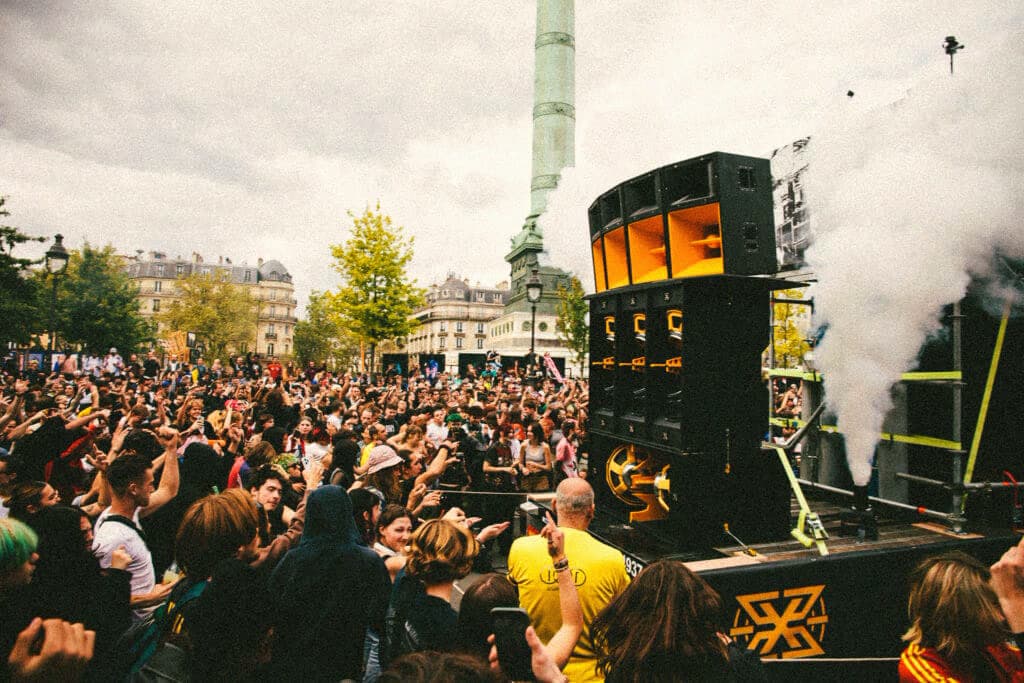
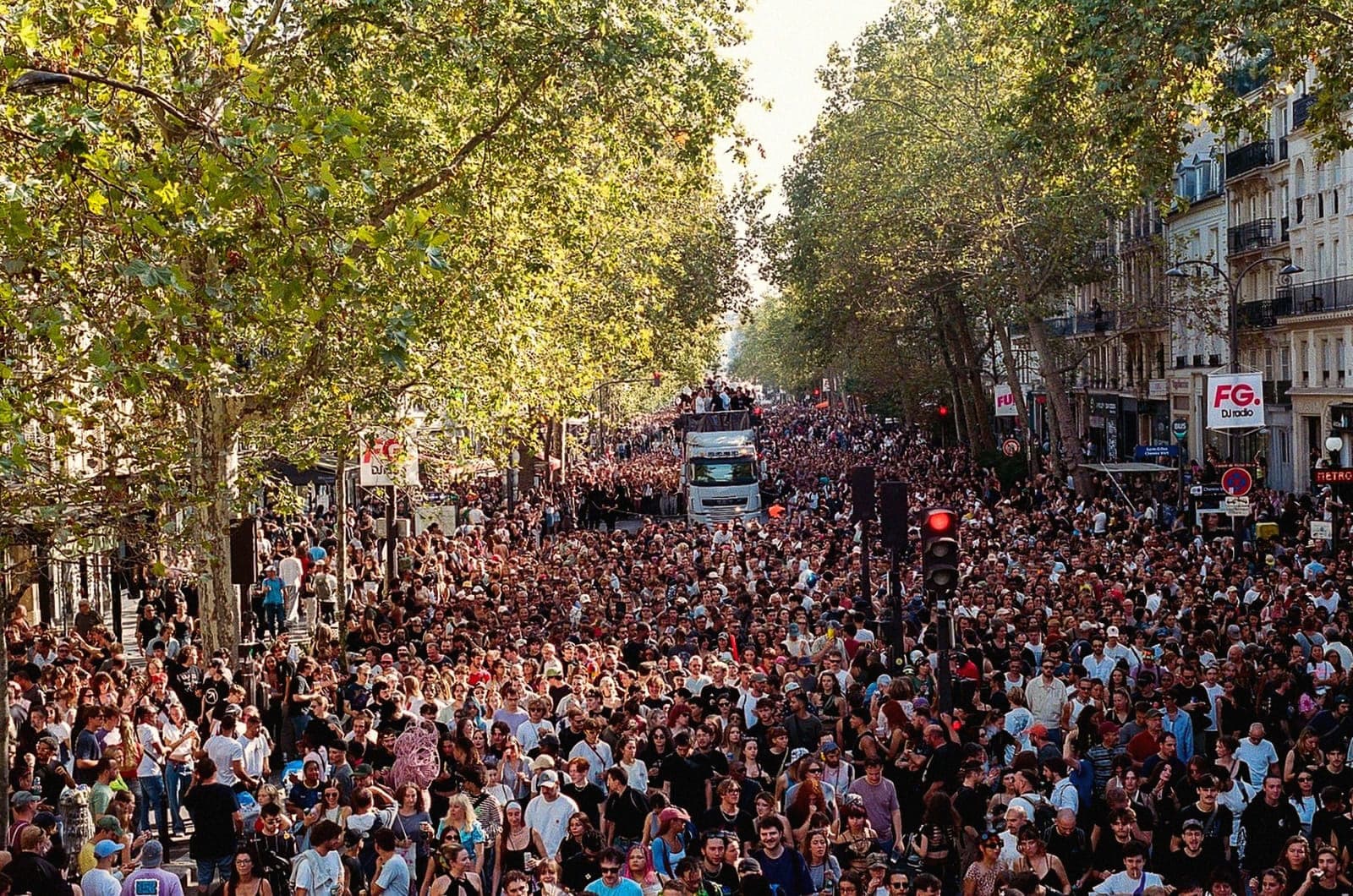
On Saturday, September 19, 2026, the Techno Parade came back to Paris after skipping two editions, and it came back loud. Ten sound floats rolled from Place de la Bastille to Place de la Nation, carrying crews and labels including EZPZ, Fun Radio, Organïk, Phantom, Radio Mamè, Space Oddity, Technopol itself, and Techno Ride x Claquettes Chaussettes. Organizers put the crowd at 350,000, roughly the population of Nice moving down Boulevard Voltaire behind a wall of subs.
This year's edition, the 26th since Technopol first marched the same route in 1998, was dedicated to Detroit. Visit Detroit sponsored its own float, and Belleville Three co-founder Kevin Saunderson played alongside Women On Wax founder DJ Minx, with Detroit's DJ Holographic and Paris local DJ Roulita also on the bill, tracing a line from the Motor City warehouses that invented techno to the boulevards where France is now arguing about whether to let it keep playing.
What does the Ripost law actually criminalize?
The parade's real subject was the law passed this summer that the free party scene calls "Ripost": organizing an undeclared, self-run party can now mean up to two years in prison and a €30,000 fine, participating in one up to six months and €7,500, and the size at which a gathering must be declared to authorities in advance dropped from 500 people to 250. Interior Minister Laurent Nuñez has defended the toughened penalties bluntly: "To ensure this doesn't happen again, sanctions must be toughened. Our fellow citizens do not understand."
The scene tested that framing in May, when up to 40,000 ravers, by organizers' count, took over a disused military firing range near Bourges, deliberately chosen because it sits in the minister's home constituency, even after officials warned unexploded World War Two ordnance could still be buried on the site. Police handed out more than 600 fines. The Techno Parade, by contrast, is exactly the kind of event the law does not touch: declared, ticketless but sponsored and policed, the model Technopol has run since the 1990s. Marching under the banner "Riposte à la loi Ripost" made that distinction the whole point.
Why is a declared parade fighting a law about undeclared parties?
Because Technopol argues the law punishes the wrong target. Its president, Tommy Vaudecrane, told franceinfo the government is "genuinely facing a law that is disconnected from reality" and that it "punishes far too harshly people who simply want to celebrate according to a different model," and the association is pushing for repeal and for consultation with organizers to replace prison time. One banner carried down Boulevard Voltaire put it plainer:
Cultural heritage is not a security threat. Stand up against the Ripost law.
That line lands harder given the timing: France added electronic music to its official inventory of intangible cultural heritage in December 2025, months before signing off on prison sentences for people who throw it in a field without a permit. Former culture minister Jack Lang, who set the original 1998 march in motion, showed up too and called the law "rigid and authoritarian," though Technopol was careful to note his presence was "neither an invitation nor an initiative from us," distancing the parade's message from Lang's own baggage.