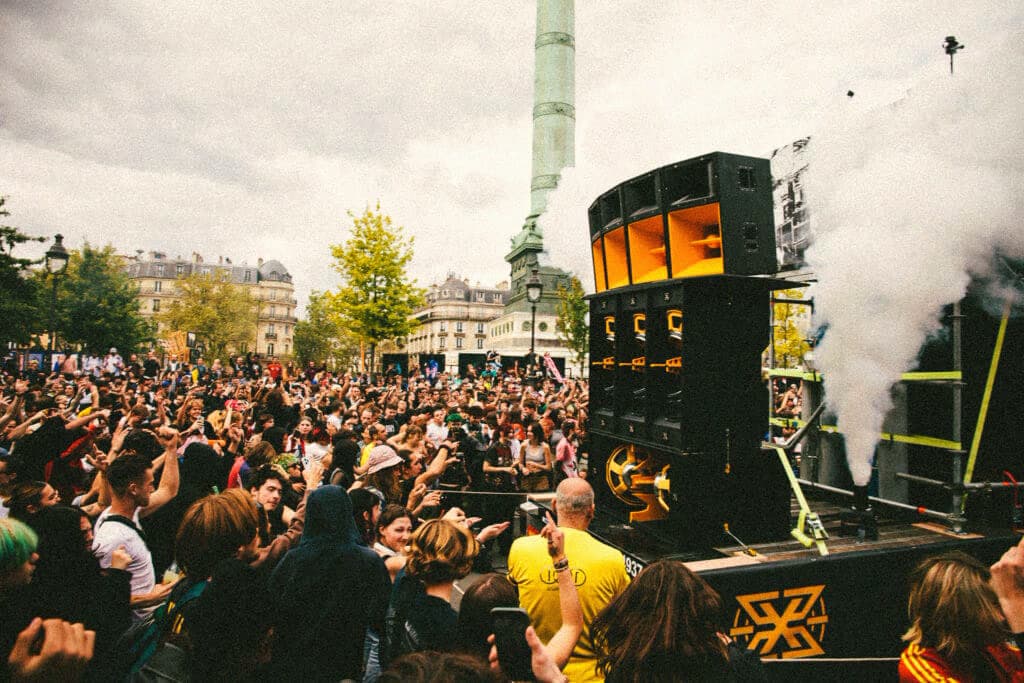
France spent late 2025 telling the world its electronic music culture was worth protecting, adding it to the country's intangible cultural heritage inventory. Then, over the summer of 2026, its parliament passed a law that can send a dancer to prison for going to the wrong party. On September 19, 350,000 people walked from Place de la Bastille to Place de la Nation to say so, in the first Techno Parade Paris has held in two years.
What does the RIPOST law actually criminalize?
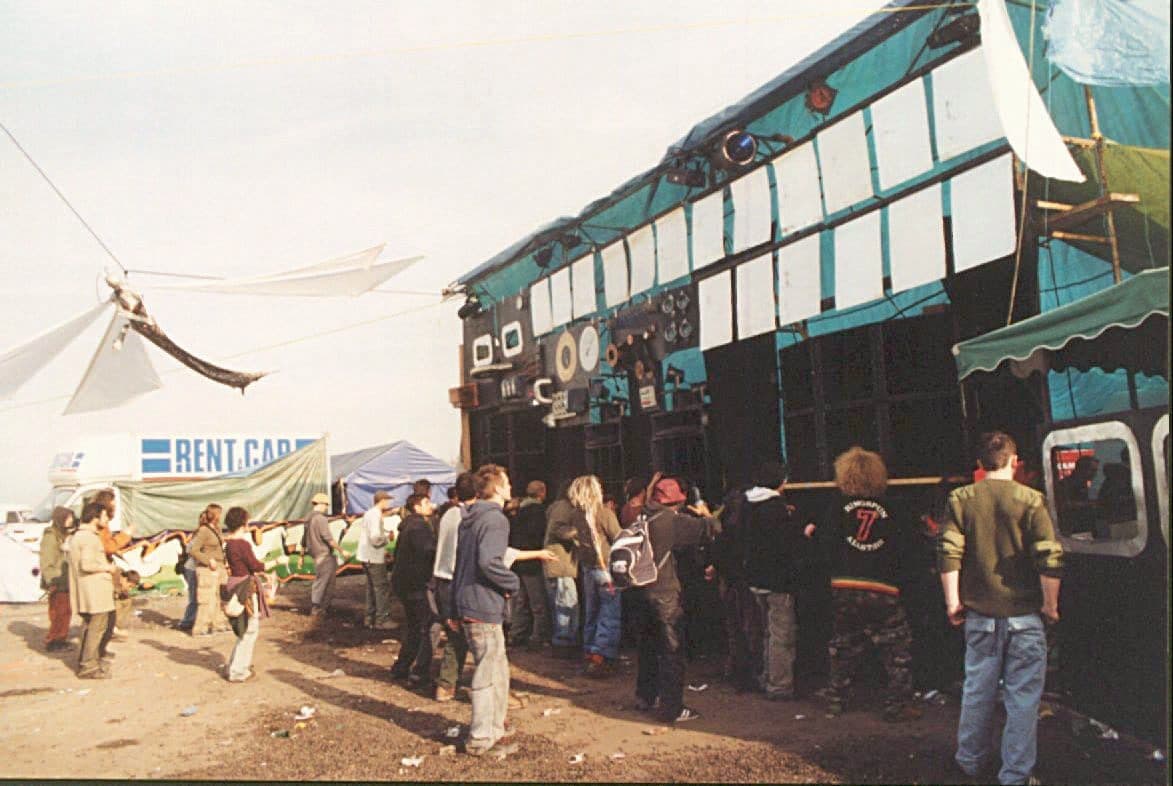
RIPOST, adopted this summer, targets free parties, the unlicensed, unregulated raves that have run through French fields and warehouses since the early 1990s. Organizing one now carries up to two years in prison and a 30,000-euro fine. Simply attending and dancing carries up to six months and a 7,500-euro fine. That second number is the one that turned a niche club-policy fight into a street movement: this is not a law about promoters skimming door money, it is a law with a line item for the person on the dancefloor.
Technopol, the association that has organized the Techno Parade since 1998, argues the law's real danger is in what it doesn't say. Nowhere does the text define "organizer" with any precision, which the group warns could sweep in a DJ who plays a booked set, a sound engineer, or a volunteer pouring water at the entrance, anyone adjacent to an event that gets classified as unauthorized after the fact. "Avec la loi Ripost, nous sommes confrontés à une loi déconnectée de la réalité," Technopol president Tommy Vaudecrane told France Info at the march, a law disconnected from reality.
Why did a parade suddenly become a protest?
The Techno Parade has always been part celebration, part demonstration, born in 1998 as a show of force for a scene that French authorities had spent the 1990s trying to shut down. This year it returned after a two-year gap with an explicit target: full repeal of RIPOST, and a demand for what Technopol calls interministerial negotiations, replacing imprisonment with dialogue. Ten floats made the six-hour walk from Bastille to Nation, among them a Detroit techno tribute carrying Kevin Saunderson, DJ Minx and DJ Holographic, a pointed reminder that the genre France is now legislating against was built by Black American DJs the country has spent three decades celebrating as cultural royalty.
Jack Lang, the former Culture Minister who backed the original 1998 parade as a government-sanctioned answer to Berlin's Love Parade, showed up this year too. Technopol made a point of saying his presence was "neither invited nor sought," a rare public distancing from the very official whose patronage once legitimized the event, and a sign of how radioactive establishment endorsement has become for a scene now facing criminal statutes rather than subsidies.
"Avec la loi Ripost, nous sommes confrontés à une loi déconnectée de la réalité."
Why should the scene outside France care?
France is not the only country where free parties and warehouse raves operate in a gray zone, but RIPOST is a rare case of a Western European government attaching actual prison time to attendance, not just fines for organizers or noise violations. If it holds, it becomes a template other governments can point to: a democracy, weeks after formally recognizing electronic music as cultural heritage, criminalizing the people who dance to it. Every scene that depends on unlicensed spaces, from UK free parties to Eastern European warehouse nights, has a stake in whether that contradiction gets challenged or normalized.
What we think
A government cannot induct a genre into its cultural heritage inventory and then write a statute that puts its dancers in a cell, and expect the scene to shrug at the whiplash. RIPOST reads like a law built for a handful of organizers who genuinely put people in danger, then drafted so loosely it nets everyone standing near a speaker. Technopol is right to demand repeal rather than amendment: a law this vague is not a drafting error, it is a chilling effect with a legal cover story.