What actually happens now when a label says no?
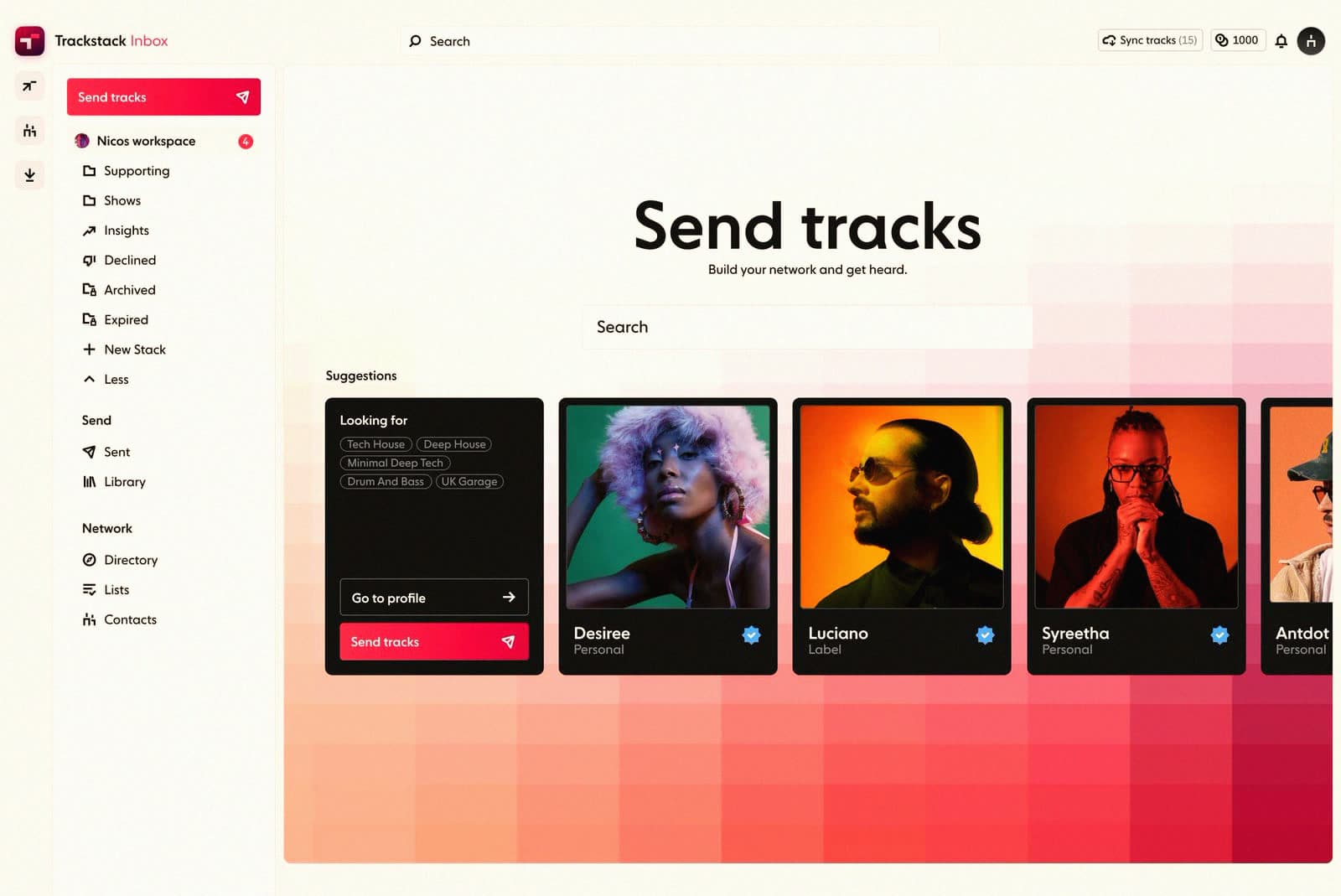
For most of dance music's history, sending a demo meant sending it into a void. You uploaded a WeTransfer link, you waited, and you usually heard nothing back. Trackstack's core product, an inbox built to handle hundreds of demos at once, changes the default. A label can clear that inbox with one-click decisions, and when it passes on a track it can fire back a response, even a templated one, along the lines of “we listened, it is not a fit.” It is not a glowing A&R essay. But it is a reply, and for a producer used to silence, knowing your track was actually heard and passed on is its own kind of closure.
Why is a rejection no longer the end of the road?
Because the decline is wired into a bigger machine. Jamie Jones, the Hot Creations founder who built Trackstack after drowning in his own demo inbox, frames the platform as an operating system for electronic-music careers rather than a glorified submission form. A no from one label drops the producer back into a system with other moves: Elevate, a marketplace where established names sell feedback, mixing, mastering and coaching; a Store to sell the track directly to the people who do support it; and a Studio to build a base of engaged peers. The company says over 100,000 professionals are already on it, and it has tied in data through a partnership with Songstats. The bet is that a rejection is just one node in a network, not the end of the line.
“Fifty engaged professionals who truly invest in your work are worth more than 5,000 passive followers.” That is the Trackstack pitch, and the decline is meant to feed it, not kill it.
Is this a lifeline or a new toll booth?
Here is the catch worth naming. The moment feedback becomes a product, the line between mentorship and pay-to-play gets thin. A scene already thick with gatekeepers should watch that the next step after a no is not simply an upsell, a producer paying for the encouragement a label used to give for free. Trackstack's defence is transparency: at least the terms are visible, the response is real, and nobody is pretending the inbox is a meritocracy when it never was. For the bedroom producer who has sent a hundred tracks into silence, a system that answers, even to say no, even for a fee, is still a better deal than the void.