Who is Tweakbench, and why does this matter?
If you were trading plug-ins on forums in the mid-2000s, you knew the name. Tweakbench, the work of one developer, Aaron Rutledge, put out a run of cult freeware: chiptune boxes that spat out Nintendo-style bleeps, granular tools, ambient pad machines, the kind of weird instruments IDM producers hoarded. They were built in SynthEdit, and when Rutledge stepped away they were effectively lost to modern systems for the better part of two decades.
At the end of 2025 he came back and rebuilt the lot from the ground up in JUCE and C++, the modern way. Free updates have pushed the bundle to 39 plug-ins, and crucially they run natively on today's machines, Apple Silicon included.
What is Bastion?
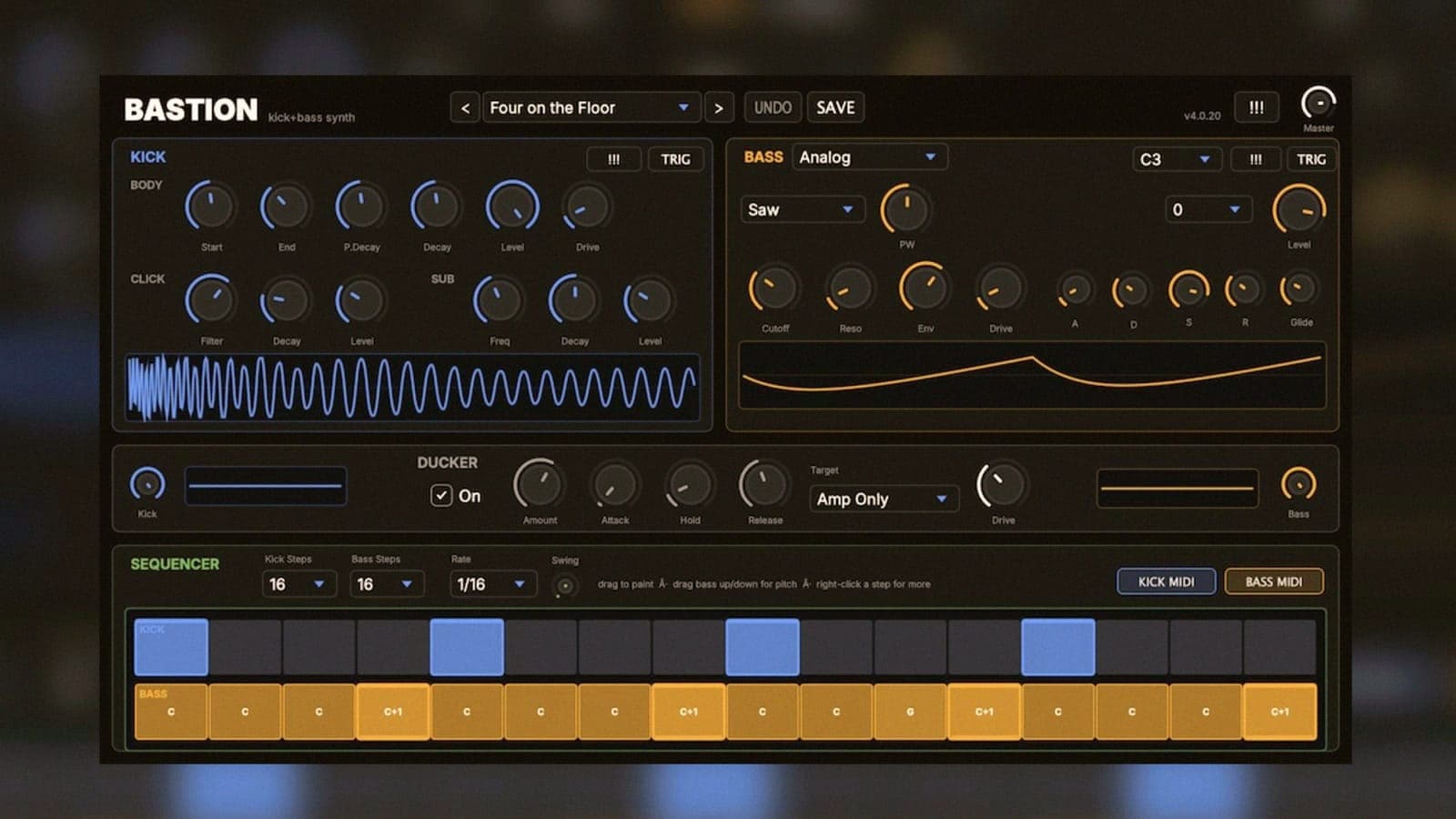
Bastion, out on 25 June, is the most club-facing thing he has made yet: a combined kick-and-bass synth aimed straight at the low end of a house or techno track. The kick side stacks three layers, body, click and sub, each with its own drive and a pitch envelope to snap the attack. The bass side runs three engines, classic analogue waves, two-operator FM for metallic bite, and a wavetable mode with nine tables.
It is 10 dollars on its own, and free if you already own the bundle. That is the whole pitch: a usable kick-and-bass tool for the price of a coffee.
Free tools in a subscription world
The timing is pointed. As big-name makers wall features behind subscriptions and paid firmware unlocks, here is a developer doing the opposite, charging five to ten dollars a plug-in and handing out updates for nothing. It reopens an old argument: is dirt-cheap, near-free gear democratising production, or quietly training everyone to expect tools for nothing? The plug-in scene was built on exactly this gift-economy generosity, and Tweakbench is a reminder that it never fully went away.