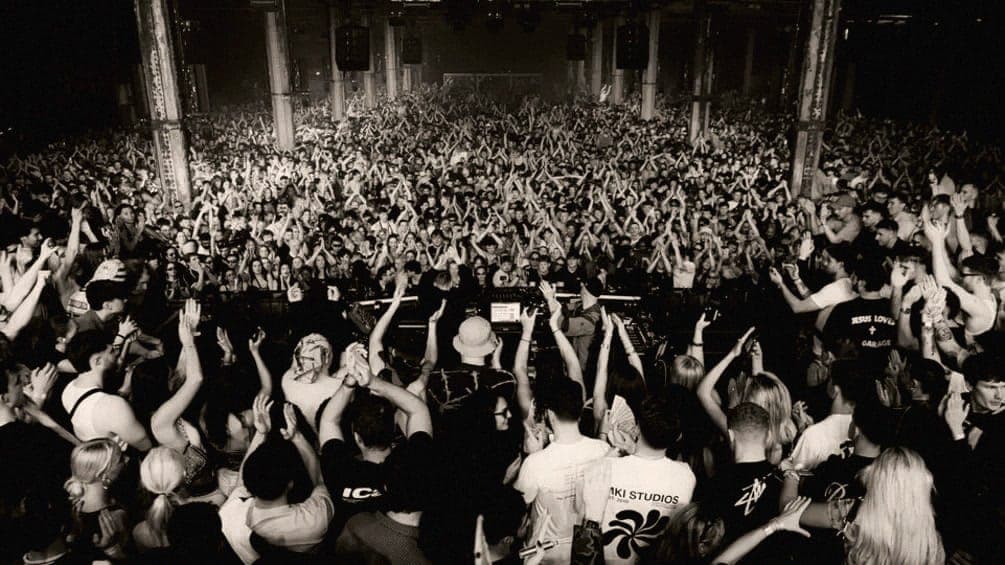
What exactly is WHP stepping back from?
The Warehouse Project has run every autumn through New Year's Day since 2006, when Sacha Lord, Sam Kandel and Rich McGinnis staged the first instalment in a disused Boddingtons brewery in Strangeways. It moved through the Store Street railway arches from 2007 to 2018, had a stint at Victoria Warehouse in Trafford Park, and has operated out of Depot Mayfield since 2019, scaling into one of the UK's biggest clubbing operations.
2026 was built as the victory lap: Fred Again, Disclosure, Skrillex, Bicep, Solomun, Overmono and Tiesto on the bill, curated nights from Annie Mac and Jamie xx, a dedicated 20-year celebration in November, plus a short film, an exhibition, a podcast and an archive of 20 years of club photography. On 30 September, Kandel and McGinnis posted directly to WHP's own channels to confirm that 2027, in its current format, will take what they called a short breather. Events continue next year, just on a far smaller scale, and there's no plan to revive the old Store Street site.
Why pull back right after the biggest year?
The founders don't cite money or burnout. Their statement reads like a conscious decision about pacing, not a forced one: "Since then, all we've been thinking about is the next move: the next night, the next artist, the next season, the next venue. Suddenly two decades have gone by and it feels like someone pressed fast-forward." Their answer, in their own words: "We spoke at length about how to mark 20 Years. We think the answer is to dial things back the following year."
"It feels like someone pressed fast-forward."
That framing carries different weight for a brand that isn't fully independent anymore. Co-founder Sacha Lord sold his remaining shares and exited both WHP and Parklife in July 2024, handing them to LN Gaiety, the joint venture between Live Nation and Gaiety Investments that already held a stake in the business. Kandel and McGinnis, now running the operation day to day, are the ones who get to decide whether dialling back is a luxury a Live Nation-linked promoter can afford that a fully independent one often can't.
What does this signal for everyone else running club nights at this pace?
WHP is the brand other British promoters have pointed to as proof that a single building can carry a genuine, multi-month festival-grade season and survive. If the operator that proved the model decides a year of restraint is the right call right after its best season, that's a signal worth reading on every promoter's own books, not just in Manchester.
It also lands against a backdrop WHP itself isn't claiming as its reason: the UK's night-time economy keeps shrinking regardless. Industry body NTIA figures put the contraction at 5.1% year on year to the first quarter of 2026, something like three net closures a week, and roughly one in four late-night venues gone since 2020, close to 800 businesses. WHP isn't citing those numbers as its reason to pause, but any brand choosing to run smaller next year is doing so in a sector where plenty of others don't get to choose; they just stop.