What's actually new in firmware 1.3?
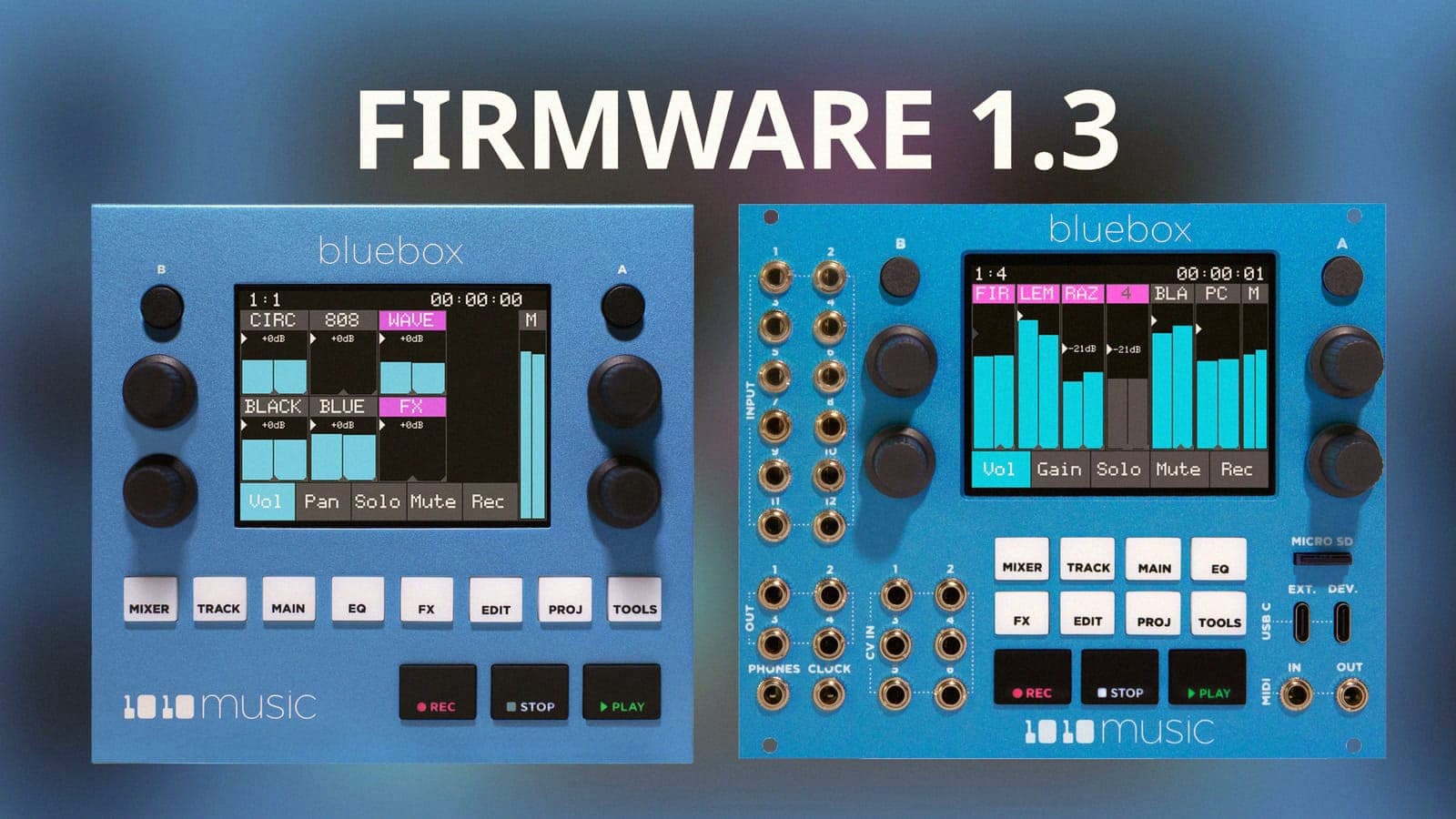
1010music has pushed out a beta of firmware 1.3 for 1010music's bluebox, and it's the biggest functional jump the little mixer-recorder module has had since launch, according to Synthanatomy's July 29 report. The headline addition is a sidechain compression effect built into the mixing engine itself: pick a source to trigger it (another track crossing a threshold, the internal clock synced to a note division, or an incoming MIDI note), then dial in attack, hold, release and depth to shape how hard the ducking bites.
Alongside it, 1010music rebuilt the USB audio path. Both bluebox versions now run 24-bit/48kHz over USB; the desktop unit gets clean stereo input and output routing to a computer, and the Eurorack module version, the one that turns bluebox into a full mixing and recording brain for a rack, can now push three stereo pairs plus 12 mono inputs to a DAW or iOS device over a single USB-C cable.
Why does the SD card reader mode matter?
The other fix is smaller on paper but bigger in daily use: bluebox can now act as a straight microSD card reader, mounting as a drive when plugged into a computer. Anyone who has recorded a set on a bluebox and then had to pull the card, find an adapter and drag files across a desktop knows exactly why this was, per Synthanatomy, one of the most requested features in the community.
A 32-band spectrum analyzer now runs live on the selected track or the main bus, giving bluebox users a level of visual feedback that used to mean routing audio to a laptop first.
Who is this actually for?
Bluebox was built to let a modular rig, or a compact live setup, mix and record itself without a laptop in the chain. Sidechain compression on board means a DJ or live-PA act can duck a pad or vocal under a kick using nothing but the module, and the SD reader mode means the resulting recording gets off the hardware in seconds. That is the whole pitch of standalone gear like this: fewer trips back to software for the workflow to actually work.