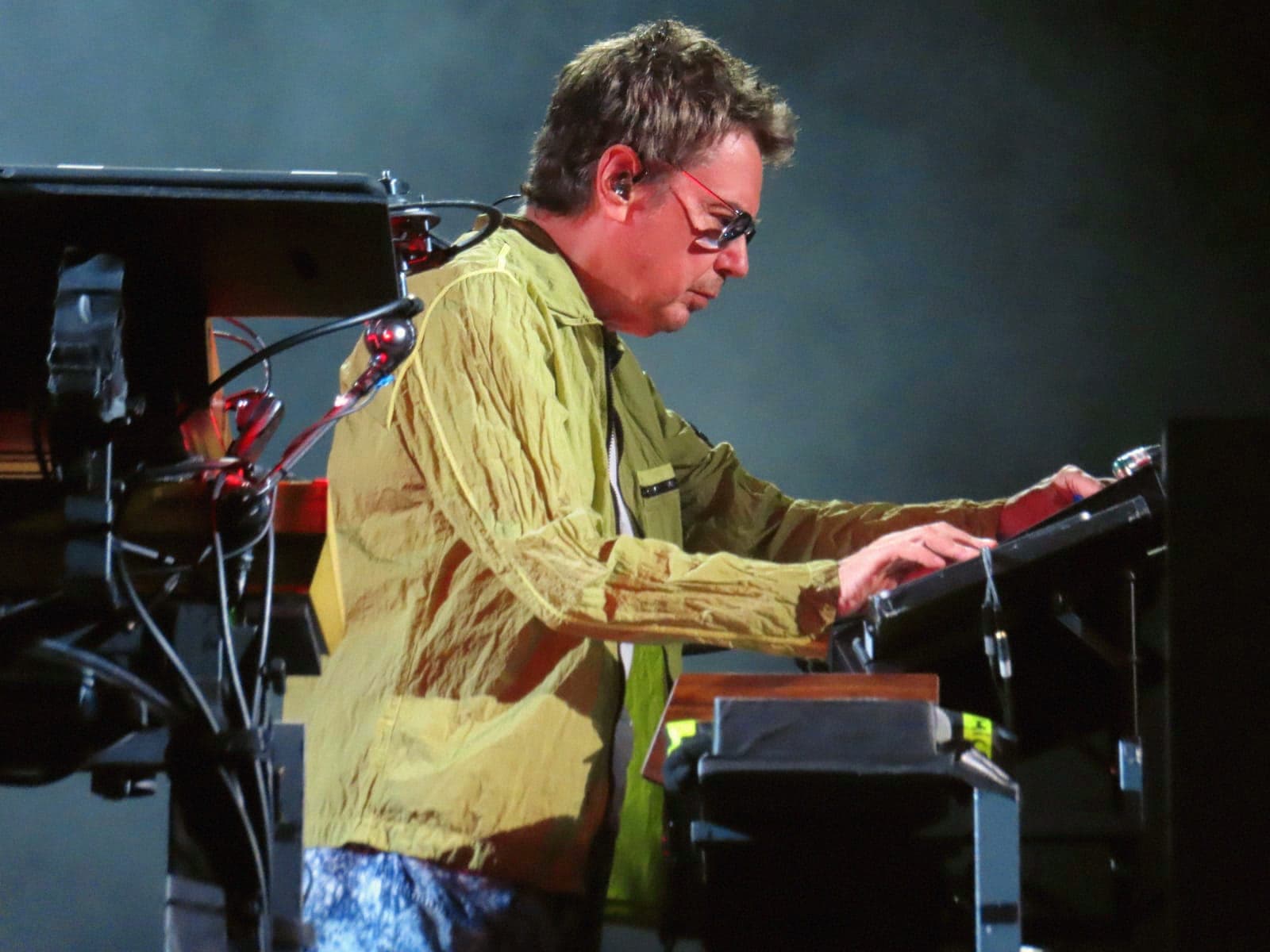
Thirty years ago, Jean-Michel Jarre was already an elder statesman of electronic music, a decade removed from the album that made him one. Now he's opening the week that proves how far the genre he helped invent has traveled: Amsterdam Dance Event's 30th anniversary, October 21-25, where the single biggest booking on the bill belongs not to a DJ but to a 78-year-old Frenchman replaying Oxygene start to finish at AFAS Live.
It's a deliberate piece of symbolism, and it lands on two anniversaries at once. 2026 is ADE's 30th year as the conference and festival the entire house and techno industry treats as its annual town hall, a week when every booker, agent and label exec on earth is in the same city. It's also the 50th anniversary of Oxygene, the 1976 album that helped define what electronic music could sound like before house or techno existed as genres. Jarre doesn't just play a set. He gets an ADE Pro keynote interview too, the conference's way of putting its own prehistory on stage.
Why book a 50-year-old album to open a 30-year-old dance festival?
Because ADE's organizers are using the milestone to make an argument about legitimacy, not just throw a party. The rest of the 2026 programme pushes the same message from different angles. 'Swan Lake Remixed' takes the Dutch National Ballet, its Junior Company and the ISH Dance Collective and reworks the classical ballet with electronic music by Rik Ronner at Gashouder, a room built for 4am, not Tchaikovsky. The Royal Concertgebouw Orchestra, one of the most respected ensembles in the world, performs Beethoven's Fifth on the opening night. None of that is club programming. All of it is ADE telling the rest of the culture industry that electronic music has earned a seat at the table next to opera houses and philharmonics.
Electronic music, as well as ADE, has a history, a legacy and a future. I'm so happy to be part of this celebration in 2026.
That's Jarre's own framing of the booking, and it doubles as ADE's thesis for the year: history as a flex.
Does any of this mean ADE is leaving the underground behind?
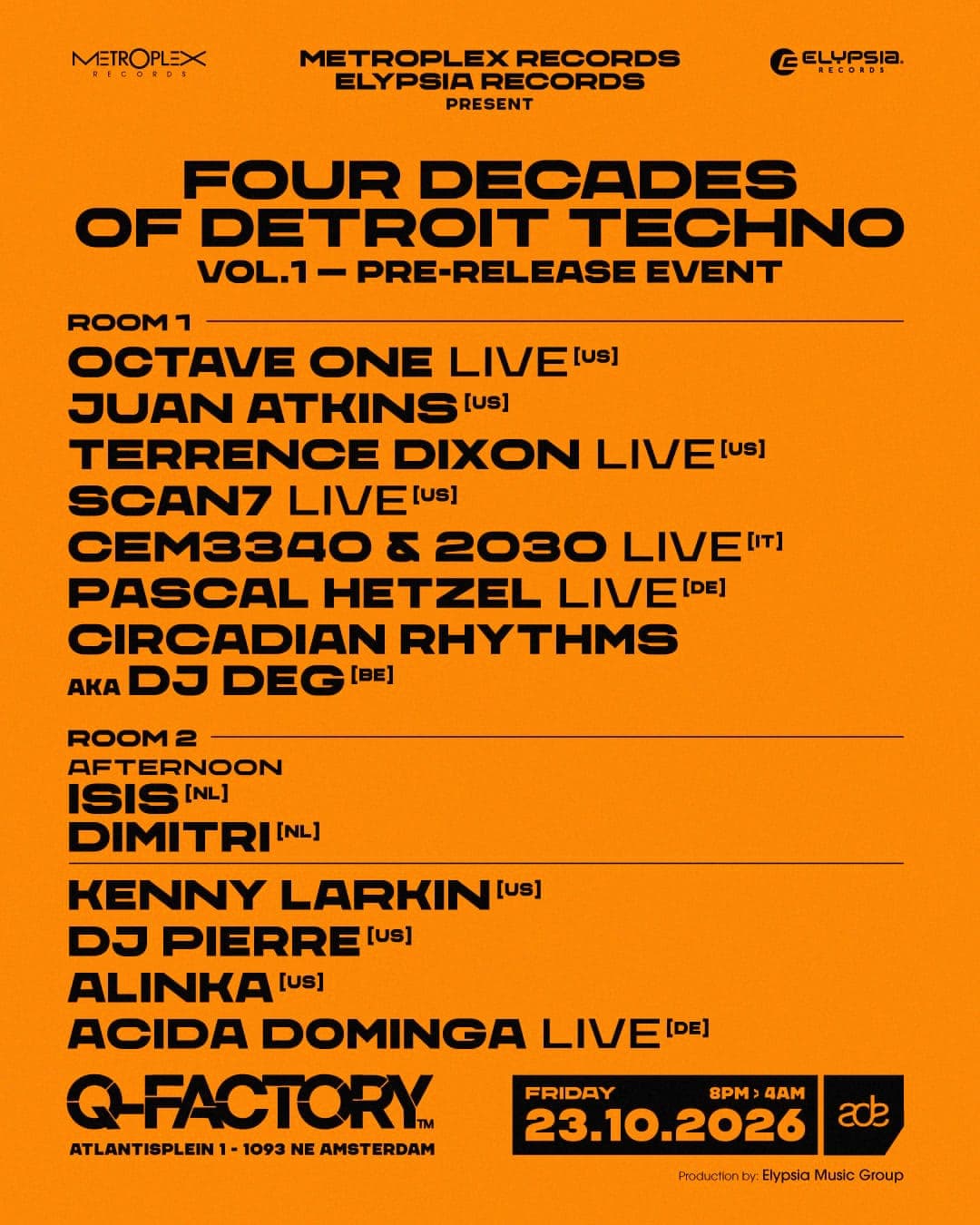
Not on the numbers. The anniversary programme still runs on the same engine that built ADE in the first place: more than 1,000 events, over 3,300 artists, across club nights, warehouse shows and label showcases that never touch a philharmonic. Skepta brings an expanded 'Mas Tiempo' production to Warehouse Elementenstraat. KI/KI, one of the most talked-about new names in techno, headlines two nights of a five-hour set at Ziggo Dome, a scale of ambition that has nothing to do with legitimizing anything to anyone outside the scene. The club culture is still the bulk of the week by sheer volume.
But volume isn't where the attention goes, and that's the real tension in this edition. A 30th anniversary is supposed to be a victory lap for the scene that built ADE: the promoters, the DJs, the labels who turned a Dutch conference into the industry's biggest annual gathering. Instead, the loudest statement of the week belongs to a synth legend from outside house and techno entirely, and to a ballet company. That's either electronic music finally getting the cultural respect it deserves, or it's ADE reaching outward for validation it no longer needs to ask for. Both readings are true at once, and which one wins probably depends on whether you're in the room for Jarre or queuing for KI/KI.
What happens to this tension after 2026?
If the crossover bookings pull new, older or more mainstream audiences into ADE's orbit without displacing the club programming that's always been its backbone, this becomes the template for how a 30-year-old underground institution ages without going stale. If the headlines keep going to the legacy names and the orchestras while the actual dancefloors get treated as background noise, that's a real cost, and one the scene that built ADE has every right to push back on.