Why put this fight on a stage instead of in a courtroom?
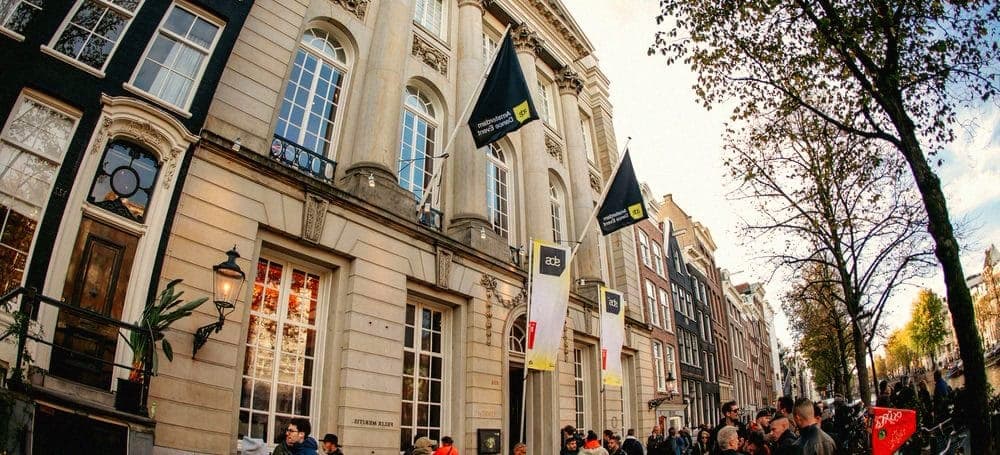
For the better part of two years, the standoff between musicians and the companies training AI on their work has mostly played out through cease-and-desist letters, licensing fine print and the occasional lawsuit. ADE Pro 2026 drags it into a room with a microphone. On Friday October 23, at 1:45pm in Felix Meritis's Shaffyzaal, BT, Mathame and Portrait XO sit down for "Artists on AI: A No-BS Roundtable" alongside Dave Clarke, Miss Kittin and Terrence Dixon, moderated by journalist Marcus Barnes. ADE's own copy frames it around where AI "flattens" the creative process rather than helps it, and who absorbs the loss of control, of income, of authorship when a model learns from a catalogue it never licensed.
The same week, Google DeepMind and NVIDIA both get a credited presence on the ADE Pro programme for the first time. DeepMind's Jeff Chang runs a session on AI models and agents in music production, and NVIDIA's Shari Reich sits on a second, separate panel built specifically for the platforms, not the artists.
Who actually negotiates the terms, and who just finds out about them?
ADE Pro splits the conversation into two rooms, and the split says something on its own. "AI Platforms Roundtable: Setting the Terms" puts NVIDIA's Reich next to Splice CEO Kakul Srivastava, SoundCloud's Bina Mistry, Deezer CEO Alexis Lanternier, Believe COO Romain Becker and Image-Line CEO Constantin Koehncke, moderated by Cliff Fluet, to work out what workable agreements between AI companies and the music industry could look like: licensing, attribution, training data. No musician is on that bill. The artists get the adjacent room and the No-BS framing; the companies get the room where the actual terms get set.
Who's actually benefiting from the current wave of licensing deals, and who's being left out of that conversation entirely?
That line, straight from ADE's own programme copy for the artists' panel, is the real tension of the week: musicians are being asked to debate a system whose rules are being written one room over, by people they won't share a stage with.
What's actually at stake for BT, Mathame and Portrait XO?
Sharing a stage with the people building the tools that can already write a topline or master a track cuts both ways. Say too little and the panel reads as a photo op that hands DeepMind and NVIDIA free legitimacy in front of the exact audience whose catalogues feed their models. Push too hard and it's six artists against a room that already includes the platforms' own negotiators from the other panel, with the lawyers and licensing terms decided somewhere else entirely. The upside is real: it's rare for a working producer to put a direct question to an NVIDIA or DeepMind executive on the record, in public, at the same event where the platforms are simultaneously hammering out the deals that decide whether that producer gets paid.
Why it matters
ADE Pro is one of the few rooms this year where the people writing AI's rules for music and the people living under them are forced to share the same building, if not quite the same panel. Whatever gets said on Friday becomes a reference point other festivals, labels and lawyers will cite back.
What we think
Putting NVIDIA and Google DeepMind in a room with working artists is progress, barely. Scheduling the platforms' own licensing roundtable apart from the artists, and staffing it entirely with executives who actually write the contracts, tells you which conversation ADE still treats as business and which one it treats as PR. If BT and Portrait XO want more than a panel credit on their bio, the next ask is a joint session, not two separate rooms down the hall from each other.