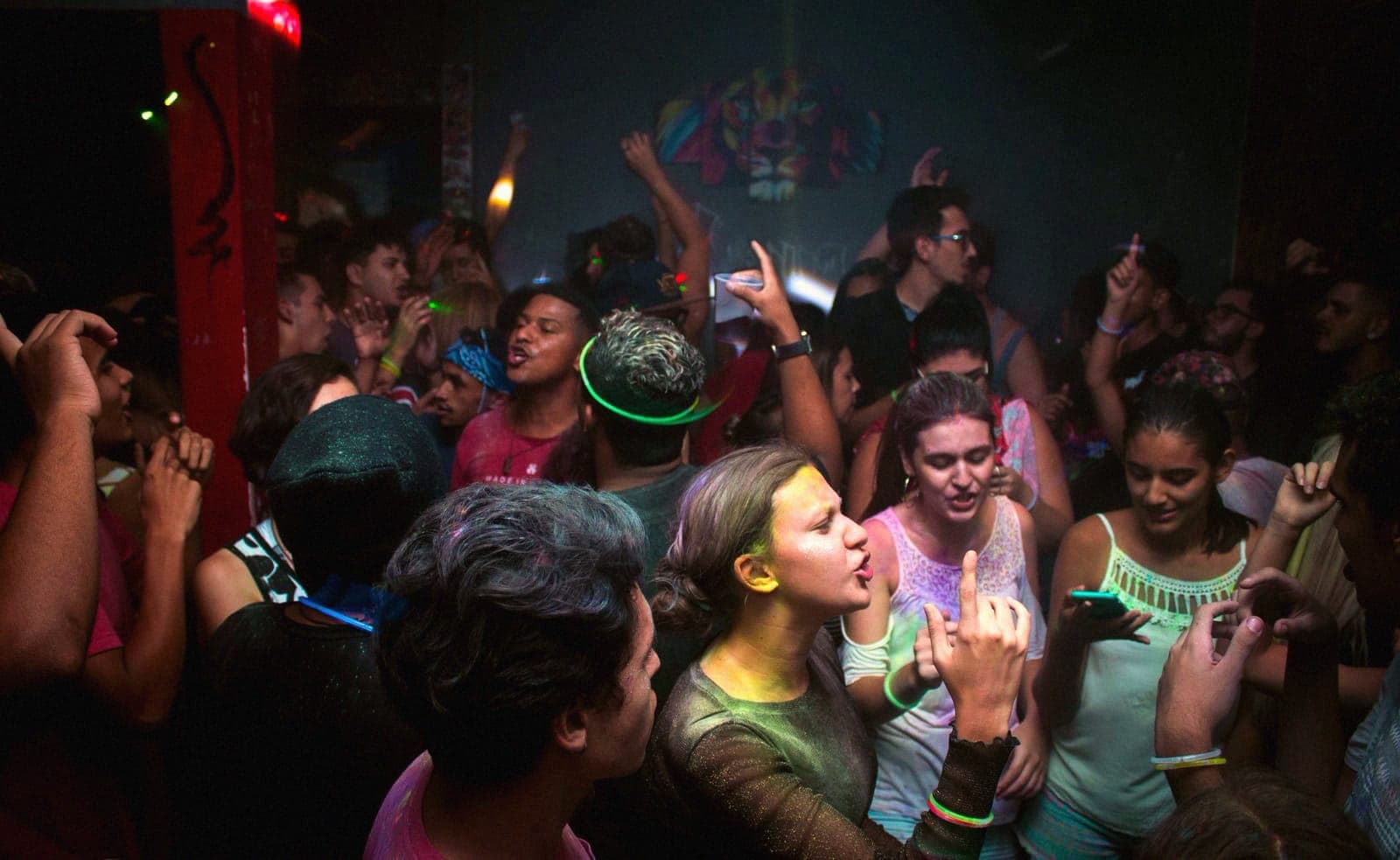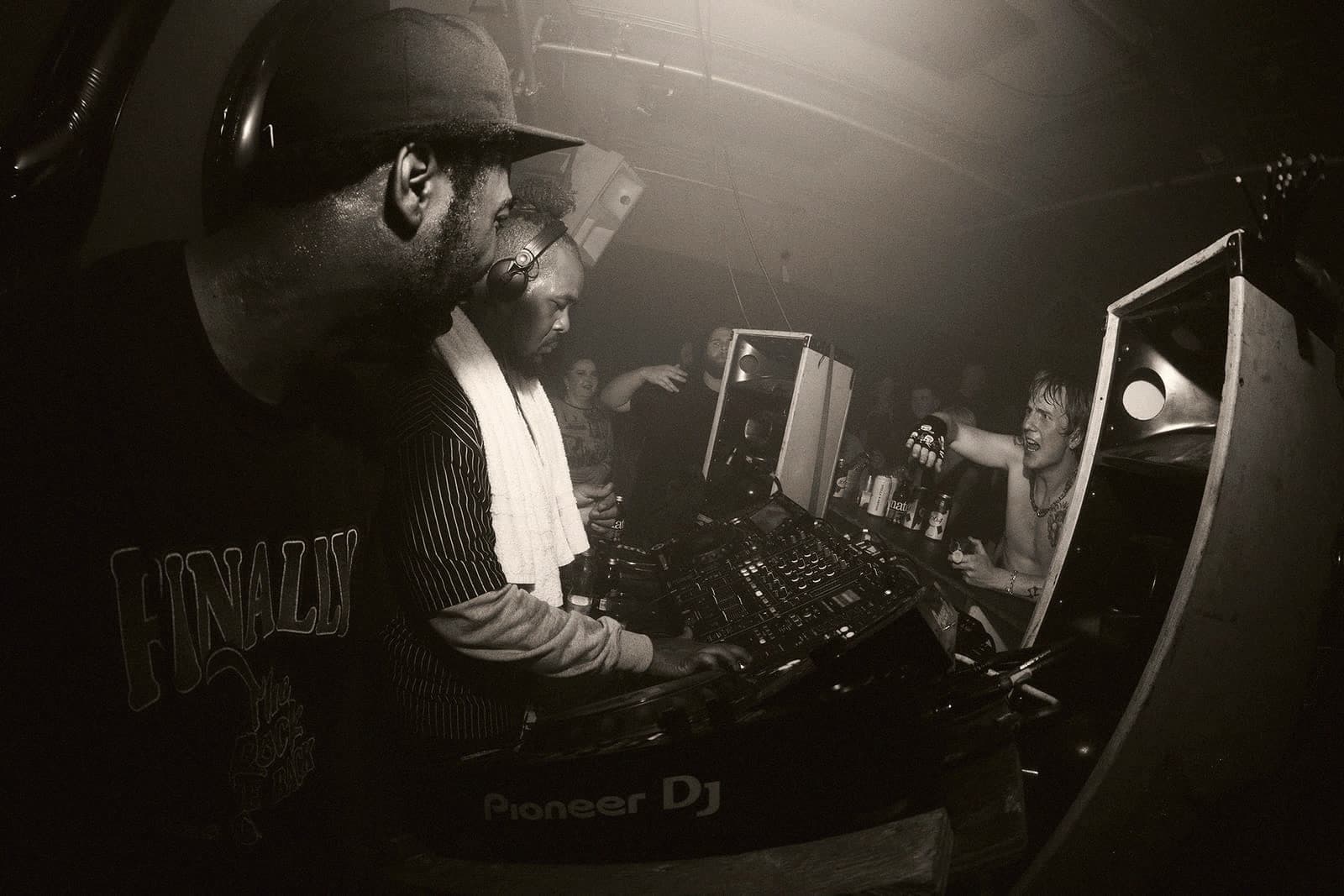
Walk into the AAJA basement in Deptford on a given last Thursday and the first thing that feels wrong, if you've been raised on club etiquette, is the geometry. Nobody is facing the booth. The DJ is there, 160bpm footwork pouring out of the system, but the crowd has turned its shoulders inward, toward each other, trading steps in a loose circle that tightens whenever someone starts going off.
That's not an accident. It's the whole premise of After Werks, the night Aoife Keane, who DJs as SOHOTSOSPICY, built with dancer Will Gore, known as Malt Beverage, when they started it in 2024. "You have to turn away from the DJ and look at people," Gore says. In most clubs that would be a breach of etiquette. Here it's the point: footwork, the dance and music culture that grew out of Chicago around 2000, was always built on the circle, the battle, the people watching each other move, not a crowd worshipping a booth.
Why flip the floor around the dancers?
Footwork's music and its dancing have often lived in separate rooms, even in the city that invented it. DJs built tracks for sets; dancers built moves for battles, often to a different crowd entirely. Big Dope P, who runs the Chicago label Moveltraxx, has watched that split from the inside for years. "People love the DJ side of things or just the tracks. Some people just like the dance, but it was different communities," he says. What After Werks does, and what has made it travel from a free Deptford basement night to slots at We Out Here and Outlook Festival, is put both halves of that culture in the same room on the same terms. "Now everyone gets to experience the battles at the club," he says.
For Keane, that payoff is direct and physical. "Being able to play a track and you can see someone giving it their all on the dancefloor, it's very validating," she says. It also changes what the DJ is for. The set isn't there to be admired from the front; it's there to be danced to, hard, by people who know the footwork.
Who actually wants to dance like this?
Footwork is not an easy floor to walk onto cold. The tempo alone filters the room. "It's really hard to be a casual footworker," Gore says. "You have to practise quite a lot just to hit the speed." That should, in theory, make a 160bpm night exclusionary. Dancer Cami Sayeh says the opposite happens inside the circle at After Werks: "Everyone just lifting each other up. The competitive energy is in a nice way." The battle format keeps its edge, people still try to outdo each other, but the audience it's aimed at is the floor, not a camera phone pointed at the DJ.
Keane is wary of what happens when a night like this gets too big too fast. "I definitely make a conscious effort to not turn it into a brand," she says. "We're here to learn." AAJA, the DIY arts space and radio station in Deptford where After Werks lives, has its own version of that fragility: it faced a closure threat in February 2025 over rising rent, a reminder that the rooms where this kind of floor-first culture gets to exist are not guaranteed to stick around.
"You have to turn away from the DJ and look at people."
Why it matters
Most clubbing is still built around the DJ as the thing you came to watch, and most club design, from booth height to lighting rigs, reinforces that hierarchy. After Werks is a working, growing counter-example: a free night that has scaled from a Deptford basement to major festival stages by making the dancers, not the decks, the show.
What we think
The DJ-as-star model has calcified across house and techno alike, and it's worth noticing when a scene pointedly rejects it rather than just failing to afford it. Footwork's circle format isn't nostalgia, it's a genuinely different answer to what a dancefloor is for, and it deserves more rooms than one basement in Deptford.