For twenty years, the MPC has been a closed box. You could sample into it, sequence on it, even hack its firmware if you were determined enough, but building a plugin that actually ran inside it, the way a VST runs inside Ableton, was never on the table. Akai just took that wall down.
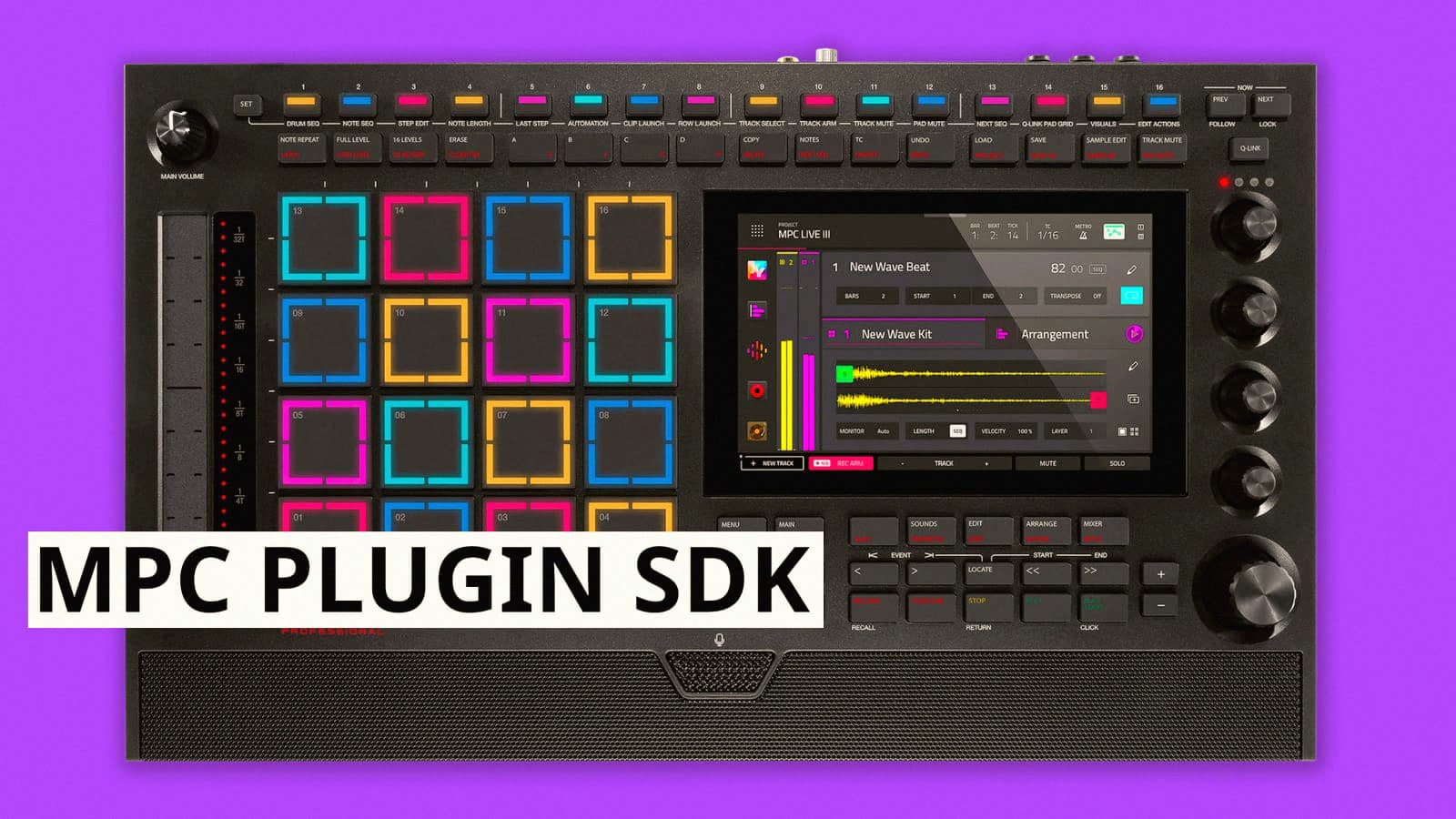
MPC OS 3.10.1, released November 12, 2026, ships the company's first official Plugin SDK: a free toolkit for building VST2-format instrument and effect plugins that run natively on standalone MPC hardware, from the MPC One up through the Key 37 and Force. Akai unveiled it at the Audio Developer Conference (ADC26), where InMusic's Pete Goodliffe and Jack O'Donnell walked through a platform that used to guard its internals and now hands them to anyone with an idea, per Sonic State's coverage of the session.
What does the SDK actually unlock?
The headline feature is the obvious one: outside developers can finally write instrument and FX plugins for MPC hardware instead of waiting on Akai's own roadmap. But the update does more plumbing than that. It removes the separate caps on audio tracks and plugin tracks that standalone MPC units have carried for years, and it ships a genuine developer panel: a Linux terminal, SSH access, raw system logs and live CPU and memory monitoring, the kind of access that used to require jailbreaking the box.
Akai paired the SDK launch with two plugins built on its own tools, an SP-1200 emulation chasing the crunch of the sampler that built early hip hop, and a channel strip modeled on the SSL SL 4000 console. Shipping its own plugins alongside the kit it gave everyone else is Akai's way of proving the SDK is real, not a gesture.
Why does the AI coding agent change who gets to build here?
The part that will actually move the needle for most producers isn't the SDK spec, it's what comes bundled with it. The official SDK builder includes an AI coding agent that writes the plugin's C++ from a plain-language description of what the user wants it to do. The project's own description on GitHub puts it plainly:
"You never have to read C++ if you do not want to."
That is the real shift. Plugin development for hardware DSP has always been a C++ gatekeeping exercise, the kind of skill that filtered out most bedroom producers before they even tried. An AI agent that turns a description into working plugin code doesn't just lower the barrier, it removes the main one.
What does this threaten for the usual plugin-licensing playbook?
Major hardware brands have mostly kept plugin ecosystems closed or tightly licensed, selling you their own DSP and taking a cut when third parties want in. Akai choosing to open MPC OS for free, and to back the existing Open MPC community project (227 free plugins and counting) rather than compete with it, breaks from that model. If a free, AI-assisted SDK is enough to get a real plugin ecosystem running on hardware that used to be sealed, it's a hard case for competitors still charging developers to play in their sandbox.
Whether that ecosystem turns into something lasting or stays a few hundred hobby plugins depends on whether Akai keeps the SDK maintained past the launch buzz. For now, the MPC just became a platform instead of an appliance.