What is Annie Mac actually warning about?
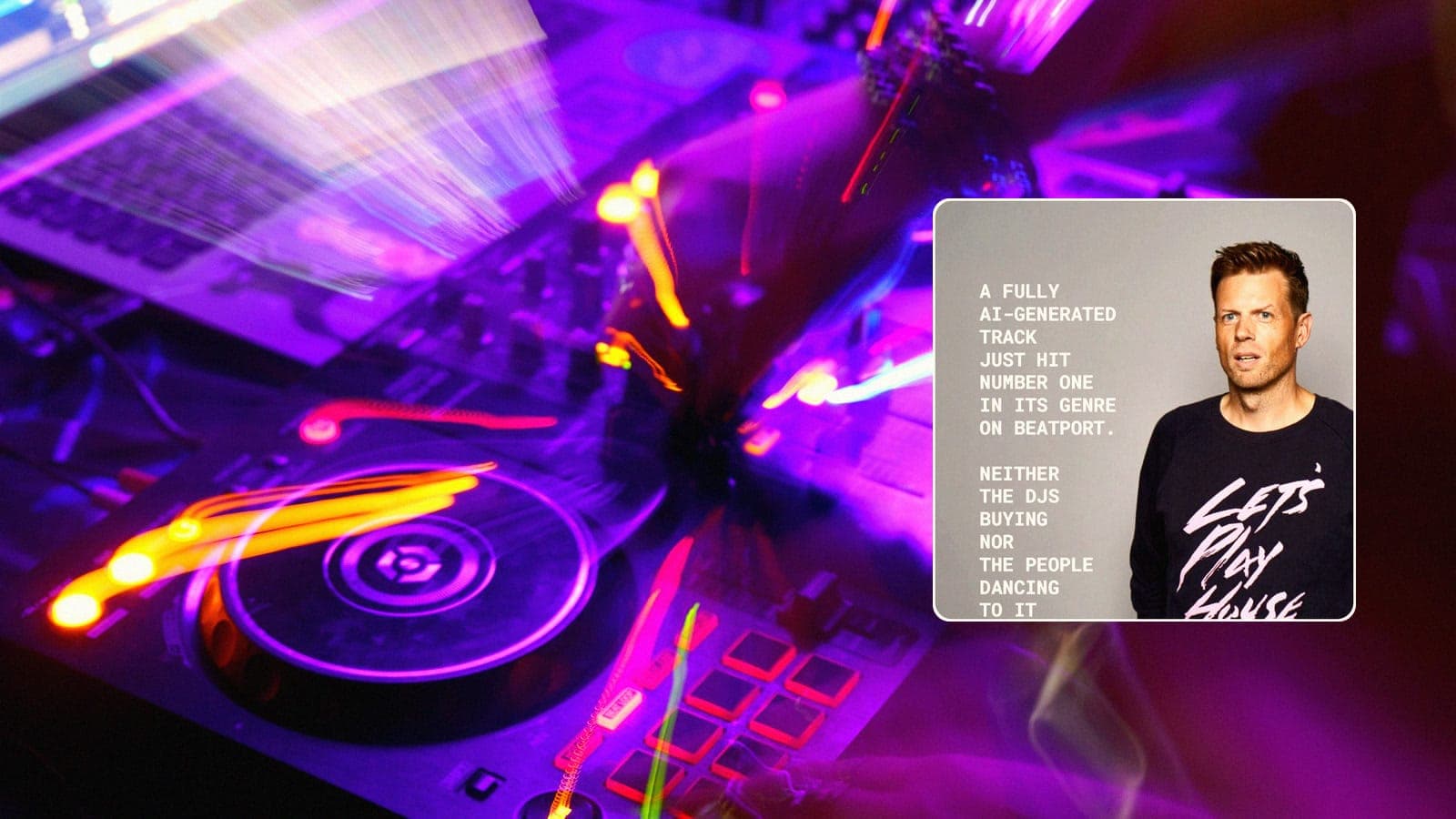
Annie Mac is no luddite, and that is what gives the warning its weight. The woman who ran BBC Radio 1's dance output for the better part of two decades, who built Before Midnight around the radical idea that a club night can end before the comedown, knows exactly how much skill and patience a good record takes. Her point is simpler and harder to dismiss: the friction was never a bug. It was the filter. When a track that once took months of late nights can be conjured in under a minute, the struggle that shaped a producer's taste, and earned the listener's attention, quietly disappears.
The cost, as she frames it, lands twice. On the maker, who never has to learn the craft that made the music worth making. And on everyone else, who now wades through an ocean of frictionless content where nothing had to be earned.
"It's never been easier to make music, but at what cost?"
Do the numbers back her up?
They do, with a twist. More than a third of all new uploads to Apple Music are now fully AI-generated, according to figures reported in April 2026, a flood large enough that Apple has since rolled out measures to keep music fair. And yet those same AI tracks account for under 0.5% of total listening time. The machines are making the music; people still aren't choosing it.
There is a catch buried in that gap. Research published in 2026 found listeners often rate AI tracks highly, until they are told the music is AI, at which point the verdict flips. The glut is real, the indifference is real, and the value of made by a human is suddenly very real too.
Why does this hit dance music hardest?
Because house and techno were built in bedrooms. The whole mythology of this scene, the kid with a borrowed sampler, the 4am studio grind, the white-label that took a year, rests on the premise that the barrier to entry was also the culture. Lower that barrier to zero and you do not just democratize the music. You remove the thing people were proving when they made it. Annie Mac is not mourning gatekeeping. She is asking what a track means when it costs nothing to make, and whether anyone will bother to listen when everyone can make one.