What did Ardour 9.8 actually add?
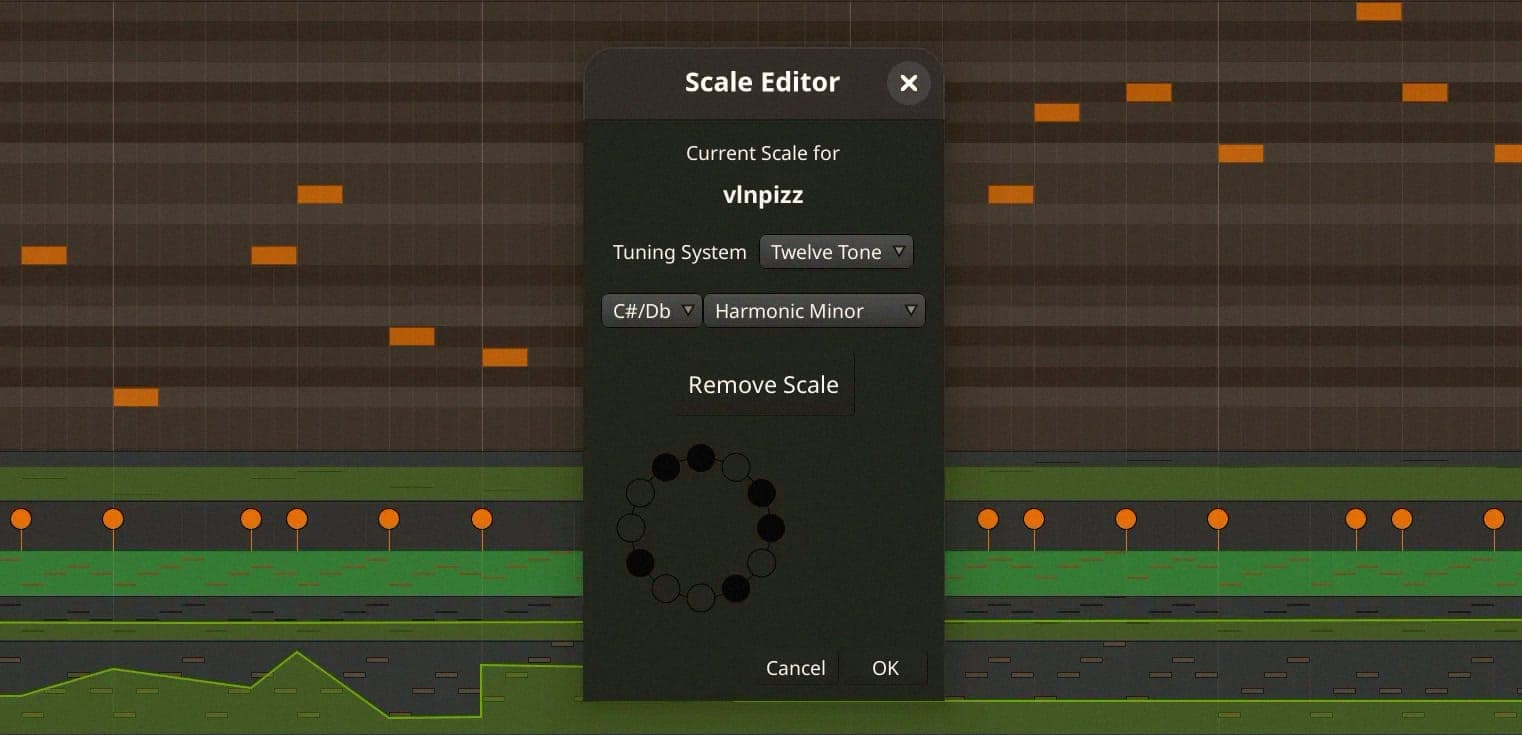
Ardour 9.8, out August 23, 2026, ships a Scale Editor and a Key Enforcement menu that sit on every MIDI track. Right-click a track header and you can set its key and scale, watch out-of-scale notes highlight in the piano roll, and choose whether Ardour lets you draw them at all. Three auto-adjust modes correct notes played on a MIDI keyboard back into the chosen scale in real time. The bigger shift is underneath: tuning now applies directly to scales rather than sitting in a separate menu, which is the plumbing microtonal work actually needs. Ardour's own changelog is candid that this is a first pass, with 12-tone equal temperament (12-TET) still the default and scales beyond it, on-timeline key changes, and loading Scala tuning files all listed as next steps.
The same update tightens the parts of a DAW nobody notices until they fail. Crash recovery now works mid-recording, capping data loss at roughly five seconds instead of losing a whole take, and partially written FLAC or BWF files get rebuilt into new files with their broadcast wave metadata intact. Clip recording gets a guaranteed 2-bar count-in, MIDI chord editing gains an arpeggiation option, and the hardware list grows to include Novation's Launchkey controllers, Arturia's DrumBrute and Ableton's own Push 2, all mappable without a third-party bridge.
Why does microtonal tuning matter to house and techno producers?
Most commercial software still treats 12-TET as the only option: bend a synth off the Western semitone grid in Ableton, Logic or Bitwig and you are usually reaching for a third-party tuning plug-in, not a built-in menu. That has real consequences for genres pulling from scales 12-TET was never built for. Afro house, organic house and the wider global-south electronic scene regularly draw on Yoruba, Arabic maqam and other traditions using intervals a standard piano roll cannot represent, and minimal and deep-tech producers chasing unusual timbres hit the same wall from a different direction. A DAW that puts scale and tuning logic in one place, for free, lowers the technical bar for exactly that kind of experimentation, even in this early, admittedly rough form.
Why does a free GPL project keep out-building the paid ones?
Ardour has never charged for its source code or its features, only for the convenience of pre-built binaries and support subscriptions that fund the work. The 9.8 changelog still carries a copyright line running back to 2008 under founder Paul Davis, and two decades of that model have produced a DAW serious enough for professional session recovery and now, unusually, curious enough to question 12-TET before its billion-dollar competitors do. It will not out-polish Ableton or Logic on workflow. But on the question of who gets to build music outside the Western tuning grid without paying for the privilege, GPL software just moved ahead.
"You get a lot of freedom in what you can and cannot do: you can forbid drawing new out-of-scale notes if you like." (Ardour 9.8 release notes)