Chart bodies rarely move fast. ARIA just did, and the reason is a Madonna cover nobody flagged as synthetic until it was already sitting at No.1.
What exactly did ARIA change?
From now on, a track has to be "substantially human made" to qualify for an ARIA chart. That means a human wrote the song and a human performed the lead vocal and the primary instruments. AI-assisted mastering, mixing and other production tools are still fine, ARIA isn't asking producers to unplug their plugins. What it won't tolerate anymore is a synthetic voice or an AI-generated performance carrying the record.
ARIA CEO Annabelle Herd framed it as a defence of the whole system charts are built on: "A chart that rewards unlicensed AI output would undercut the very basis of the recorded music we exist to represent."
How did one Madonna cover force the issue?
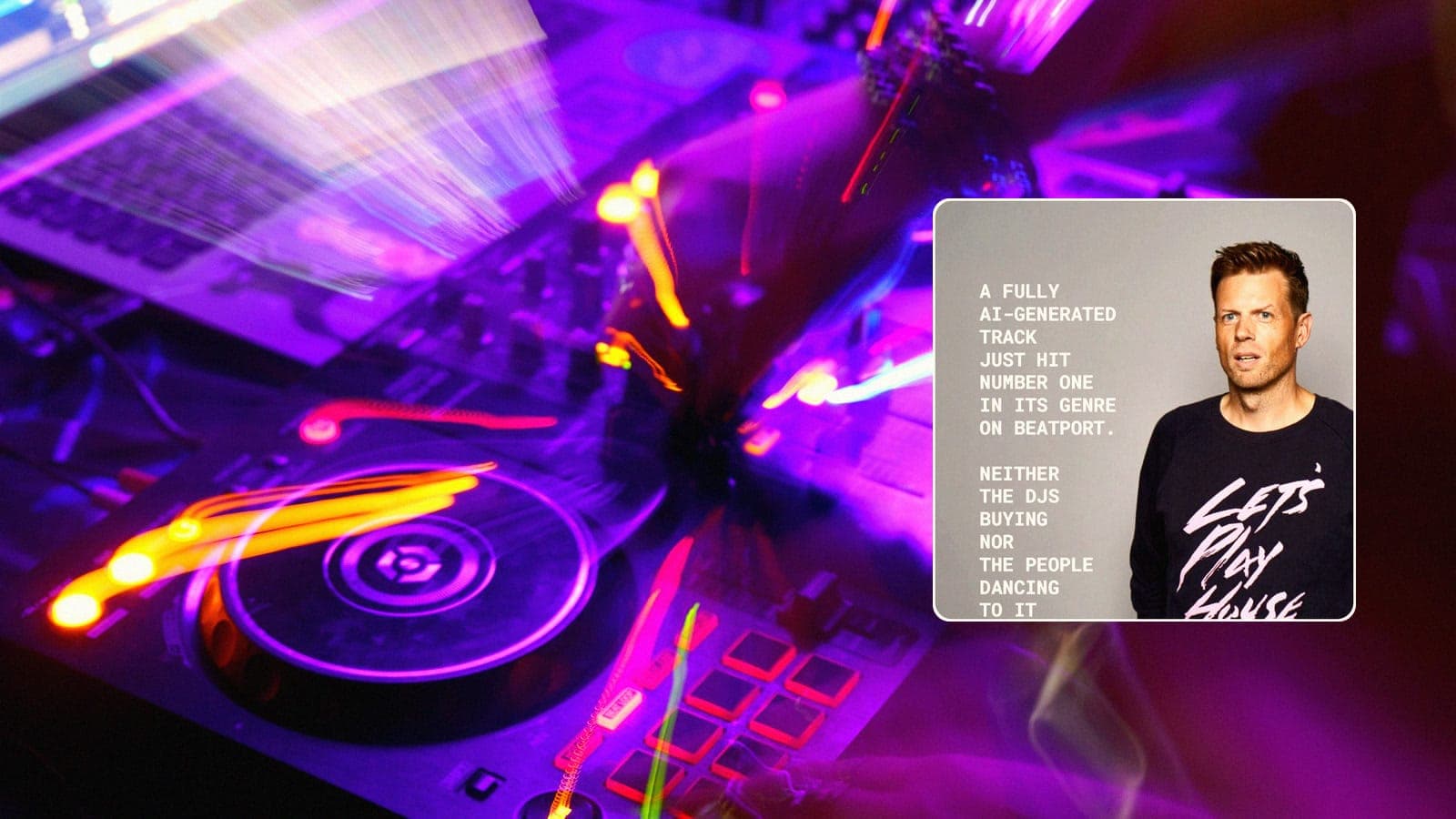
Brisbane DJ and producer Josh Fawaz released an AI-assisted cover of Madonna's "Like a Prayer" that quietly climbed to No.1 on the ARIA Dance Singles chart and No.2 on the overall chart, pulling in more than 48.5 million Spotify streams along the way. Nothing about the campaign flagged it as AI-made.
That changed after an ABC investigation and mounting community pressure. On July 17, 2026, Fawaz added AI vocal and drum credits to the track, by which point it was still topping Australian radio airplay charts. His defence was blunt: "I use AI as a tool. What I care about is providing my listeners with good music."
The reaction from working producers was not kind. Needs No Sleep, a producer who works with Defected and Toolroom, called Fawaz "the biggest issue in music right now." RMIT researcher Sam Whiting put the stakes in broader terms: if the voice carrying a No.1 record isn't human, "that brings in really worrying questions around what we value anymore in terms of human expression."
"A chart that rewards unlicensed AI output would undercut the very basis of the recorded music we exist to represent.", Annabelle Herd, ARIA CEO
Where does this leave dance producers who use AI as a tool?
This is where it gets uncomfortable for the wider dance floor, not just pop radio. A July 2026 study found that 38.5% of globally released music now involves AI somewhere in the process, and 23.2% is entirely AI-generated. House and techno producers already lean on AI for stem separation, mastering chains, drum-hit generation and vocal chops sampled from god knows where. ARIA's line, human songwriting plus human lead vocals and primary instruments, is drawn specifically to leave that workflow alone while catching records where the performance itself is synthetic.
The hard part is proving it. Nobody scrutinized Fawaz's vocal until an investigation forced the credits into the open, and a No.1 record had already banked its streams and its chart week by then. A rule is only as good as who's checking it, and ARIA hasn't said how it plans to audit submissions before they chart rather than after.