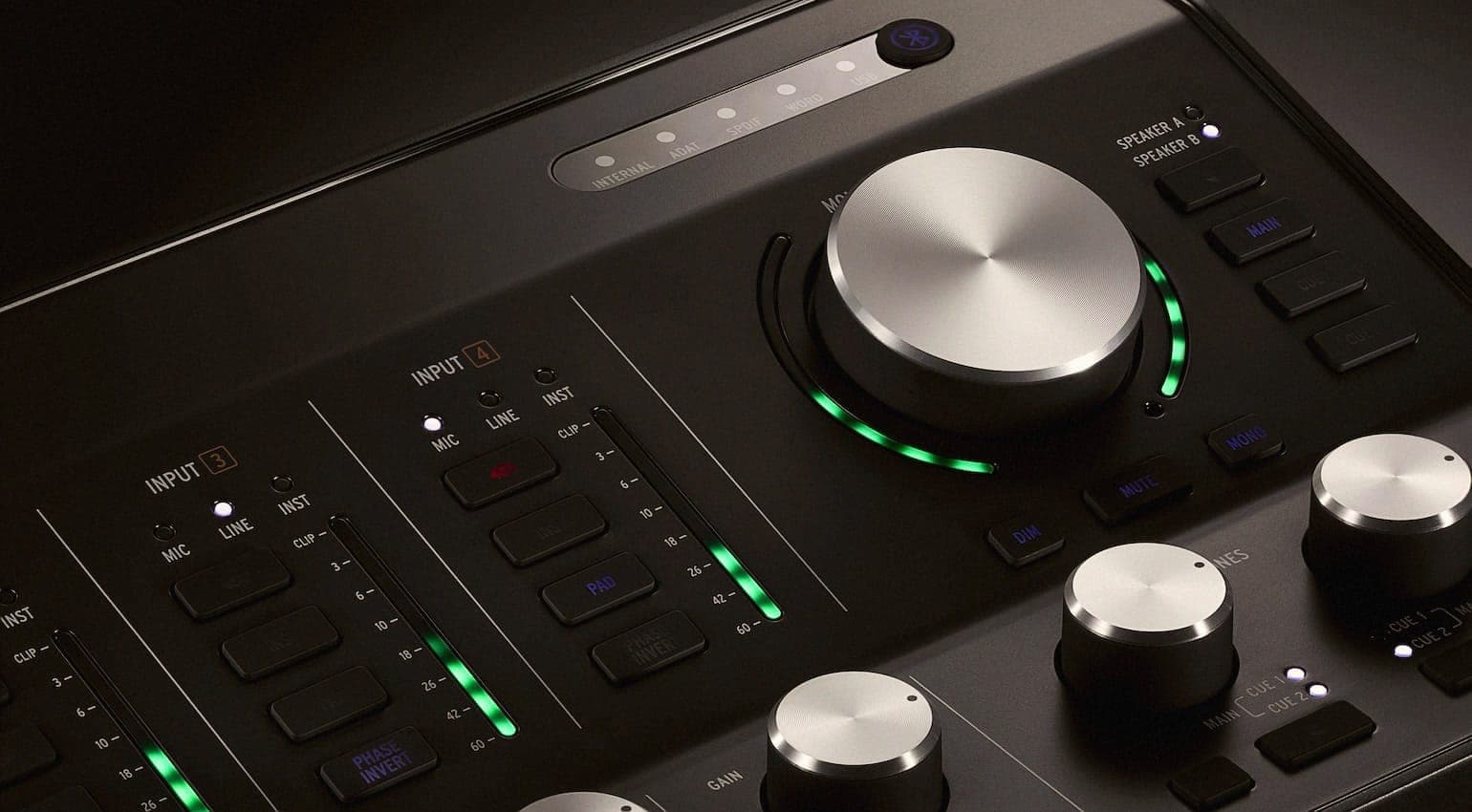
Arturia's original AudioFuse Studio launched in 2019 as a do-everything desktop interface: mic pres, phono input, ADAT, MIDI, the works. Six years on, the company isn't replacing it. It's rebuilding the part that mattered most and quietly upgrading the part nobody expected.
What actually changed inside the box?
The headline spec is the preamps. Arturia says the four DiscretePRO mic/instrument/line preamps in the Rev2 now hit a -129dBu equivalent input noise floor, 119dB of dynamic range, 78dB of gain and +18dBu of headroom, all improvements on the original unit's noise and distortion figures. For anyone tracking vocals or acoustic instruments through a home setup, that noise floor is the difference between a clean take and one that needs a noise gate rescuing it later.
Arturia also reworked the internal clocking and power regulation, which the company says improves word-clock sync and keeps the USB-C connection to a computer more stable, the kind of unglamorous fix that only shows up when a session doesn't glitch. Depending on the source, the interface is described as an "8x8" or an "18-in/20-out" unit at 24-bit/192kHz, a discrepancy that comes down to whether you're counting the core analog I/O or the full tally including ADAT, MIDI and digital returns.
Why does Bluetooth matter on a studio interface?
The original AudioFuse Studio's Bluetooth module was a nice-to-have for streaming reference tracks. The Rev2's new module supports AAC, aptX, aptX HD and aptX Low Latency, which matters because Low Latency codecs cut the delay that made wireless headphones or a Bluetooth speaker unusable for anything beyond casual listening. That's a real workflow addition for anyone who checks a mix on a wireless pair before committing to it, not just a spec-sheet bullet point.
Does the price actually make sense?
Here's where it gets messier. Thomann in the UK lists the Rev2 around £865 to £989, Sweetwater in the US has it at $999, and other retailers cite figures anywhere from $999 to $1,199 or €989 to €999. That's a wide enough spread that shoppers comparing regions will see genuinely different deals, not just currency conversion noise. Arturia hasn't clarified a single global MSRP, so buyers should check their local retailer before assuming they know the going rate.