Latency is the invisible tax every producer pays. Play a chord into a soft synth and there's a lag before you hear it back; big enough and it throws off timing, feel, the whole take. Audient says its new Horizon range gets that lag down to 0.99 milliseconds round-trip at 192kHz, which is close to the point where the delay stops being something a working engineer can feel at all.
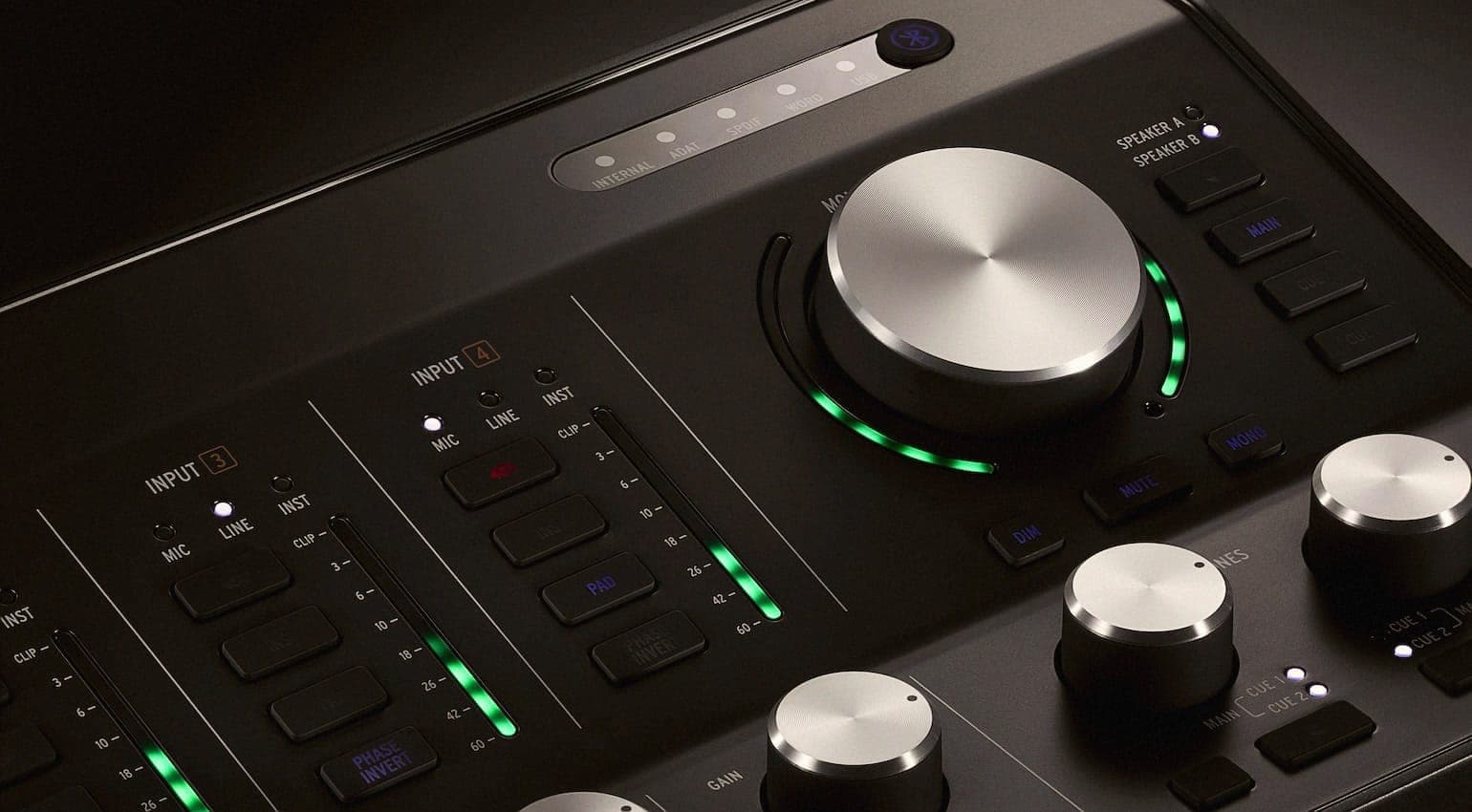
Horizon isn't one box, it's three, built to cover a studio from a single vocal booth to a full mastering suite. The Horizon 8P is the tracking interface: 24-in/32-out over Thunderbolt 3, with eight ORBIT variable-impedance Class-A preamps on board for shaping a signal as it goes to tape, not after. The Horizon 16 sits in the middle at 34-in/34-out for hybrid setups running outboard gear alongside the box. The Horizon 32 tops the range at 50-in/50-out, aimed squarely at mastering rooms where every extra bit of headroom and conversion accuracy matters.
Why does the daisy-chaining matter?
A single Horizon unit is already a serious channel count, but Audient built the range to link together, with support for up to 200x200 I/O when units are chained. That's the detail that speaks to a studio owner more than any spec sheet number: it means a facility can start with one unit and scale up as sessions demand more inputs, instead of ripping out an interface and replacing it wholesale. For a label running a shared studio, or a mastering house juggling multiple monitor controllers and outboard chains at once, that's the difference between a purchase that lasts three years and one that lasts a decade.
32-bit mastering-grade conversion across all three models means the ceiling on dynamic range and detail retrieval is set by the room and the source, not by the box doing the converting. Audient is backing the range with a three-year warranty, and says it represents five years of R&D, the kind of timeline that suggests this isn't a rebadge of an existing product line.
Sub-millisecond round-trip latency at 192kHz is the number that actually changes a session: it's the gap between hearing your take back in time and fighting the box to keep up.
Who is this actually for?
Not the DJ booth. Horizon is aimed at tracking rooms, hybrid studios running analog outboard through software, and mastering engineers who need conversion accuracy above almost anything else. But that's exactly the audience that keeps the house and techno pipeline running: the labels and studios where a rough mix becomes a finished master before it ever reaches a dancefloor. Interface latency and channel scalability rarely make headlines, but they're the plumbing behind every record that does.
Horizon goes on sale from 28 September 2026.