Most house and techno producers don't work in a treated room. They work in a bedroom, a boxroom, a corner of an apartment with a desk against the wrong wall. Low end piles up in corners, midrange smears off hard surfaces, and the mix that sounds correct on those speakers falls apart on a club system. Acoustic treatment fixes it properly, but foam, bass traps and a calibrated room take money and space most people don't have.
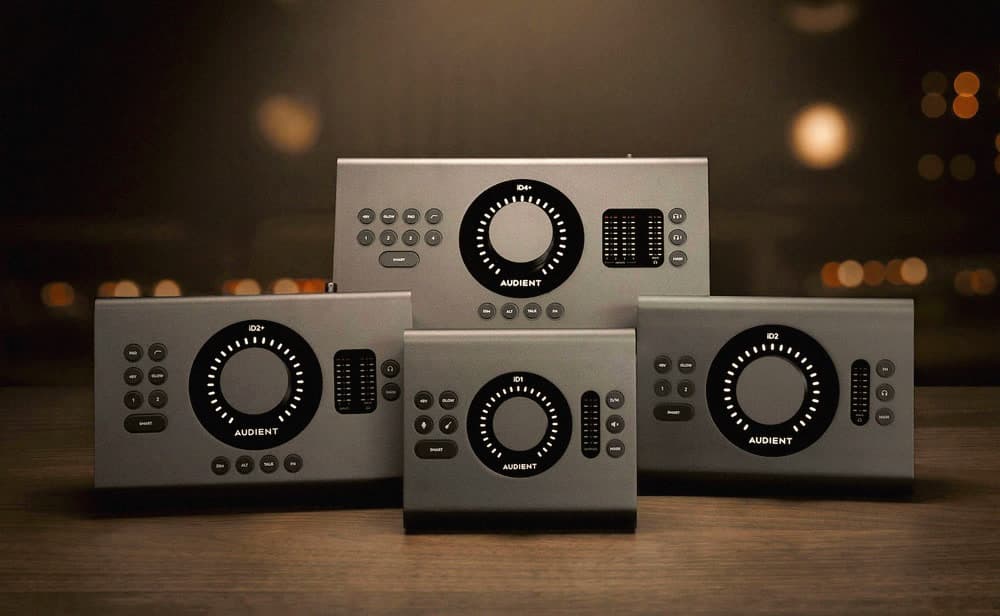
Audient is betting its new iD MK3 interface range on a cheaper fix sitting inside the box. Announced November 12, 2026, the range spans four models, iD1, iD2, iD2+ and iD4+, scaling from a simple 2-in/2-out unit up to a 20-in/24-out interface for bigger sessions. The headline feature across all four is RoomTune, a monitor-correction system that runs entirely on the interface's own onboard DSP chip rather than the host computer's processor.
Why does running on the interface's own chip matter?
Software room-correction plugins already exist, but they sit on your CPU alongside every synth, sample and effect already loaded in the session, competing for the same cycles. RoomTune measures your speakers and room with Audient's RM1 reference microphone, then corrects the stereo output in hardware, before it ever reaches your DAW's CPU meter. That means the correction runs for free, all the time, whether you're mixing a club-ready drum bus or just checking a reference track at 2am. Audient is also promising headphone correction and more RoomTune profiles as free future updates, so the hardware the room is built on should keep earning new capability.
The RM1 microphone needed to run the calibration comes bundled with the pricier iD2+ and iD4+; owners of the iD1 and iD2 buy it separately.
What else is actually new on the preamp side?
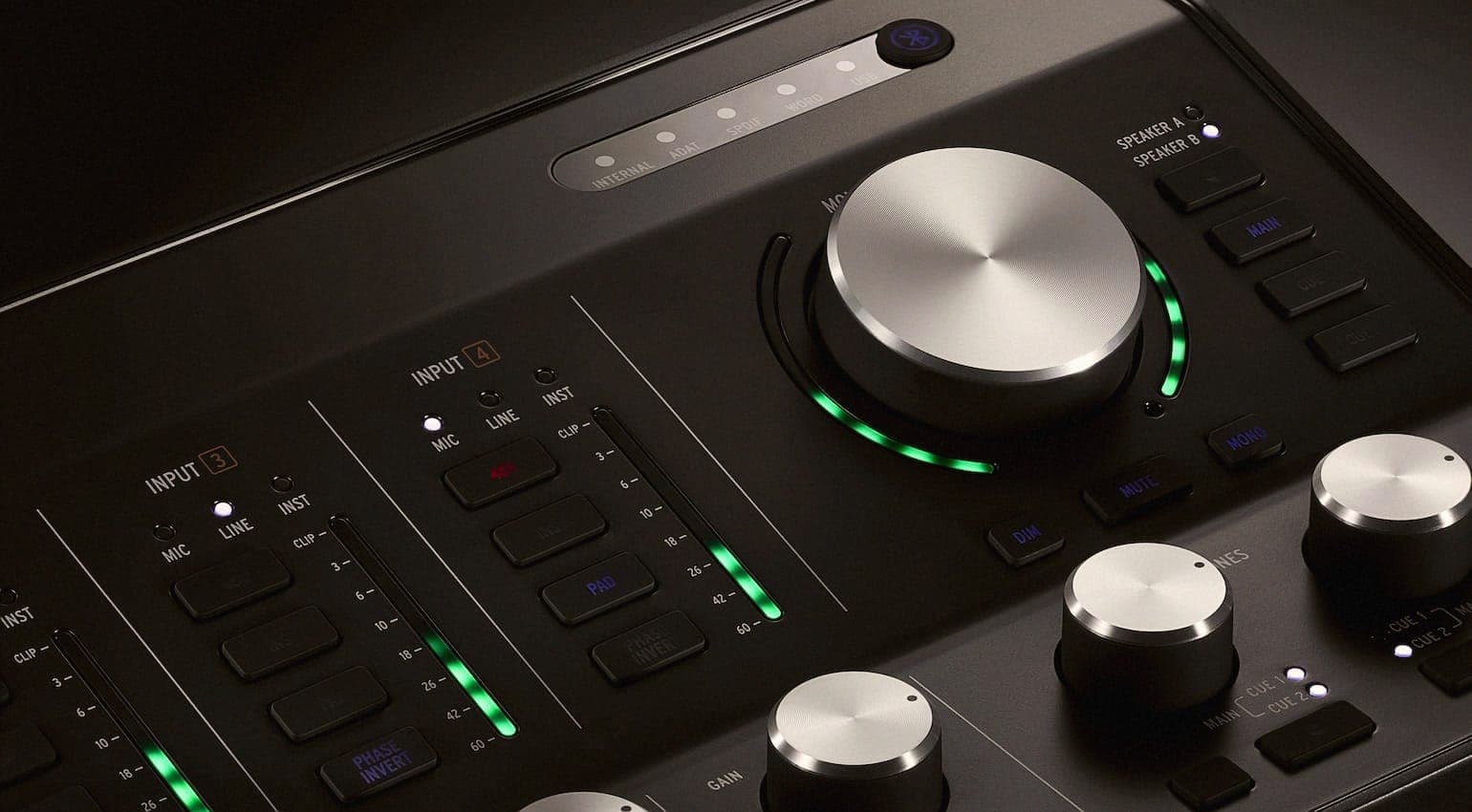
Underneath the room correction, the MK3 range carries forward Audient's Console mic preamps, the same discrete Class-A design pulled from the company's ASP8024-HE desk, now delivering 75dB of clean gain across every model. Conversion runs at 32-bit with 128dB of dynamic range, and an Analogue Tone Suite, four tools called Orbit, HMX, LIFT and GLOW, adds variable-impedance coloring, MOSFET-driven harmonic saturation and high-frequency lift, all processed with zero latency on the same onboard DSP that handles RoomTune. A Smartgain function sets input levels automatically, useful for anyone recording vocals or hardware synths solo without a second pair of hands on the gain knob. Every model runs on USB-C bus power alone, no wall adapter required. The iD2, iD2+ and iD4+ are available immediately through Audient's dealer network; the entry-level iD1 ships in early 2027.
"With the next-gen iD range, we've built a range around four things," said Audient CPO Andrew Allen, per the company's announcement.
Why it matters
Most house and techno production now happens outside professional studios, in bedrooms and apartments where real acoustic treatment is impossible. A room-correction system that costs nothing in CPU overhead removes one of the biggest excuses for a mix that doesn't translate, without asking a producer to rebuild their room or their rig.
What we think
Room correction baked into cheap hardware is overdue, and doing it on a dedicated chip instead of burning CPU is the right call for anyone running a laptop loaded with soft synths. The real test will be how RoomTune actually sounds against a treated room with a trained ear behind it, not just the spec sheet, but putting serious room correction inside an interface this affordable is the direction home-studio gear should be heading.