What does the Ignite actually do?
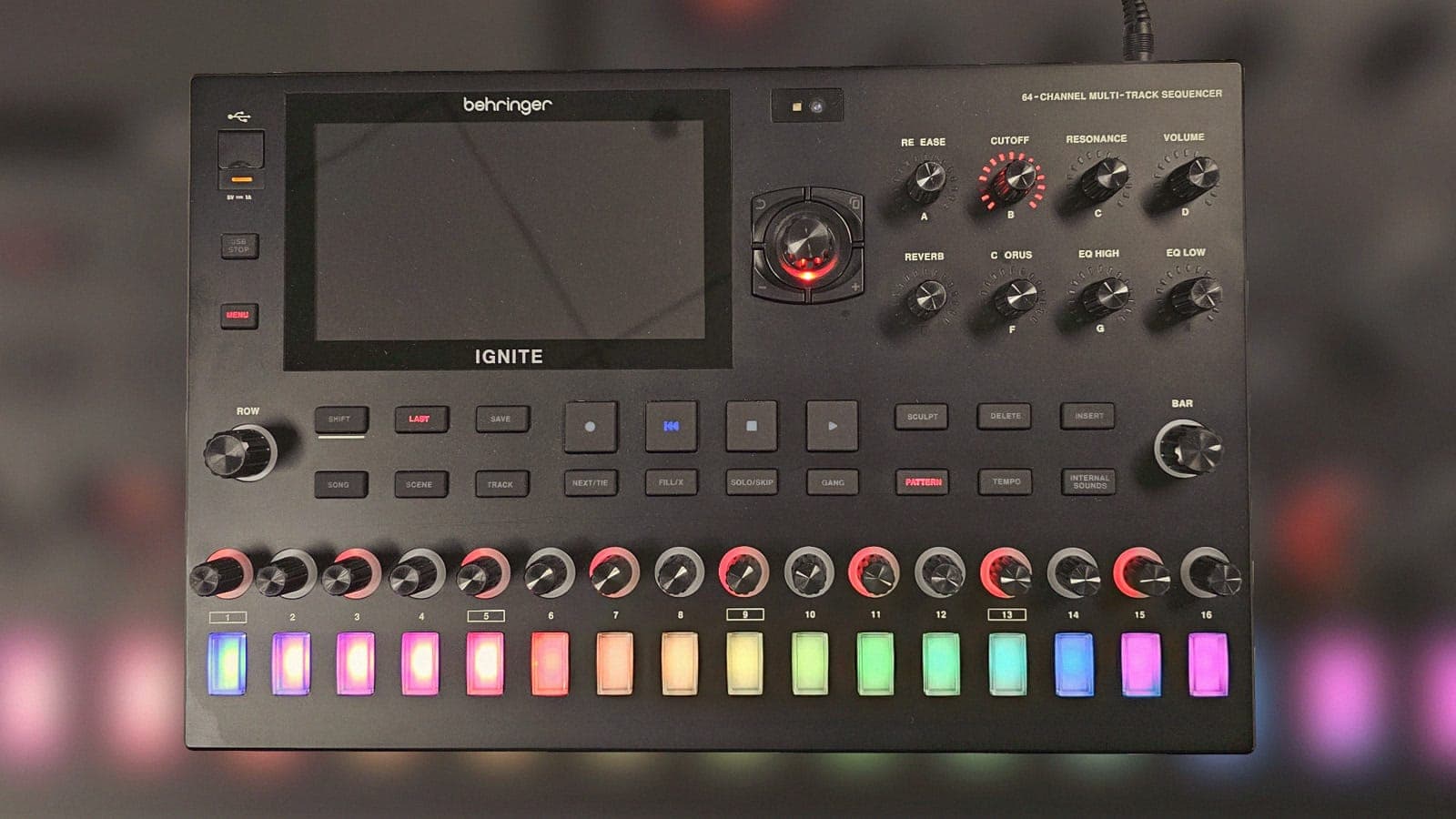
The Behringer Ignite is a 64-channel hardware sequencer built around a song, scene, track and pattern structure. Patterns stretch up to 16 bars of 16 steps, scenes run as long as 200 bars, and the clock holds 96 PPQN resolution, enough headroom for complex polyrhythms or long evolving arrangements. The control surface is built for hands-on work: a large touchscreen and a multi-function joywheel sit next to eight assignable encoders with LED rings, plus 16 backlit sequencer encoders with RGB buttons styled after Behringer's own TR-8S. Real-time recording, undo, fill, solo and skip, gang and sculpt functions cover the kind of live reshaping techno and house producers actually reach for on stage, and ten user-definable scales plus transpose control keep melodic work in key. A built-in General MIDI sound engine means the Ignite can make noise on its own, and the I/O list is generous: five 5-pin DIN MIDI ports, USB MIDI and USB host, eight calibrated CV outputs and eight gate outputs, sync in and out, and WiFi.
Then there's the gesture camera. Behringer is building an AI camera into the Ignite for touchless, hands-free control, the kind of feature synth brands usually save for flagship showpieces, not a sequencer aimed at a mass market.
Why is a clone company suddenly open-sourcing hardware?
Behringer built its reputation, and its lawsuits, cloning other companies' circuits: the Minimoog, the TB-303, the Juno, the SP-1200. The Ignite flips that script. Its firmware engine is open-source, published through a public MusicTribeOpenSource GitHub repository covering the application, the audio engine and the hardware protocol, so anyone with the skill can write custom firmware and share it instead of waiting on Behringer's own update cycle.
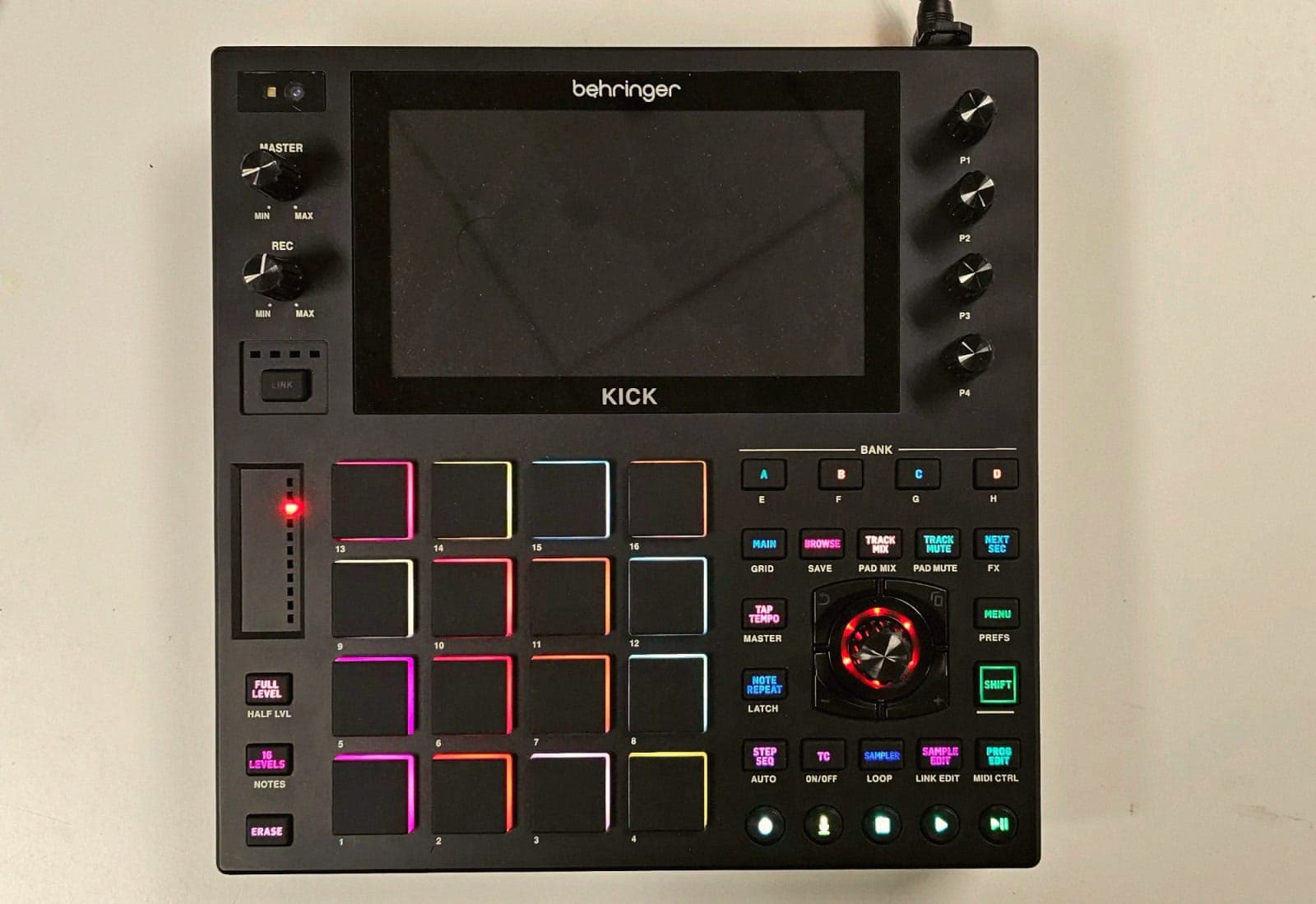
It's not a one-off. Per Decoded Magazine, the Ignite is the second product in a deliberate open-hardware push that started with Kick, a roughly 150 dollar sampler that also carries an AI gesture camera, and continues with a promised 300 to 400 dollar open DJ controller.
We build the hardware, you build the software.
That's Behringer's own framing of the strategy, leaning on AI-assisted coding, what Decoded calls vibecoding, to let users describe a feature in plain English and generate the code themselves instead of waiting on Behringer's engineering backlog.
Is the open firmware actually usable yet?
Not quite. As of the announcement, the GitHub repository for the Ignite carries no buildable firmware release: Behringer has shared the framework, not a finished product you can flash today. That gap matters. An open sequencer is only as good as the community that builds for it, and a company famous for shipping fast and iterating later is now asking users to trust an unfinished software ecosystem on a device meant to anchor a live rig. Price and release date remain unannounced.