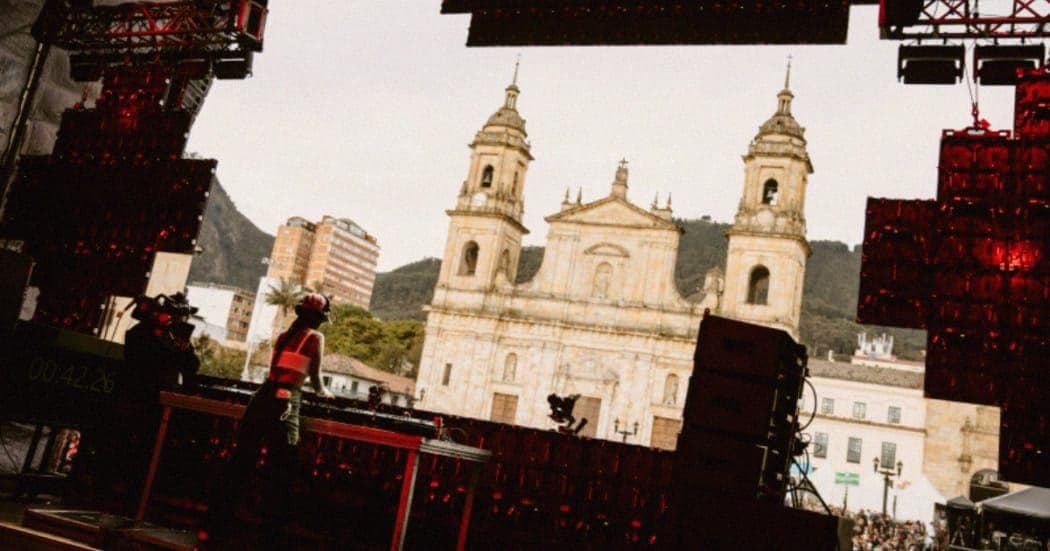
Plaza de Bolívar is the most symbolically loaded square in Colombia: the seat of the presidential palace, the cathedral and the Capitolio Nacional, the site of protests, inaugurations and national mourning. On July 25, it hosts a rave, and this time City Hall is the one throwing it.
What actually changed for Monumentum in 2026?
Monumentum: Distrito Rave started as an independent festival. For its fifth edition, Bogotá's Mayor's Office and the Fundación Gilberto Alzate Avendaño (FUGA), through the Bronx Distrito Creativo Presenta strategy, have folded it into city government programming outright. That is a different thing from a permit or a one-off grant: FUGA's own project approval frames Monumentum going forward as a piece of public policy aimed at strengthening the local electronic music industry, alongside the entrepreneurship and creative-economy work FUGA already runs out of the old Bronx district. Strategic partner Páramo Presenta, plus Bogotá clubs Gate Club, Kaputt Club, Octava, Radio Berlín and VideoClub, the Cámara de Comercio de Bogotá and the city's DJ cluster within Asobares are all folded into the same structure.
Who's playing, and why does the lineup matter?
Keith Barrera headlines as the first Colombian DJ booked through the European agency TRIVIAL Bookings, Pao Calderón brings a multiple-time Best DJ Colombia trophy cabinet, and New York-based DIOSSA arrives with credits at HÖR Berlin and ADE. Under them: Bluekim B2B Kamra, Virginia Valley B2B Camille Spectrae, Linda Lenor, Dankz and Saradélica. The rest of the bill was built in public: a DJ talent search pulled more than 140 applications down to 24 semifinalists competing in live broadcasts, with a finalists' showcase on July 23 and the eventual winner opening the main event on July 25.
Why does a government-backed rave in the main square matter?
Electronic music in Latin America has grown up mostly despite institutions, not because of them, chasing permits, fighting noise complaints, moving between warehouses when a club gets shut down. A capital city formally naming a rave as cultural policy, in its most guarded civic space, with security paid for by the Women's Secretary and on-site medical and harm-reduction services rather than by a private promoter's insurance, is a different kind of precedent for the region. It does not erase the informal scene that built this culture in Bogotá; it puts city money and a stage in the middle of the capital behind it instead of against it.
Why it matters
A regional government treating a rave as infrastructure, not a nuisance, gives promoters and club operators elsewhere in Latin America a concrete precedent to point to when they lobby their own city halls for the same treatment.
What we think
Credit where it's due: pairing an open DJ talent search with real safety and harm-reduction budgeting is the kind of institutional support this scene almost never gets, anywhere. The test now is whether Bogotá keeps funding it past a good news cycle, or whether Monumentum quietly reverts to a one-off once the cameras move on.