What makes Brussels' underground so good right now?
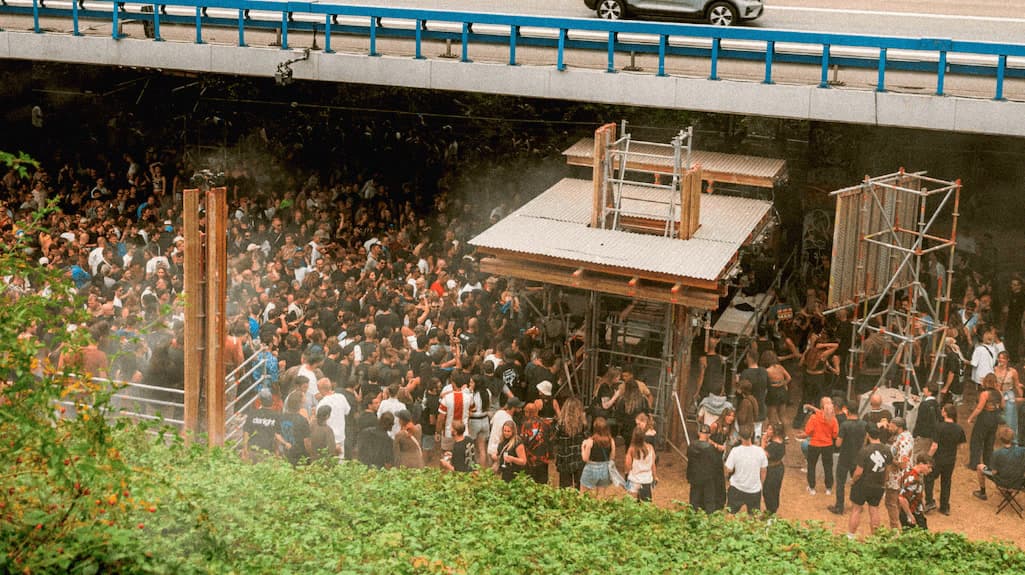
Resident Advisor's Bella Aquilina spent time across four Brussels spaces for a feature published October 14: Fuse, the thirty-year-old techno institution on Rue Blaes; Horst, the arts-and-music festival that has spent since 2022 rebuilding a derelict telecom-equipment depot at Asiat Park into a nine-stage site pulling around 12,000 people a day; Le Lac; and Sundaze. The throughline isn't a shared sound, it's a shared method: small collectives running parties out of unusual or temporary spaces, building a scene that answers to nobody's booking algorithm.
That's exactly what's made Brussels, long overshadowed by Berlin and Amsterdam on the European club map, into somewhere promoters and DJs now talk about with real urgency. Fuse alone has spent three decades turning into the kind of club foreign partygoers tick off their map like a museum without losing its floor, going as far as banning phones from the dancefloor in February 2026 to protect the anonymity that made it work in the first place.
Why are so many venues closing at the same time?
Over the past year, Brussels has lost or confirmed the loss of several of the rooms that built this reputation. Spirito closed after 16 years. The bar Bonnefooi shut. The club La Cabane in Boitsfort turned off its lights. The temporary venue RESET closed. And Le Lac, one of the four spaces in RA's own feature, was forced to shut after its operating permit was denied, a single neighbor's complaint enough to bar it from running any event louder than 85 decibels.
Nathan Pujadas, coordinator of the advocacy group Brussels By Night, lays the causes out bluntly.
"Exploding costs, increasingly difficult cohabitation with residents, political pressure and punitive measures, a total absence of strategic vision, audiences with less purchasing power, clubs are suffocating."
None of it is happening in a political vacuum only in the figurative sense: the Brussels-Capital Region has gone without a sitting government for around 550 days, stalling policy across culture, public health, urban planning and the nighttime economy all at once.
Does the city's new noise law actually fix this?
Brussels' Parliament did respond. In June 2026 it passed an "agent of change" framework: whoever causes a conflict is now responsible for adapting to it, meaning new residents moving in next to an established club must take their own noise-mitigation measures, not the other way around. Any new residential or hotel project within 20 meters of an existing venue has to warn buyers about the noise before they move in. "The principle is simple," said Vooruit's Pascal Smet, who tabled the bill with MR's Anne-Charlotte d'Ursel. "Whoever causes the change takes responsibility."
It's real progress, backed across the political spectrum, from PS to Les Engagés to CD&V. But the framework explicitly doesn't apply to temporary establishments or outdoor events like the Midi Fair, which is precisely the format Le Lac, RESET and most of the DIY scene RA just celebrated actually run on. Brussels club culture earned recognition as regional intangible cultural heritage back in 2023; the venues doing the most interesting work right now are the ones that protection still doesn't reach.