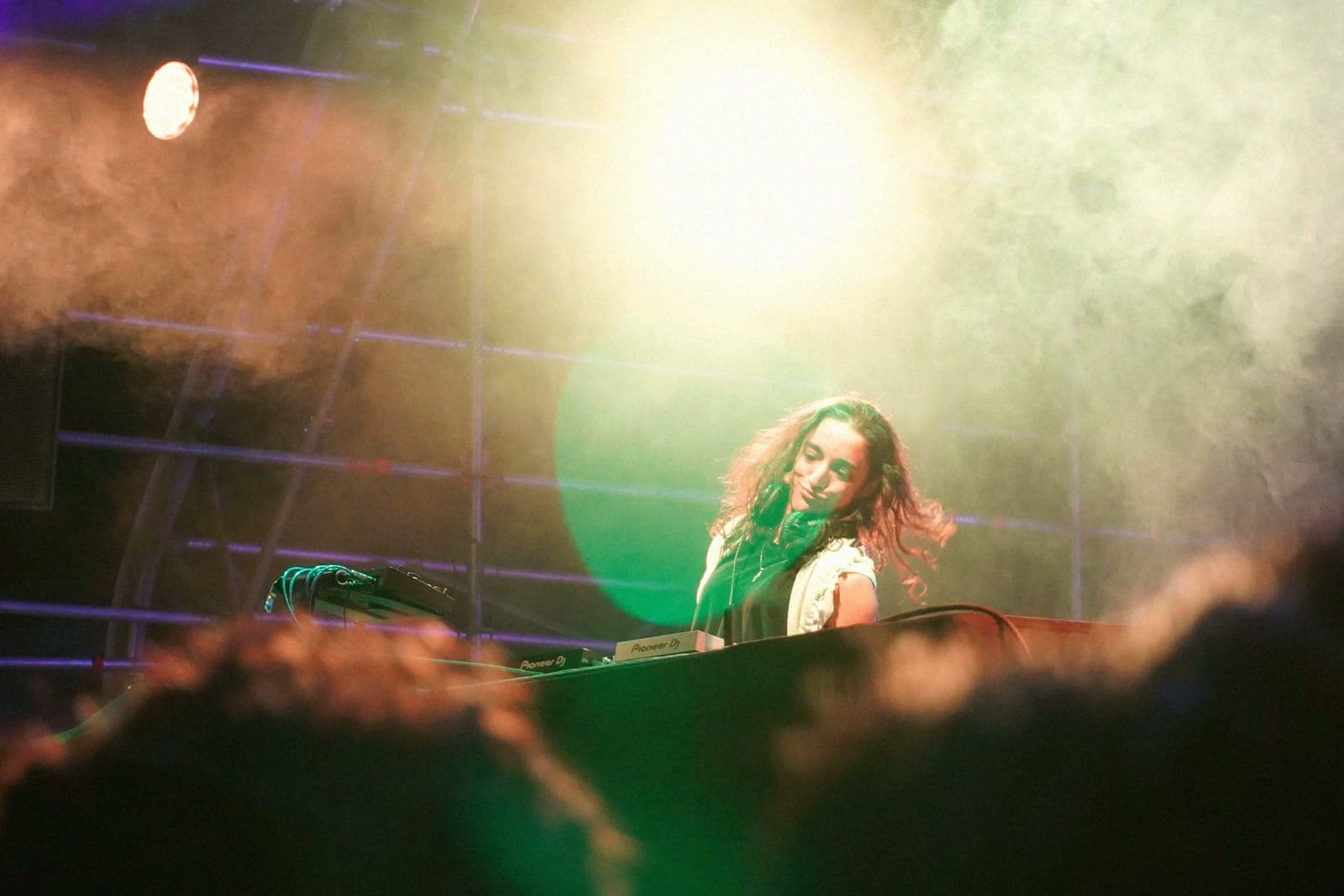
Dahab doesn't have the Gulf's sponsorship budgets or the five-star residencies of a Riyadh or a Dubai weekender. What it has is a lagoon, a mountain range, and eight editions of a festival that built its own audience from the ground up: Sama' Abdulhadi now headlines it.
Chill O'Posite's 2026 run, subtitled "Dahab's Essence," lands October 8 to 10 at the Dahab Lagoon Club & Resort, a stretch of South Sinai coastline where the Red Sea meets desert mountains. Four stages are set across beach and mountain ground, with wellness installations and a Festival Market of local vendors woven between them, so the festival reads as a destination weekend as much as a lineup.
Who else is on the bill?
Abdulhadi tops a lineup built mostly from the region: 47 Soul, AIWAA, Aly Fathalla, Blacky, Jad Halal, Nico Morano, Tia and Tony L Issac, with B2B sets scheduled across all three days. It's a different booking logic than the major Gulf festivals chasing global headliners at any cost: Chill O'Posite leans on acts who already play Cairo, Amman and Beirut, and have built followings there.
A Red Sea weekend of techno and house built by the same South Sinai scene that's been running it since 2014.
Why does a Palestinian techno DJ headlining Egypt's Red Sea scene matter?
Abdulhadi became globally known off her 2018 Boiler Room set inside Jordan's Petra ruins, a moment that turned her into one of the most recognisable names in Middle Eastern techno and, soon after, one of its most scrutinized: she was arrested and briefly jailed in Ramallah in late 2020 over a separate gig, a case that drew international attention to the legal risk dance music faces in the region. Having her anchor a Sinai beach festival puts a regional A-lister on a stage that usually survives on local draw alone, and signals that South Sinai's scene can book beyond its own circuit without chasing Gulf money to do it.
Why it matters
Most of the global conversation about electronic music in the Middle East points at the Gulf's petrodollar festival boom. Chill O'Posite is the other model: a community-built event, running since 2014 on tourism and ticket revenue rather than sovereign-wealth sponsorship, now strong enough to land one of the region's biggest names.
What we think
This is the kind of booking that matters more than its ticket count suggests. A festival that survives eight editions on a lagoon in Sinai, without a state oil fund behind it, and still pulls Sama' Abdulhadi, is proof the region's scene doesn't need Gulf money to grow a real stage.