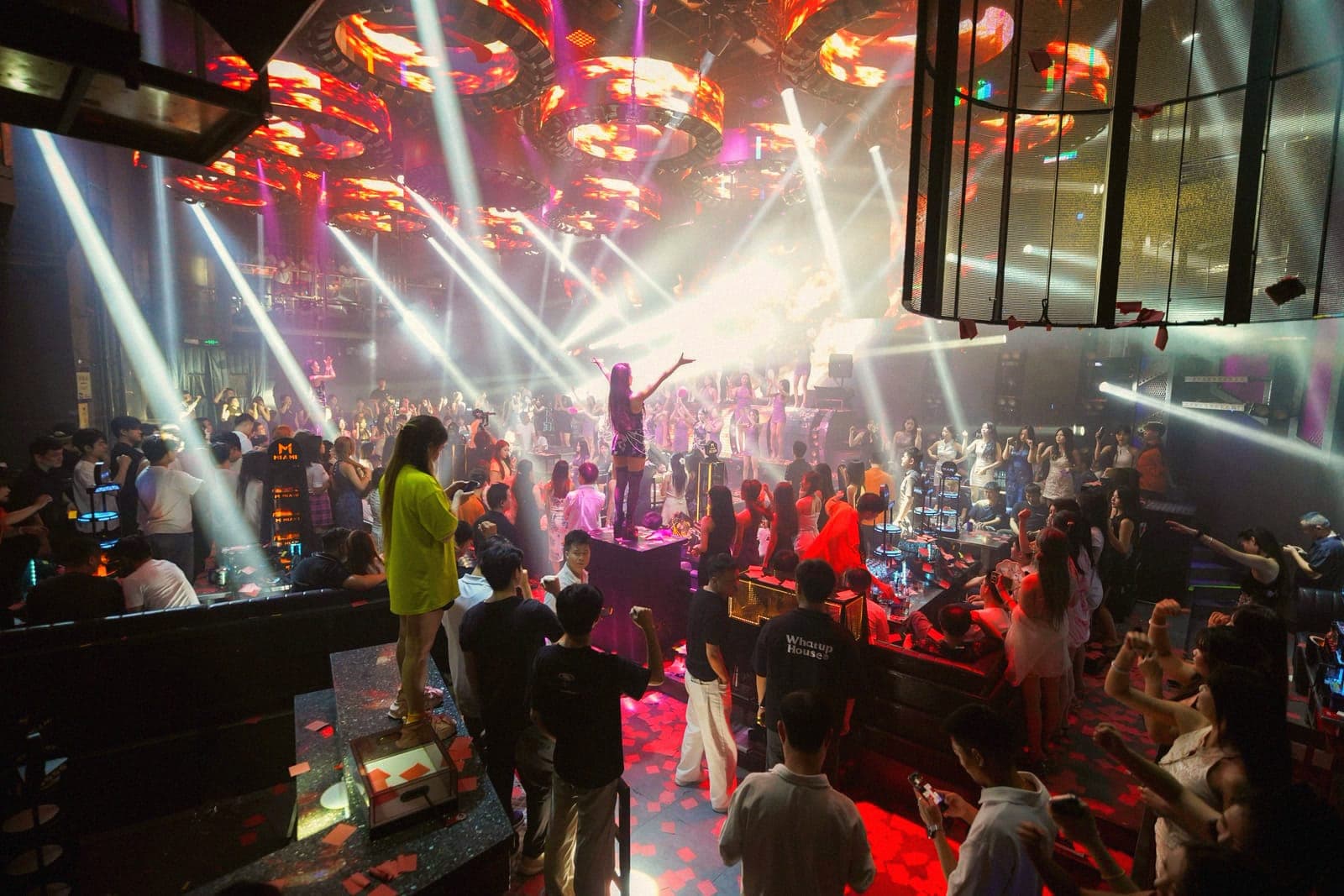
For decades the Berlin club model ran on a simple trade: keep the door cheap or free, make the real money at the bar. That model is gone. The Clubcommission's Club Culture Berlin 2026 study, published in partnership with the city's Senate Department for Economic Affairs and reported by DJ Mag on August 12, found that only 61% of Berlin clubs are currently breaking even, down from 79% in 2017.
The cause isn't fewer punters. It's what happens once they're inside.
Why did the money move from the bar to the door?
In 2017, food and drink accounted for 60% of a typical Berlin club's revenue, with admission fees making up just 21%. By 2026 those numbers have essentially flipped: admission now drives 59% of revenue, drink sales just 20%. Alcohol consumption on the floor is down 73%, even though 67% of clubs raised drink prices and 47% raised cover charges to compensate. People are still coming. They're drinking a fraction of what they used to, and paying more at the door to make up for it.
That's not a cyclical dip a good summer fixes. It's a structural rewrite of the unit economics that built Berlin's reputation as an accessible, low-barrier techno capital. A club that once broke even on a €10 door and a full bar tab now needs that door charge to cover payroll, rent and power on its own, because the bar barely moves.
"Demand is high, the dance floors are packed, and yet quite a few businesses are under financial pressure," said Michael Biel, State Secretary for Economic Affairs in Berlin's Senate Department for Economics, Energy and Public Enterprises.
Who absorbs the squeeze now?
The study's size breakdown shows where the pain concentrates. 45% of Berlin clubs now pull in less than €100,000 a year, up from 16% in 2017, while only 7% clear €2 million. The middle is thinning: small and mid-size rooms, the ones that can't spread rising staffing and operating costs across a big-room budget, are the ones tipping from break-even into loss.
For the clubs, that means higher door prices are no longer a temporary hike, they're the new floor, because there's no bar margin left to retreat to if a slow month hits. For punters, the accessible-entry, cheap-drinks version of Berlin nightlife that drew people to the city in the first place is quietly disappearing, replaced by a model that looks more like door-driven scenes elsewhere in Europe. For the city, it's a warning sign for a cultural export it has spent years branding as core to Berlin's identity: the numbers say the floors are as full as ever, but the businesses underneath them are not.
What's actually driving the cost side?
The Clubcommission study points to rising staffing and general operating costs as the other half of the equation, not just falling bar revenue. Security, technical staff and utilities have all gotten more expensive since 2017, and none of that eases even when the room is sold out. Combined with a dancefloor that drinks less, it leaves the door charge as the only lever clubs have left to pull.