Why put a wavetable engine inside a kick synth?
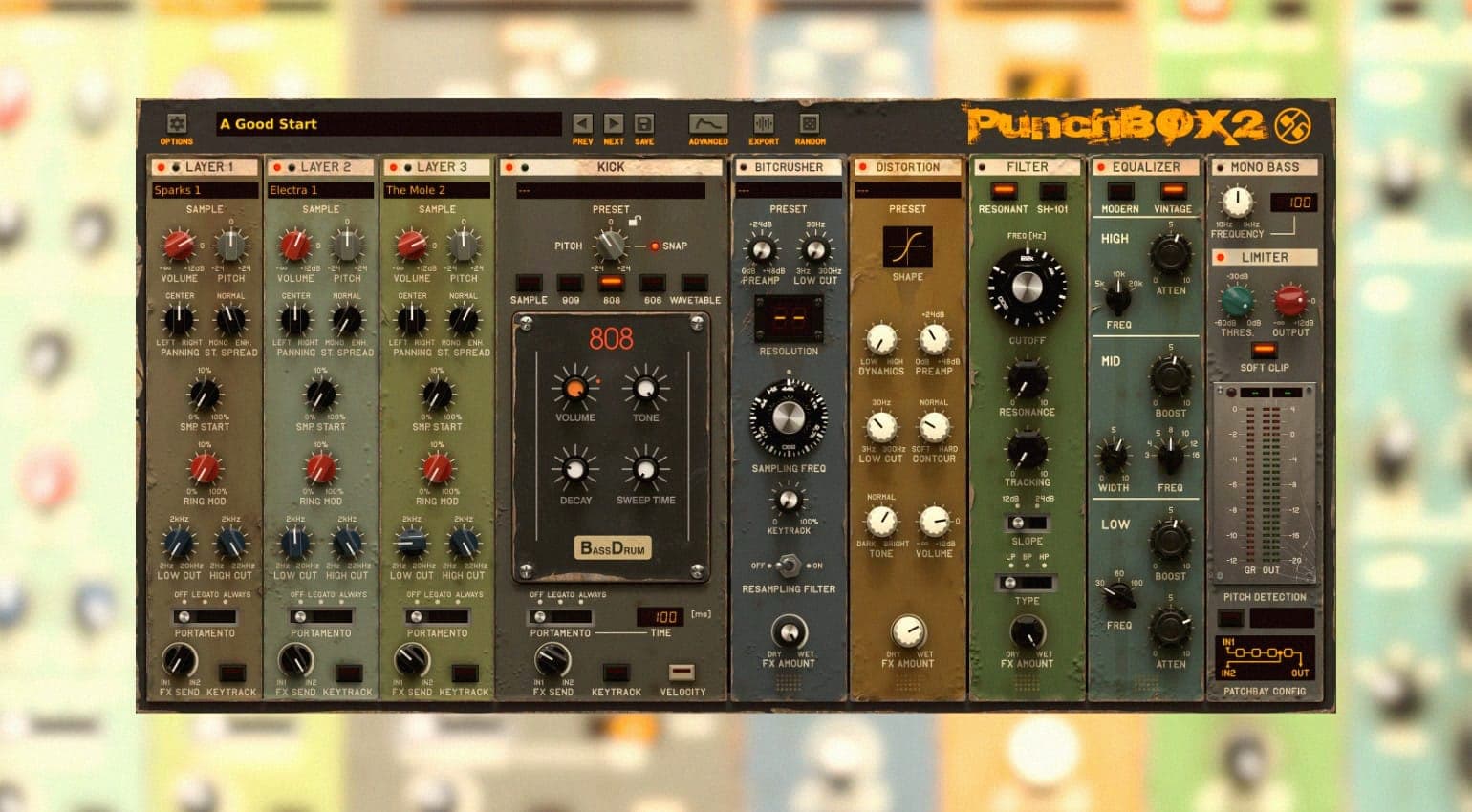
A kick is one hit, but the shape of that hit is where house and techno records live or die. d16 Group built PunchBox around a central kick generator, and version 2 gives that generator a fifth way to make sound: a Wavetable mode alongside Sample, 909, 808 and 606. Instead of only triggering a sample or an analog-style model, you can now scan a wavetable and shape the source with position, phase, level and filtering, then modulate those to get a kick that moves rather than sits still.
A static kick is a loop. A kick that evolves under modulation is a hook.
That is the real pitch here. The 909, 808 and 606 modes cover the classics you already reach for. Wavetable is the part that lets you design a body and a click that do not exist in any sample pack.
What does the full four-layer architecture give you?
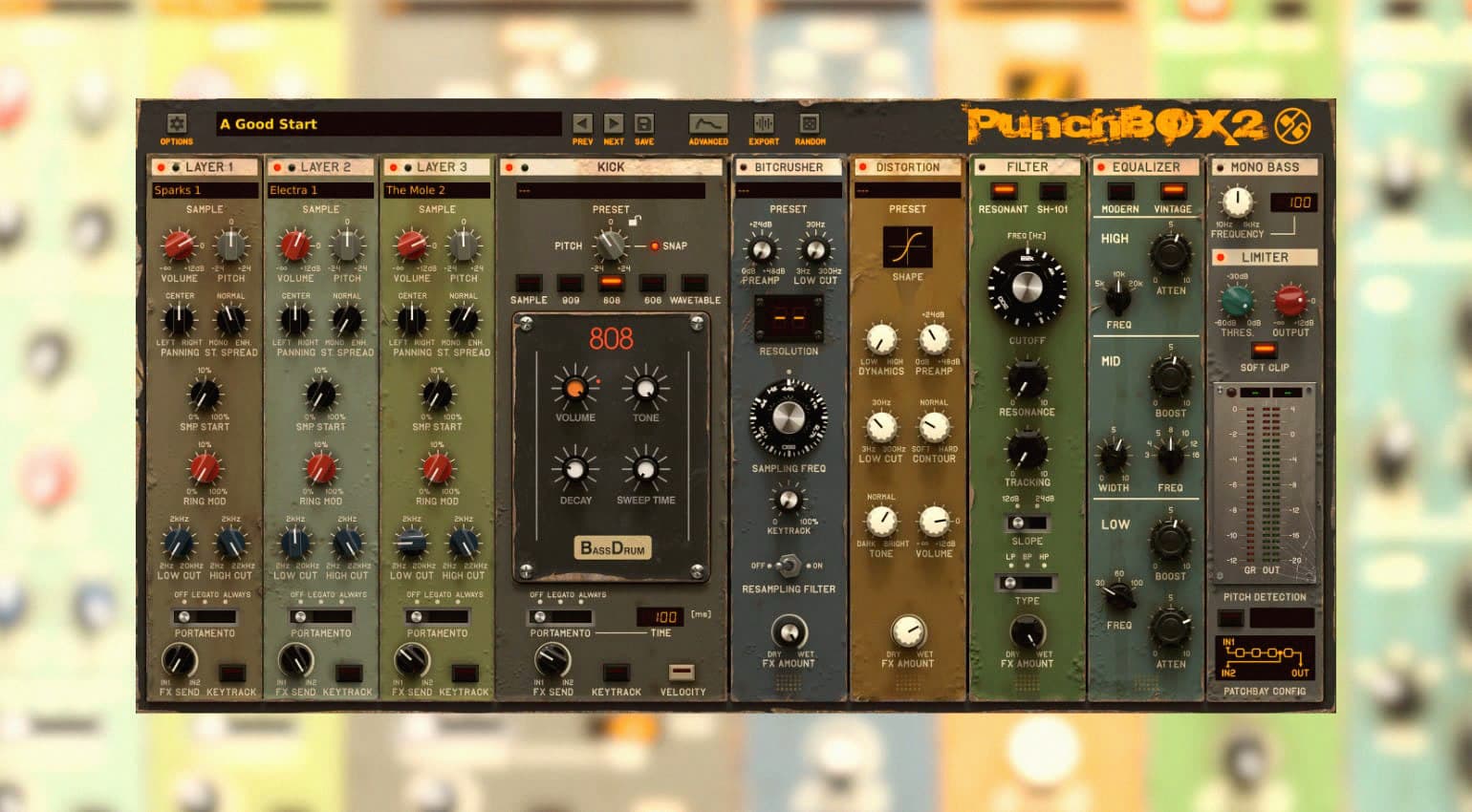
PunchBox 2 stacks the central kick generator with three universal sample-based layers, so a single patch can be a hybrid: an analog-model body, a wavetable sub, a sampled click, a bit of noise for air. Everything feeds an effects rack with Bitcrusher, Distortion, Filter, Equalizer, Mono Bass, Limiter and Soft Clip, and a Patchbay Config system gives 10 routing topologies for that rack, so the order the effects hit the signal is yours to change. An Advanced Editor adds real-time waveform preview and multi-stage envelopes for tighter transient work.
The library is deep for a single-purpose tool: 1,506 samples, 1,120 master presets, 243 kick presets, 66 wavetables and dedicated preset banks for the effects. It ships for macOS and Windows in VST2, VST3, AU and AAX.
Is it worth paying for over free 909 and 808 tools?
The intro price is 79 euros until 26 July 2026, then it moves to 99 euros. Version 1 owners upgrade for 25 euros. That is the argument every producer will have: free 909 and 808 emulations are everywhere, so the case for PunchBox 2 rests on the wavetable engine, the layering and the effects routing being faster than wiring the same result by hand.