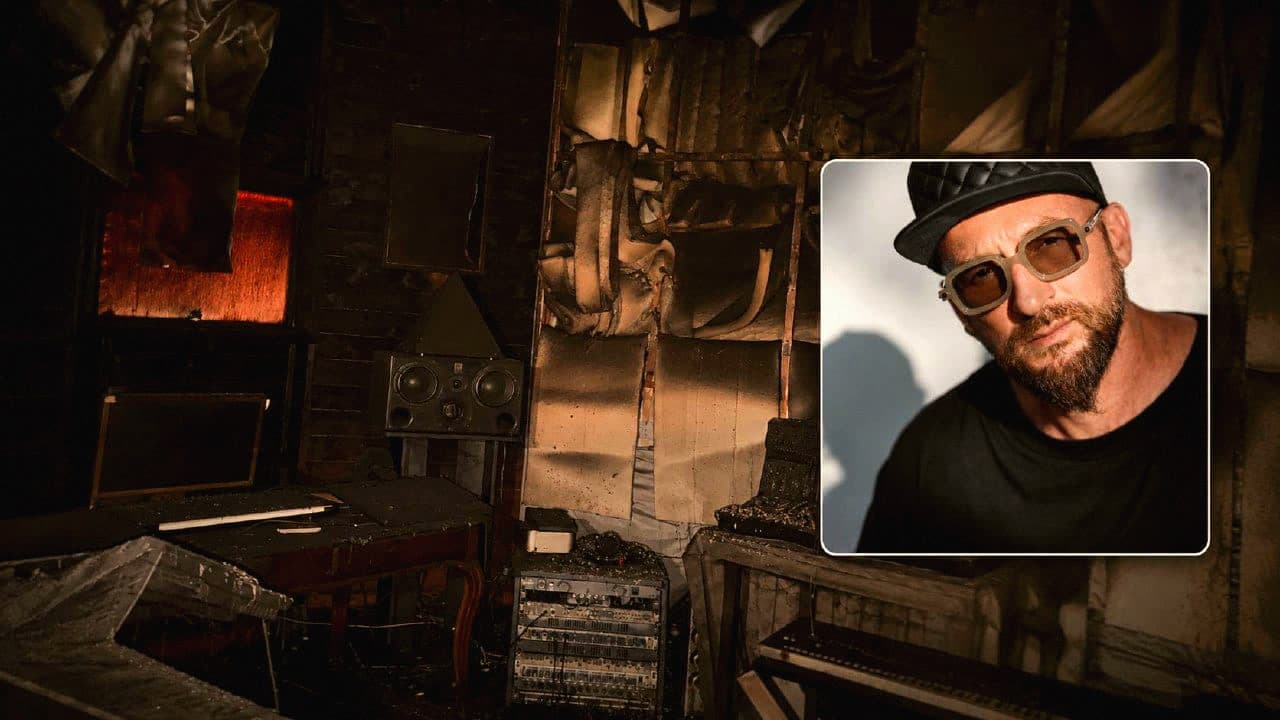
For more than two decades, Damian Lazarus has built his career on a particular instinct: recognising potential before it becomes visible to everyone else. Through Crosstown Rebels, the label he founded in 2003, he helped shape the early trajectories of Jamie Jones, Seth Troxler, Maceo Plex, Art Department and Deniz Kurtel, artists who would go on to redefine underground electronic music.
But Lazarus didn't simply sign records. Jamie Jones has credited him with helping artists “discover their sound and discover their voice,” an approach Jones would later carry into Hot Creations. Crosstown became an ecosystem around its artists, combining releases with DJ support, Rebel Rave, Get Lost, showcases and a wider community. Lazarus wasn't just looking for finished products; he was looking for difference, then creating the conditions for it to develop.
When distribution problems left Crosstown in serious financial difficulty around 2008, he could have walked away. Instead, he looked at the still-emerging artists around him and believed their music was too exciting to abandon. The gamble paid off. Jamie Jones went on to build Hot Creations and Paradise, Maceo Plex created Ellum, and Seth Troxler developed his own labels and projects. Lazarus hadn't simply helped create successful DJs; he had helped develop people who would eventually build worlds of their own.
From Music to Something More
That instinct for creating the right conditions for something to emerge eventually extended beyond artists. In [[place:tulum|Tulum]], Lazarus developed a relationship with a local Maya healer named Carlos, with whom he discussed spirit, the universe and Maya beliefs. Following the advice of a medicine man, Lazarus once stood beneath the full moon with his arms raised towards the sky. He later described feeling an electrical current moving through his body: an experience he interpreted as a connection with the universe and a kind of green light to create [[event:day-zero|Day Zero]].
[[event:day-zero|Day Zero]] launched in Tulum on December 21st, 2012, combining music, jungle, sunrise, ceremony and collective experience into something closer to ritual than a conventional festival. Yet Lazarus' spirituality hasn't followed a straight line. Around 2019-2020, he began questioning God, spirituality and even some of his own beliefs. His journey became less belief followed by enlightenment than belief, experience, doubt and reconstruction.
Years earlier, Lazarus had also described experiencing what he called a “green fire” within himself. There is no need to prescribe a meaning to it. Green grows; fire consumes. Sometimes both can exist in the same image.
More recently, the transformation became personal in a different way. Around the making of [[release:magickal|Magickal]], Lazarus confronted burnout and creative blocks and stopped drinking and taking drugs. Now roughly two years sober, he remains immersed in the nightlife world that has defined much of his adult life. The clubs remain, the parties remain, the environment hasn't fundamentally changed.
He has.
An Ibiza High, Then the Unthinkable
This summer seemed to be opening another chapter. On July 28th, after more than two decades at the centre of underground electronic music, Lazarus made his debut on Amnesia's legendary Terrace, playing B2B with Joseph Capriati at [[event:metamorfosi|Metamorfosi]].
Days later, on August 6th, he was back behind the decks for another major Ibiza moment, playing B2B with Marco Carola for Music On at Destino. It was the kind of week that should have been remembered for milestones, music and celebration.
Instead, everything changed.
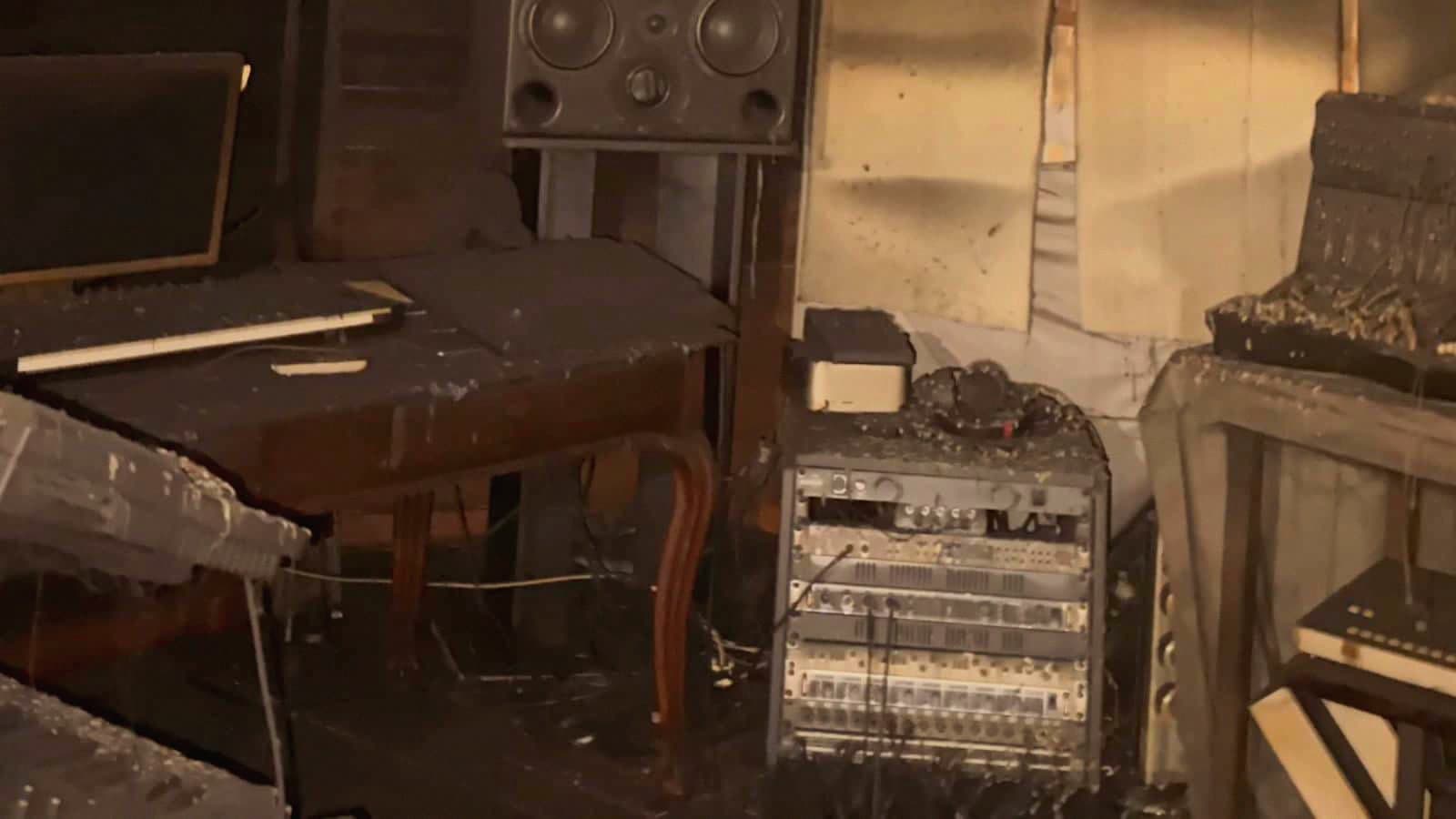
On August 8th, Lazarus shared devastating news on social media: his studio had been struck by lightning and destroyed by fire. He described it as the “saddest thing I have ever been through.”
That heaviness deserves space.
A studio is more than equipment and four walls. Over time it becomes an archive of an artist's life: music made and never released, records collected, instruments, objects, memories and ideas waiting to become something. Losing it is not a poetic metaphor. It is a real loss.
And there is a danger, particularly when someone's life already contains spirituality and ritual, of rushing to turn tragedy into meaning. Renewal doesn't cancel grief. Whatever eventually rises from the ashes doesn't replace what burned.
Sometimes sadness has to be allowed to be sadness.
Back to the Maya
Still, the dates carry a curious echo.
More than a decade after Maya spirituality helped inspire Day Zero, August 6th fell on 1 Kib in the 260-day Tzolk'in calendar: the beginning of a new 13-day cycle, carrying associations with wisdom, contemplation and lessons inherited from the past. August 7th moved into 2 Kab'an, associated with Earth, movement and evolution.
Then, on August 8th, came 3 Etz'nab, associated in interpretations of the Tzolk'in with cutting through confusion, removing what is no longer needed, truth and clarity.
There is no prophecy here. No ancient calendar predicted that lightning would strike Damian Lazarus' studio. But the sequence offers an unusually fitting symbolic language for a moment when something solid and familiar has suddenly disappeared.
August 8th also falls on what contemporary spirituality calls the Lion's Gate, associated with Sirius, Leo and 8/8. It isn't a Maya tradition and the two shouldn't be conflated, but its modern symbolism circles familiar territory: illumination, change and renewal.
Whether any of that means something is personal. What Lazarus himself chose to share afterwards may tell us more.
When the Barn Burns
Amid what he described as the saddest experience of his life, Lazarus shared a Zen quote attributed to Japanese poet Mizuta Masahide:
“The barn's burnt down, now I can see the moon.”
It doesn't make the barn less valuable, or watching it burn less devastating. The moon was already there; something that stood in front of it is simply gone.
Perhaps that is where hope can exist without denying grief.
For more than twenty years, Damian Lazarus has built things: labels, artists, communities, dancefloors and experiences. He recognised possibilities in Jamie Jones, Seth Troxler, Maceo Plex and others before much of the world could see them. He imagined Day Zero in the Mexican jungle, helped artists find their voices and watched them build worlds of their own. More recently, through sobriety, he began rebuilding something closer to home: himself.
Around those same days, the sacred calendar of the culture that had influenced the beginning of his spiritual journey moved through a new cycle, movement and finally Etz'nab: cutting through confusion, removing what is no longer needed, truth and clarity.
Not a prediction, but an unusually fitting image.
Right now, there is something real to grieve, and no promise of renewal should diminish its weight. But the phoenix has endured as a symbol for a reason: fire can mark an ending without being the end of the story.
For an artist whose career has been defined by seeing possibilities before others could, all we can do now is send our love and support as he moves through the ashes, and look forward to seeing what eventually rises from them.
And now that the barn has burned, the question isn't only what Damian Lazarus will rebuild.
It's what he can finally see now that the moon is no longer hidden.