A Swedish collage film from 1998 keeps showing up in DJ green rooms and late-night group chats, and it has nothing to do with a famous label or a viral set. Lucky People Center International, directed by Erik Pauser and Johan Söderberg, spent two years circling the planet, cutting together shamans, monks, artists and bankers into one throbbing stream set to the directors' own electronic score. The collective behind it did not start in a film school. It started as an illegal nightclub in Gothenburg, then moved to Stockholm and turned into a music and art outfit. That origin matters, because the film's real argument is the one the dancefloor already knows in its body: people who move together, belong together.
What is Lucky People Center International actually about?
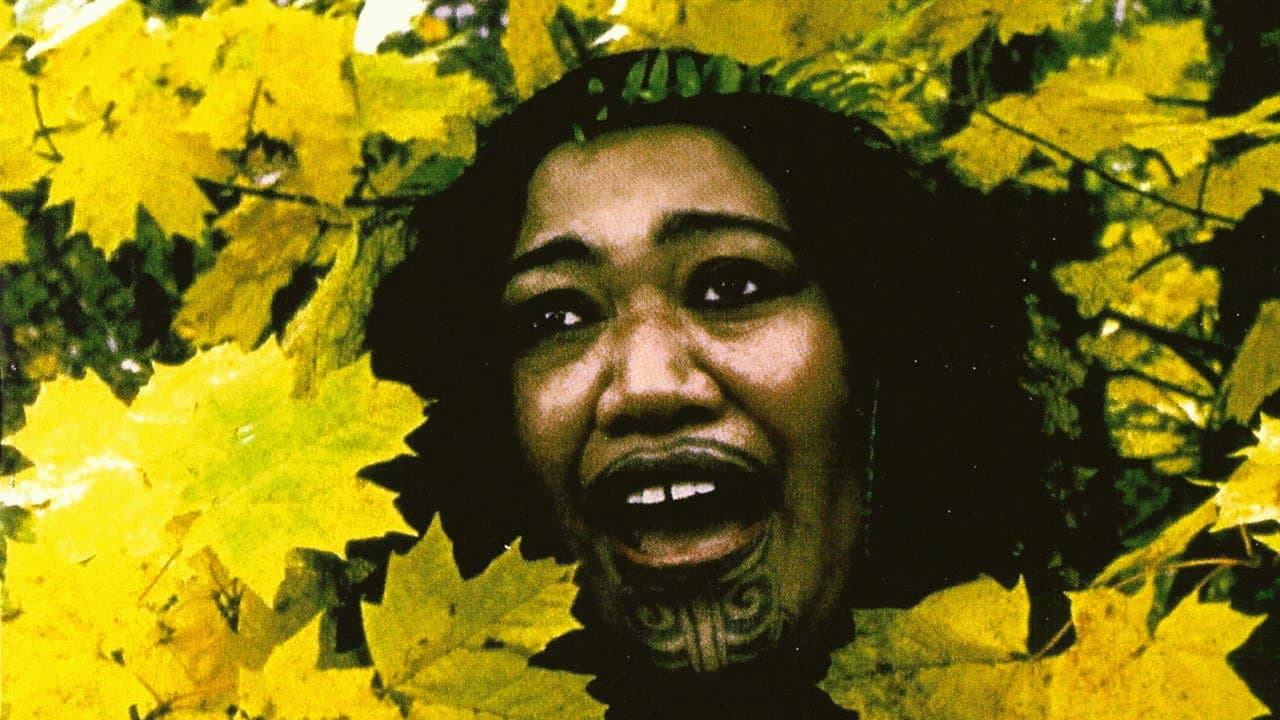
On paper it is a documentary. In practice it is closer to a 90-minute DJ set made of human faces. Pauser and Söderberg traveled through roughly twenty countries looking for people who had taken a stand against the way modern life was heading as the year 2000 closed in. The Tibetan teacher Sogyal Rinpoche appears. So does the activist Bruno Manser, the Russian artist Alexander Brener, a Tokyo banker who moonlights as a noise musician, an Indian dancer, a healer from New Mexico, Maori warriors mid-haka. Variety, reviewing it out of Vancouver in 1998, called it a bouillabaisse of art pieces, rapping rants and impressionistic images, and warned that the flash-cutting could induce a mild trance. That trance is the point. The film treats rhythm as the one language that survives translation.
The film treats rhythm, not speech, as the thing every culture in the frame already shares.
Why does moving in time with strangers feel so good?
The science caught up with the instinct. Historian William McNeill, who lived through close-order army drill and never forgot the strange high of it, wrote Keeping Together in Time in 1995 and gave the feeling a name: muscular bonding, the euphoric solidarity that floods a group when bodies move as one. Decades later a research team at Oxford, Bronwyn Tarr, Jacques Launay, Emma Cohen and Robin Dunbar, put it on the lab bench. In a 2015 Royal Society study they had people dance in and out of sync, and both synchrony and physical exertion independently raised pain thresholds, a reliable proxy for endorphins, while raising how bonded the dancers felt to each other. A follow-up silent-disco experiment in 2016 found the analgesic, closeness-boosting effect only kicked in when people actually moved in time. Endorphins are the body's own opioids. A packed floor locked to a kick drum is, biochemically, a room full of people getting gently high on each other.
How does this connect to house and rave culture?
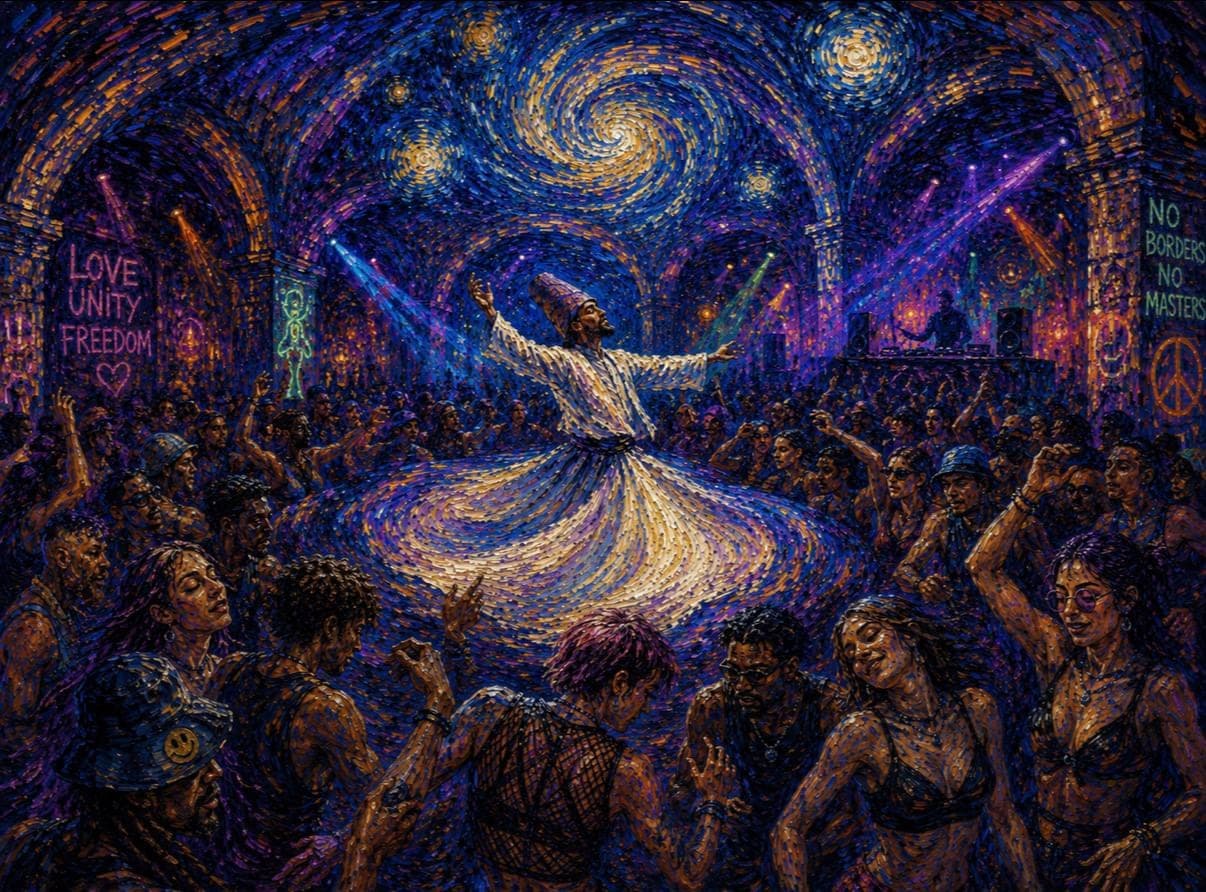
Directly. Barbara Ehrenreich's Dancing in the Streets (2006) tracks collective ecstatic dance from the Greeks worshipping Dionysus, through medieval carnival, through every authority that tried to stamp it out, and lands on a simple point: the urge to lose yourself in a crowd is old, suppressed, and always comes back. Emile Durkheim called the shared electricity of ritual collective effervescence and put it at the root of religion itself. None of this is metaphor for what happens at a Berghain all-nighter or a Lagos warehouse or an open-air in São Paulo. It is the same machine. House culture did not invent communal trance. It rebuilt it for cities that had quietly banned it, and handed it a 4/4 pulse. Lucky People Center International, made by people who came up running a dancefloor, understood that thirty years ago and shot it before anyone could prove it.