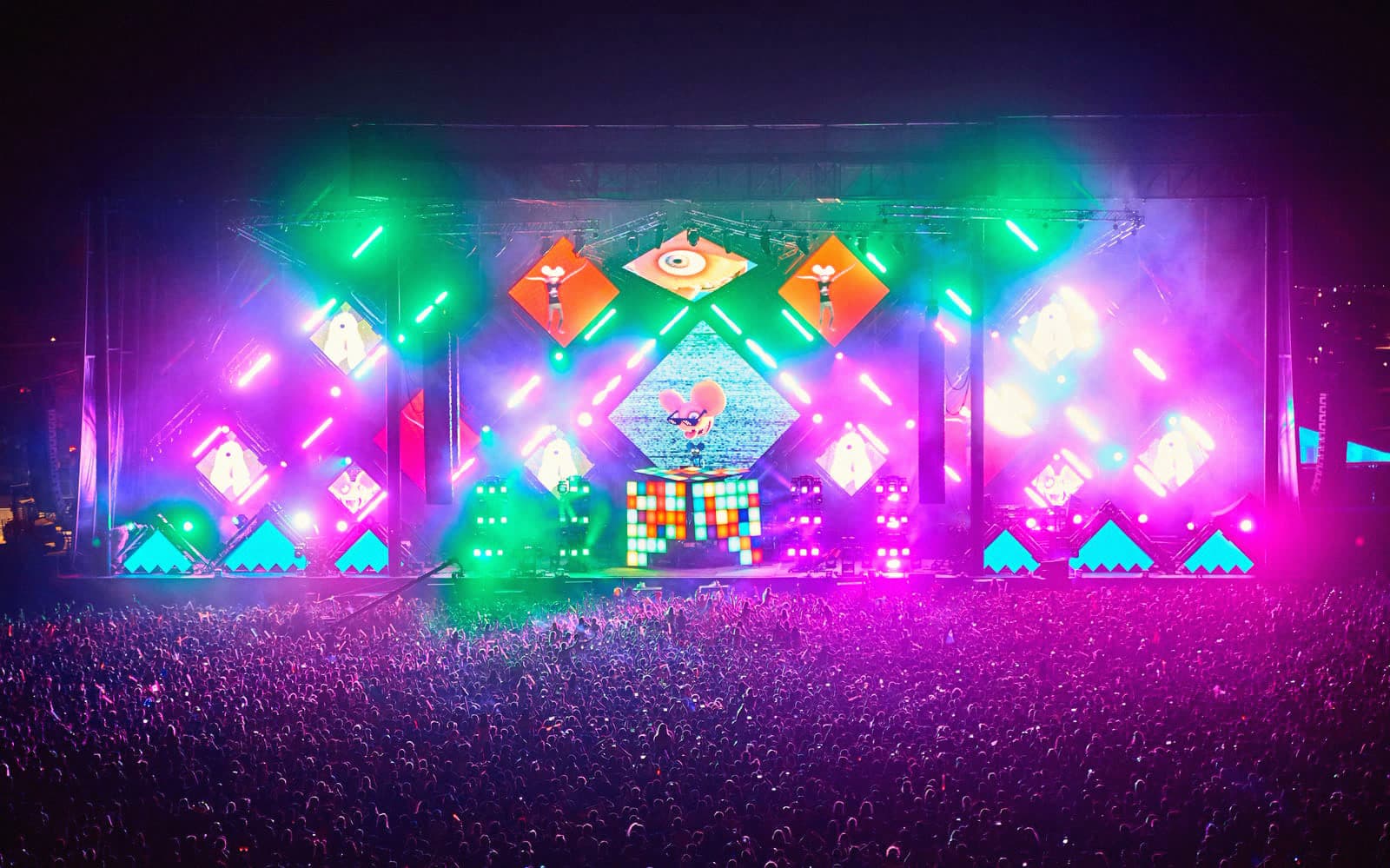
After landing at No. 91 in DJ Mag's 2026 Top 100 DJs, deadmau5 publicly asked to be removed from the ranking, reigniting a long-running debate about popularity, paid promotion, and what it really means to be a great DJ.
On October 6, DJ Mag revealed its annual Top 100 DJs ranking at [UNVRS] Ibiza, crowning David Guetta the World's No. 1 DJ for a record-breaking sixth time.
But while some artists celebrated their positions, Canadian producer deadmau5 had a very different reaction.
Ranked No. 91, down nine places from the previous year, he reposted DJ Mag's announcement on Instagram with a message that quickly caught the attention of the electronic music community:
"TAKE ME OUT OF THIS CLOWNSHOW ALREADY. Give 92-100 my spot. Congrats 92-100. Yall moved up a spot, and 101... well grats too YA MADE IT!"
He later doubled down in the comments, joking that being the 91st least effective clown among 100 wasn't such a bad achievement after all.
Beyond the sarcasm, his reaction raises a question that has divided electronic music for years: does DJ Mag's Top 100 actually rank the world's best DJs, or simply the ones who are best at getting votes?
How does DJ Mag's Top 100 actually work?
Despite its reputation as one of electronic music's most prestigious rankings, DJ Mag's Top 100 is not determined by a panel of music experts, producers, or industry professionals.
It is entirely based on public voting.
Each voter can select up to five DJs, with their first choice receiving five points, their second four, and so on. After votes are verified, the artists with the most points receive the highest rankings.
There is no assessment of technical mixing ability, track selection, creativity, musical influence, or the ability to take a dancefloor on a journey.
Instead, the system largely rewards artists who can mobilize the most fans to participate.
And in an industry where some artists perform for millions of people across massive festivals and social media platforms, while others build their careers in underground clubs, that distinction matters.
A DJ playing carefully curated six-hour sets to dedicated dancefloors is competing in the same popularity contest as an international superstar with millions of followers and a substantial marketing operation.
The ranking measures popularity among participating voters. It does not objectively measure DJing talent.
Can money influence the ranking?
This is where the controversy becomes more interesting.
DJ Mag openly permits DJs to campaign for votes and offers paid advertising opportunities specifically designed to reach potential voters.
In a 2014 investigation, VICE exposed promotional packages reportedly ranging from approximately $18,000 to $40,000, including advertisements positioned directly on DJ Mag's voting website.
These were historical prices, not confirmed rates for 2026. However, DJ Mag's current rules still explicitly acknowledge that it sells advertising to reach voters.
To be clear, purchasing advertising does not guarantee a position, and DJ Mag prohibits buying votes, offering incentives, or manipulating the results. The publication also states that it verifies votes to prevent fraudulent activity.
But the underlying issue remains.
When an artist can spend significant money encouraging people to vote, the ranking inevitably becomes a competition of promotional reach as well as popularity.
Artists with larger marketing budgets can potentially reach more voters, strengthen their positions, and benefit from the commercial credibility that comes with a higher ranking.
That credibility can translate into more bookings, increased visibility, and potentially higher performance fees.
It creates a system where popularity generates opportunities, opportunities generate greater exposure, and greater exposure can generate even more popularity.
None of this necessarily means the ranking is fraudulent. But it raises legitimate questions about what the results represent.
Where does house music fit into the Top 100?
The 2026 ranking also highlights the complicated relationship between mainstream electronic music and underground club culture.
House music is certainly gaining visibility. FISHER reached No. 9 and was named World's No. 1 House DJ, while Vintage Culture placed No. 10, Black Coffee No. 14, John Summit No. 24, The Martinez Brothers No. 28, and Jamie Jones No. 33.
Michael Bibi reached No. 37, Josh Baker made the highest new entry at No. 40, and Solomun climbed to No. 41.
John Summit, Mau P, and Chris Stussy were also named joint Highest Climbers after each rising 22 positions.
These results show that house and tech-house are becoming increasingly prominent in the global vote.
But they also reveal how differently success can be measured within the scene.
Some of house and techno's most respected and influential selectors, including Ricardo Villalobos, Loco Dice, Seth Troxler, and Luciano, are absent from this year's Top 100.
Perhaps the most revealing example is Luciano himself.
At the same 2026 ceremony, DJ Mag awarded Luciano its Outstanding Contribution award, recognizing more than 25 years of influence on house, minimal, and techno.
Yet he did not appear anywhere in the Top 100 ranking.
The publication recognizes his enormous contribution to electronic music while its public vote fails to place him among the world's 100 most popular DJs.
That contrast perfectly illustrates the difference between artistic influence and mass popularity.
Interestingly, this wasn't always the picture. Carl Cox won the first publicly voted DJ Mag Top 100 in 1997, at a time when club culture and its pioneering selectors occupied a much more central position in the ranking.
Is the best DJ necessarily the most popular?
There's nothing wrong with celebrating popular DJs or recognizing artists who have built massive international audiences.
David Guetta, Martin Garrix, FISHER, and countless others have made important contributions to electronic music in their own ways.
The problem begins when popularity is confused with artistic excellence.
Being a great producer doesn't automatically make someone a great DJ. Having millions of followers doesn't necessarily translate into exceptional track selection. And selling out a stadium doesn't tell us whether someone can read a room, build tension, adapt to a crowd, or create a meaningful musical journey.
These are skills that have always been fundamental to DJ culture.
A great set is not simply a sequence of popular tracks. It is a journey, shaped by timing, intuition, musical knowledge, and the relationship between the DJ and the dancefloor.
And those qualities are almost impossible to capture through an online popularity contest.
The irony is that a DJ could deliver one of the most extraordinary sets of the year to a few hundred people and receive virtually no recognition from a global poll, while another artist could climb dozens of positions through massive exposure and fan mobilization.
Is it time to stop calling it the world's best DJs?
DJ Mag's Top 100 is undeniably influential. Its global reach gives fans an opportunity to celebrate their favorite artists, and its results offer an interesting snapshot of electronic music's changing popularity.
But perhaps the problem is not the existence of the ranking. It's the meaning attached to it.
A popularity contest can tell us who has the strongest voting audience. It cannot tell us who possesses the greatest musical knowledge, technical ability, creativity, or influence on a dancefloor.
Deadmau5's reaction may have been delivered with his usual sarcasm, but it reignites a debate that goes far beyond his position at No. 91.
Should the world's best DJs be determined by who receives the most votes, or by what they actually do behind the decks?
Because sometimes, the DJ who deserves the most recognition isn't the one who can convince millions of people to vote.
It's the one who can make a room full of people forget about everything else and lose themselves in the music.

![DJ Mag Voted [UNVRS] the World's No.1 Club. Its DJs Poll Still Won't Crown a Techno Name.](/_next/image?url=https%3A%2F%2Fmedia.timetohouse.com%2F2026-09-17-djmag-top100-unvrs-808.jpg&w=3840&q=75)
