Does going laptop-free finally mean no compromise?
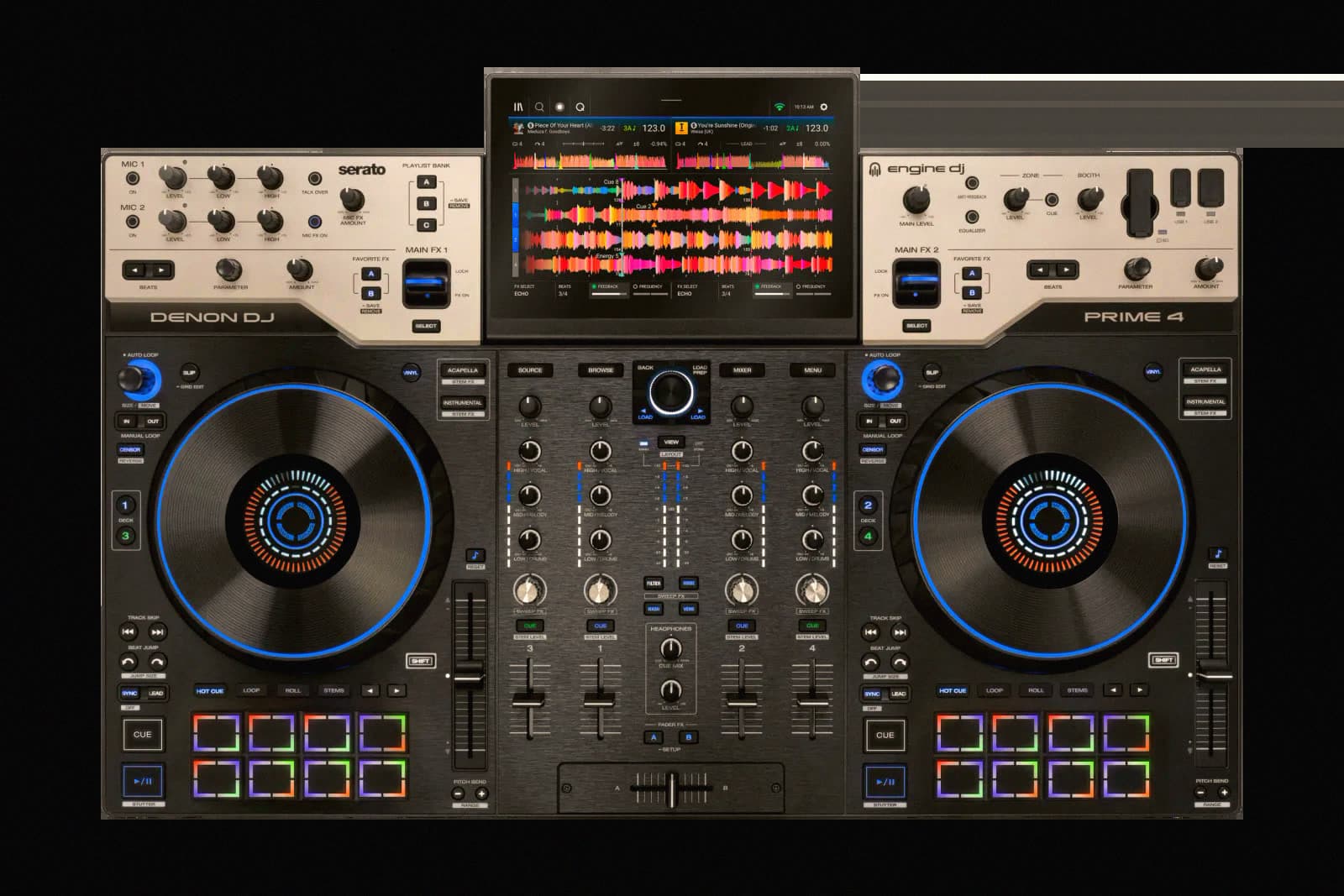
Denon DJ's new standalone flagship, the PRIME 4 G2, is the company's most direct answer yet to that question, and it's the first standalone DJ system built around 3D-sensing performance pads. The 16 MPCe pads read both how hard and where you hit them, splitting each pad into multiple zones so a single pad can fire a Hot Cue in one spot, a Stem in another and an FX or lighting cue in a third, depending on pressure and position. Denon calls it a first for standalone gear, and after years of laptop-free rigs playing catch-up on expressive pad control, it's the first hardware argument that a computer-free booth doesn't have to mean a simpler one. It's available now at $2,599 / €2,699.99 / £2,299.99.
What's actually new under the hood?
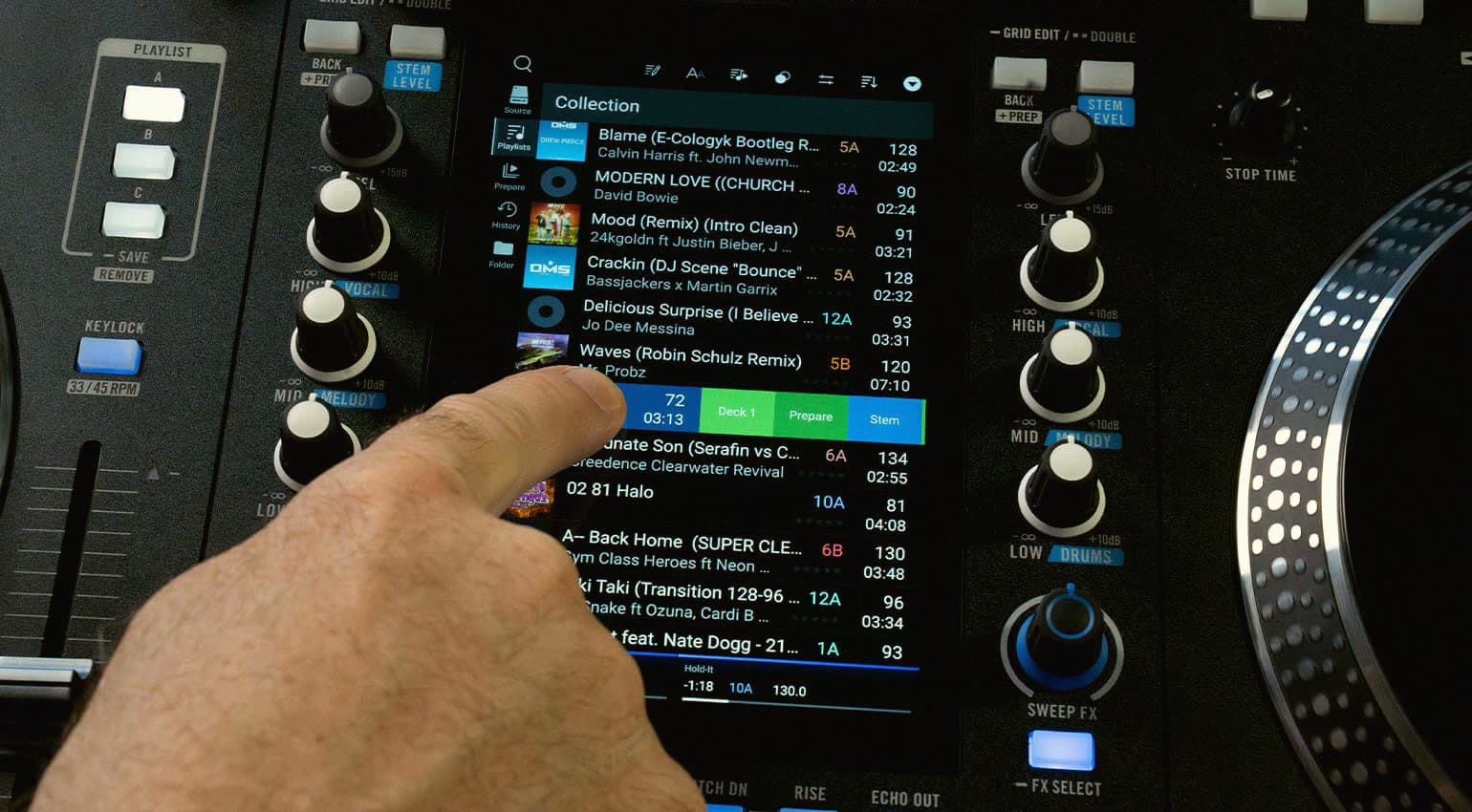
The pads sit on top of an 8-core ARM processor with 4GB of RAM, which Denon DJ says delivers four times the processing power of the original PRIME 4. That extra horsepower is what makes the unit's headline trick possible: onboard Stems rendering that splits a loaded track into acapella and instrumental layers directly on the hardware, with dedicated buttons plus Stem FX and Stem Level EQ to blend them live, all without a laptop, cloud account or outboard processor. The G2 also carries over the format's four-channel, four-deck layout, adds bigger 8-inch jog wheels with LED rings, keeps the 10.1-inch touchscreen, packs more than 25 Main FX plus Touch, Fader and Sweep FX banks, Wi-Fi access to Amazon Music Unlimited, Apple Music, Beatport, SoundCloud Go+ and TIDAL, and a built-in 3-pin DMX output so the same box can run a lighting rig.
"PRIME 4 G2 combines powerful performance tools, onboard Stems, streaming access, and integrated DMX lighting control" into one box, said Jason Stout, DJ Brands Product Manager at inMusic, Denon DJ's parent company.
Where does the laptop-free promise actually break?
Two places, and both matter for a working DJ deciding whether to leave the software rig at home. First, onboard Stems rendering isn't instant: splitting a three-minute track takes roughly two and a half minutes on the hardware, so it's a prep-ahead tool for building a set, not something you reach for mid-mix on a request. Second, the PRIME 4 G2 ships without OmniSource, the software bridge that's supposed to let the deck also function as a controller for Serato DJ Pro, Algoriddim djay and VirtualDJ; Denon says that mapping is "coming soon," which for now leaves the unit locked to its own Engine DJ ecosystem when standalone, or unusable as a controller for the software most touring DJs already own.
Why does this matter for house and techno DJs specifically?
Denon's standalone line has always pitched itself at mobile, wedding and open-format DJs who need one box and zero laptop; the PRIME 4 G2 is the first version of that pitch aimed squarely at a performance-first club and festival crowd who build a set live with pads rather than just cue tracks. At $2,599, it's priced against a full CDJ pair plus a mixer, not a laptop controller, so the real comparison a working DJ now has to make isn't standalone versus laptop, it's whether Stems and 3D pads on one box beat the flexibility of choosing software and hardware separately.