Who is behind Dr. Banana?
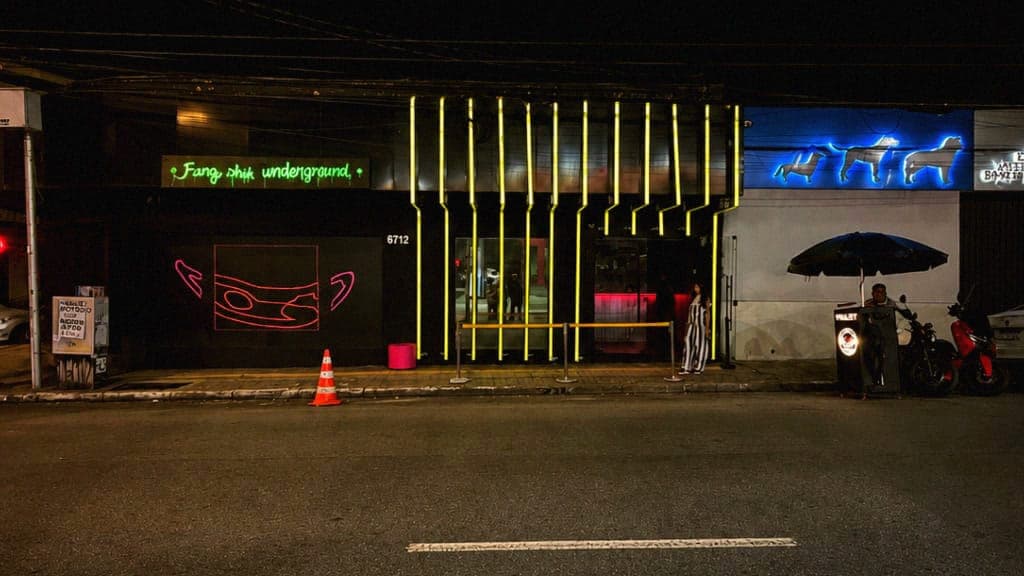
The new room sits on a quiet stretch of the Vergueiro district, behind a facade lit with yellow neon and the words "Fang shik underground." It is the work of Dr. Banana, a project from two lifers of the city's nightlife, Maria Carolina Junqueira Azevedo and Ralnir Jandreiche Nóbrega, who pitch the place less as a venue than as a course of treatment. "This party is a prescription," they wrote at the opening. "We prescribe good music, deep bass, scenic lights, unexpected encounters, aesthetic freedom and enough hours to forget the world outside." The first weekend ran on DJ Mau Mau, Pareto, Azevedo and Glaucia Maismax, and a recurring Banana Split night is already on the calendar.
A prescription for deep bass, scenic lights and enough hours to forget the world outside.
Why name a club after a Warhol banana?
The name reaches straight back to Andy Warhol's peeling banana on the cover of The Velvet Underground & Nico, a wink at the moment pop art and the underground first fused. It signals exactly what the founders want: a room that treats clubbing as culture rather than bottle service. The reference is cheeky, but the intent is serious, a deliberate link to a golden age of São Paulo nightlife that the owners grew up inside and want back.
What does this say about São Paulo right now?
Quietly, São Paulo has become one of the most important underground cities on the planet. D-EDGE has shaped the country's electronic identity for more than two decades, the Mamba Negra collective rewired who gets to stand in the booth, and newer rooms keep opening on rooftops and high floors across the centre. Brazilian artists are now headlining the world, and the scene that raised them was built by independent collectives through a pandemic and years of thin public support. A new club run by veterans, not investors, is how that kind of momentum compounds: it keeps the talent and the crowd at home instead of exporting both.