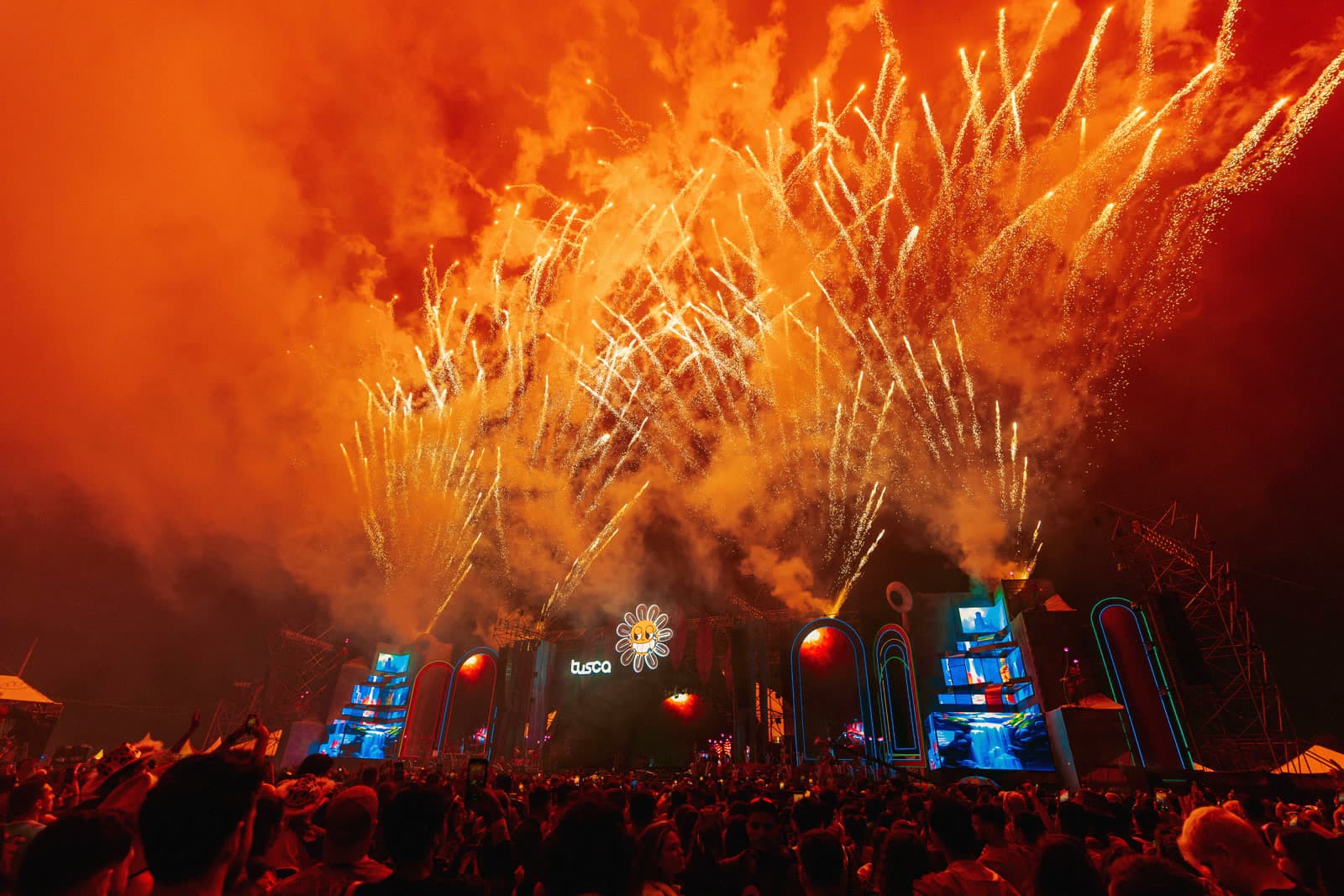
Insomniac has spent two decades building EDC into the biggest neon-and-pyrotechnics machine in American dance music. This weekend it lands in South America for the first time, and it didn't just bring deadmau5 and Alesso. It brought Time Warp.
What exactly is Insomniac bringing to Medellin?
EDC Colombia runs October 10 and 11 at the Atanasio Girardot sports complex, Colombia's biggest multi-use stadium venue, with Colombia becoming the 9th country to host an EDC edition. More than 80 artists are booked across house, techno, trance and bass, split between kineticFIELD, circuitGROUNDS and neonGARDEN, plus takeovers from Richie Hawtin's Factory 93 techno brand and the trance-focused Dreamstate stage. Organizers are projecting roughly 94,000 attendees over the two days and a $37.1 million economic boost for Medellin, with around 61,000 direct and indirect jobs tied to the event.
The techno and house credentials on this bill are real, not decorative. Time Warp, the Mannheim-born institution that has anchored European techno since 1993, is running its own stage rather than a guest slot. Boris Brejcha, ARTBAT and Nico Moreno join Hawtin across the techno-leaning stages, while the EDM mainstage carries deadmau5, Alesso, ILLENIUM, Afrojack back to back with Green Velvet, Kaskade and ALOK.
Why is Colombian press already calling this the 'empire of neon'?
The local reception has been pointed from the start. One Colombian culture outlet framed the whole event as going "de las sombras del underground al imperio del neon", from the shadows of the underground to the empire of neon, describing Factory 93 as carrying "the raw, dark aesthetics for underground purists" and Time Warp as bringing "avant-garde sound and visual innovation" into a festival built around stadium-scale spectacle. Brejcha, ARTBAT, Nico Moreno and Hawtin were singled out as representing "the dense mysticism of techno and cutting-edge sounds", set against an EDM mainstage running the opposite playbook: drops, pyro and festival-rave maximalism.
"The true stars aren't on stage; the true stars are on the dance floor."
That line comes straight from Insomniac's own founding philosophy, repeated in the local coverage of this launch. It sits awkwardly next to a $37 million projected economic footprint and a stadium built to hold 94,000 people, a scale no underground club night anywhere in Latin America can approach, and that's exactly the tension Colombian writers have already clocked.
Does the techno pedigree actually change anything?
Commercially, the heat is real: VIP and GA+ tickets sold out within hours of the initial on-sale, pushing EDC Colombia to jump its pricing straight from the 'Future Owl' tier to 'Early Owl'. That's a genuine signal that Medellin's dance audience, not just tourists flying in, wanted in on this. Whether that demand is being spent on Hawtin and Time Warp or on deadmau5 and Alesso is a different question, and one the festival's own marketing doesn't need to answer, because both audiences buy the same wristband.
The same weekend, a few kilometers away, Medellin's free rock, metal and punk festival Altavoz runs 59 bands across Estadio Cincuentenario and Parque Norte at no cost to attendees. It's a useful contrast: one model imports American festival infrastructure and sells techno pedigree as a credibility layer on top of an EDM product; the other is homegrown and free. Neither is wrong, but they're not the same thing, and Medellin gets both on the same weekend for the first time.
Why it matters
This is Insomniac testing whether techno's institutional weight, Time Warp's name, Hawtin's catalog, ARTBAT's festival-main-stage pull, can be rented to anchor a first-time EDM carnival in a brand-new market, rather than built from scratch locally. If it works in Medellin, expect the same formula, techno stage as credibility anchor, EDM mainstage as the actual business, to show up at the next EDC launch in another new country.
What we think
Time Warp running its own stage inside an Insomniac neon carnival isn't betrayal, it's a paycheck and a new audience, and nobody should begrudge Hawtin or Brejcha for taking either. But the Colombian press got the framing right on day one: this is underground credibility being used as scaffolding for a much bigger, much more American commercial product. Worth watching whether Medellin's own techno promoters get anything durable out of this beyond one loud weekend.