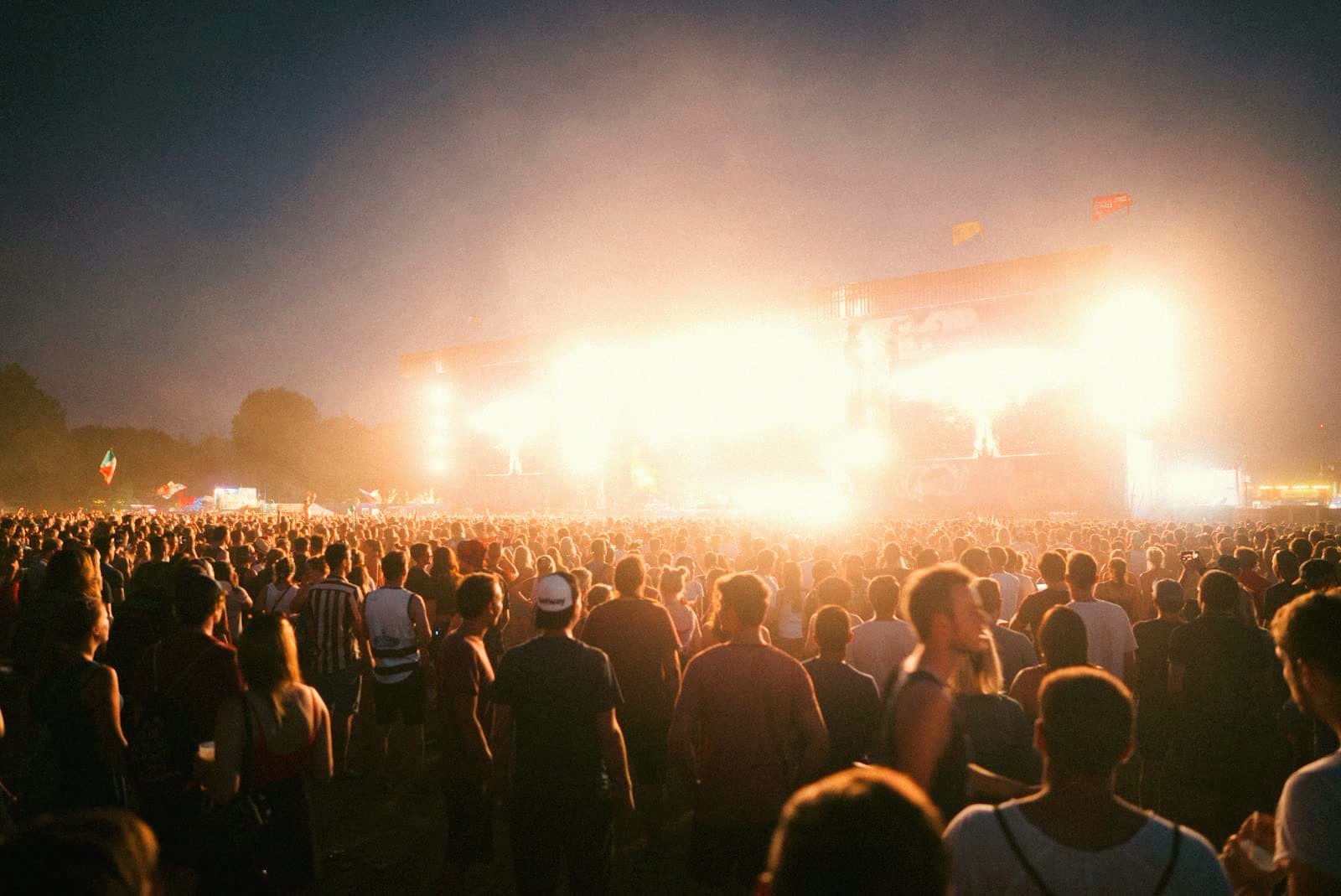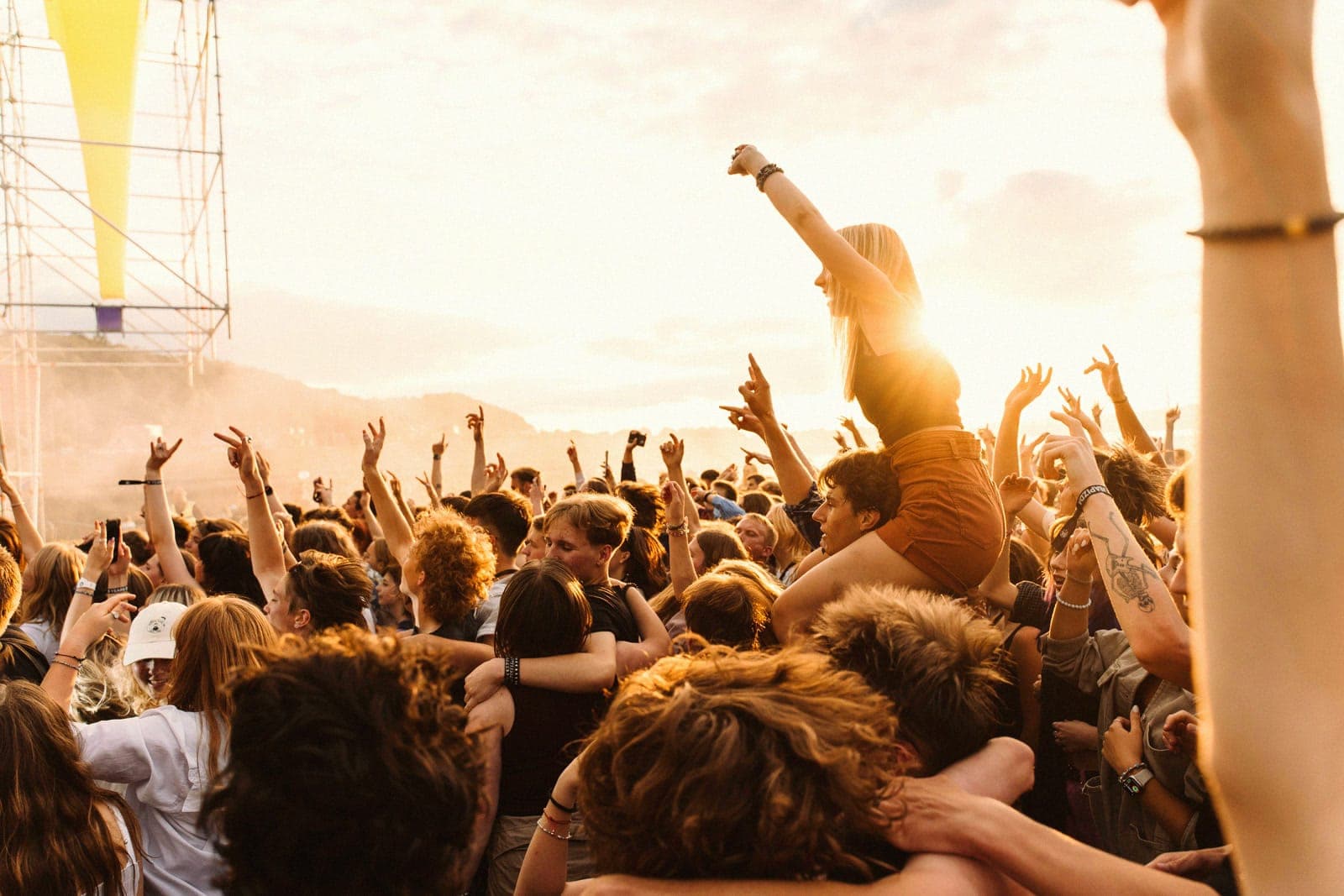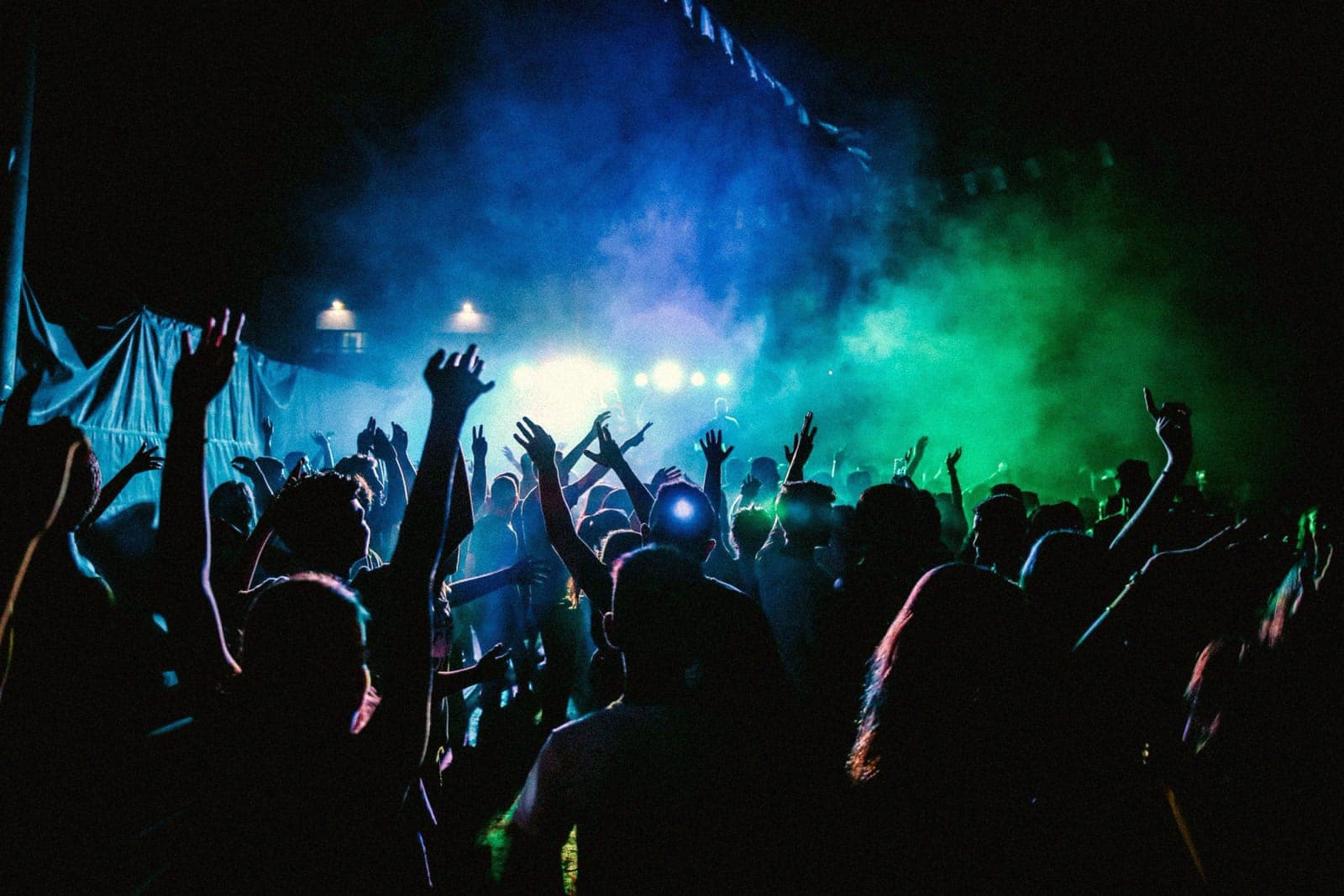
Science is beginning to explain why a dancefloor full of strangers can feel like a community. The phenomenon is called collective effervescence, and research suggests that the connection we experience while dancing together may be just as important as the music itself.
The essentials
What makes a rave feel so special isn't just the music. It's the people experiencing it together. Scientists call this collective effervescence: the intense shared energy, emotion, and sense of unity that can emerge when people gather, dance, and move to the same rhythm. It's what makes a crowd of strangers feel connected.
In 1912, sociologist Émile Durkheim introduced the concept of collective effervescence to describe how people experience powerful emotions and a sense of belonging during shared rituals. More than a century later, researchers are studying how this same phenomenon emerges at music festivals, concerts, and dancefloors.
A 2016 study tracked 46 dancers in a real nightclub and found that their bodies naturally synchronized with the music and one another. Synchronization was particularly associated with rhythmic pulses around 100 to 150 BPM. Strangers weren't just listening to the same music. They were physically moving together.
Oxford researchers found that people who danced in synchrony reported stronger social closeness and increased pain thresholds, potentially linked to endorphin activity. The 2016 experiment suggests that moving together can strengthen social bonds, even between complete strangers. Dancing isn't just an individual experience. It's a form of human connection.
A 2021 study involving 481 ravers found that awe-inspiring rave experiences were associated with personal transformation, stronger identification with fellow ravers, and prosocial choices benefiting their community. Among dancing, rhythmic beats, sleep deprivation, and drug use, dancing was the strongest statistical predictor of awe in the researchers' model.
Research from the University of Leeds found that the social experience was the strongest contributor to social well-being among the electronic dance music event dimensions studied. The findings suggest that the friendships, shared values, and sense of community surrounding rave culture may be just as meaningful as the music.
A study published in a March 2026 journal issue examined 789 participants across four live-music studies. Researchers found that stronger collective effervescence was associated with greater enjoyment, meaning, and happiness that continued a week later. The music eventually stops, but the emotional impact of experiencing it together can last.
Maybe that's why some of our most unforgettable nights aren't necessarily the ones with the biggest DJs or the best productions. They're the nights when the entire dancefloor feels connected. When nobody is performing for anyone else, and everyone is simply sharing the moment. The music brings us together. The people make it unforgettable.
Why does a rave feel like something bigger than music?
It's 4 AM. The DJ is deep into a set. Hundreds of people are moving together, completely absorbed in the music.
You look around and realize you're surrounded by strangers, yet somehow you feel connected to everyone.
Nobody needs to say anything. For a moment, the usual barriers between people seem to disappear.
It's a feeling ravers know well, but one that's difficult to describe.
Some call it losing themselves in the music. Others describe it as freedom, belonging, or even a spiritual experience.
But scientists have a name for this phenomenon: collective effervescence.
The concept was introduced by French sociologist Émile Durkheim in his 1912 book The Elementary Forms of Religious Life.
Durkheim observed that when people came together for collective rituals, they could experience extraordinary emotional energy and a powerful sense of unity.
During these gatherings, individuals could temporarily feel part of something larger than themselves.
Although Durkheim was studying religious communities, his observations have striking parallels with modern rave culture.
The repetitive rhythms. The collective movement. The emotional intensity. The temporary separation from everyday life.
And, perhaps most importantly, the feeling of belonging to a community.
More than a century later, researchers are beginning to understand how these experiences happen, and why they can be so meaningful.
The science of strangers moving as one
One of the most fascinating aspects of a rave is how thousands of people can move together without exchanging a single word.
In 2016, researchers published a study titled One in the Dance: Musical Correlates of Group Synchrony in a Real-World Club Environment.
Rather than studying movement inside a traditional laboratory, they went directly to a London nightclub.
Using smartphones equipped with motion sensors, they collected movement data from 46 clubgoers during a DJ set.
The researchers discovered that the dancers' movements became synchronized, particularly during music containing strong rhythmic pulses around 100 to 150 BPM.
The study involved disco music, but the findings offer an interesting perspective on house and techno, where repetitive rhythms are fundamental to the musical experience.
The dancers didn't have to know one another or consciously coordinate their movements.
The music provided a common rhythm, and their bodies responded together.
But there's another important dimension to this phenomenon.
It's not just that we're moving to the same music. It's that we're moving together.
A separate 2016 experiment by researchers at the University of Oxford explored what happens when people dance in synchrony.
Participants who danced together in time reported stronger feelings of social closeness and showed increased pain thresholds compared with those who danced asynchronously.
The researchers proposed that endorphin activity could help explain the findings, although endorphin release was not measured directly.
This suggests that synchronized dancing may help build social bonds between strangers.
And it offers a possible explanation for why sharing a dancefloor can make us feel connected to people we've never met.
Why some raves feel life-changing
In 2021, researchers published a study in Frontiers in Psychology examining something ravers have talked about for decades: the feeling that a particular rave changed them.
The paper, titled 'I Get High With a Little Help From My Friends': How Raves Can Invoke Identity Fusion and Lasting Co-operation via Transformative Experiences, surveyed 481 people who had attended raves or free parties.
Researchers investigated four characteristics often associated with these events: dancing, repetitive beats, sleep deprivation, and psychoactive substances.
They also explored whether participants experienced feelings of awe, personal transformation, and connection with other ravers.
Their findings were particularly interesting.
Awe-inspiring rave experiences were associated with participants describing greater personal transformation and stronger bonds with the rave community.
Within their statistical model, dancing emerged as the strongest predictor of awe among the four characteristics examined.
The researchers also found that personal transformation and identification with fellow ravers were associated with a greater willingness to support the rave community in a hypothetical donation exercise.
These were associations from retrospective survey data, not proof that a rave caused lasting psychological change.
But they point toward something significant.
The emotional impact of a rave may come not only from the music, or even the individual's altered state of consciousness, but from the sense of sharing an extraordinary experience with others.
The people may be just as important as the music
Another study, published in Music & Science in 2021, explored the relationship between electronic dance music events and well-being.
Researchers James Cannon and Alinka Greasley from the University of Leeds identified four important dimensions of EDM participation:
- Social experiences
- Musical experiences
- Emotional experiences
- Shared values
Using interviews and a questionnaire completed by 103 participants, the researchers examined how these dimensions related to psychological and social well-being.
Their findings revealed positive associations between EDM event experiences and well-being, with the social dimension emerging as the strongest contributor to social well-being in their analysis.
In other words, what happens between people at electronic music events matters.
The friendships. The feeling of acceptance. The sense of belonging somewhere. The experience of being surrounded by people who share a passion.
For regular ravers, this probably comes as no surprise.
Think about the nights you remember most.
Was it always the technically perfect DJ set? The most impressive production? The biggest headliner?
Or was it the moment you looked around and realized everyone was experiencing the same incredible feeling?
Sometimes, it's the people standing next to you who make a set unforgettable.
Why the crowd is part of the experience
In 2019, sociologist Lasse Suonperä Liebst published a study examining collective effervescence at a large music festival.
Using questionnaires and spatial data, the research investigated where and under what conditions people experienced this powerful sense of shared emotion.
The findings showed that collective effervescence was strongly associated with being physically surrounded by other people.
The experience was also spatially concentrated, suggesting that certain areas of a festival were more likely to generate these feelings than others.
This brings us to an important point about dance music culture.
A rave isn't simply a performance delivered by a DJ to an audience.
It's an experience created through an interaction between the music, the artist, and the people on the dancefloor.
The crowd's energy can influence the atmosphere of the entire event.
Anyone who has watched a DJ respond to an especially engaged dancefloor understands this relationship.
There's a feedback loop between the booth and the crowd, where the DJ shapes the atmosphere and the audience responds, potentially influencing what happens next.
The researchers didn't test whether intimate clubs, longer DJ sets, or phone-free events generate more collective effervescence.
But their findings highlight the importance of something no lighting installation or production budget can manufacture on its own: genuine collective participation.
The feeling doesn't necessarily end when the music stops
Perhaps one of the most compelling findings comes from a study first published online in 2024 and appearing in the March 2026 issue of Personality and Social Psychology Bulletin.
Researchers Nicole Koefler and colleagues examined the relationship between live music, collective effervescence, and well-being.
Across four studies involving 789 participants, they found that stronger experiences of collective effervescence were associated with greater enjoyment and a stronger sense of meaning during live music events.
Importantly, these experiences were also associated with greater happiness one week later.
The research involved live music more broadly, rather than raves specifically, and does not establish that collective effervescence independently causes lasting happiness.
Still, it offers a fascinating perspective on why a meaningful night out can stay with us long after it ends.
There's the music, of course.
But there's also the memory of feeling completely present, accepted, and connected to the people around us.
And sometimes that emotional memory is what brings us back.
Maybe that's what rave culture has always been about
Electronic music has changed enormously over the decades.
Clubs have become global brands. Festivals have grown into massive productions. DJs have become celebrities. Dance music has become a multibillion-dollar industry.
But underneath all of it, one of the most meaningful parts of rave culture remains remarkably simple.
People coming together to dance.
For thousands of years, humans have gathered around music, rhythm, and collective rituals.
Raving offers a modern expression of that deeply human desire to experience something together.
Collective effervescence doesn't mean every night out will be transformative, or that every crowd automatically creates connection.
But the research helps explain why certain moments on a dancefloor can feel so powerful.
Why complete strangers can feel like friends.
Why a shared rhythm can create a sense of belonging.
And why an unforgettable rave is often about much more than the DJ behind the decks.
The music sets the stage.
The crowd brings it to life.
The music brings us together. The people make it unforgettable.
Scientific references
- Ellamil et al. (2016): One in the Dance: Musical Correlates of Group Synchrony in a Real-World Club Environment. PLOS ONE.
- Tarr, Launay & Dunbar (2016): Silent Disco: Dancing in Synchrony Leads to Elevated Pain Thresholds and Social Closeness. Evolution and Human Behavior.
- Liebst (2019): Exploring the Sources of Collective Effervescence: A Multilevel Study. Sociological Science.
- Newson et al. (2021): How Raves Can Invoke Identity Fusion and Lasting Co-operation via Transformative Experiences. Frontiers in Psychology.
- Cannon & Greasley (2021): Exploring Relationships Between Electronic Dance Music Event Participation and Well-being. Music & Science.
- Koefler et al. (2026): Let the Music Play: Live Music Fosters Collective Effervescence and Leads to Lasting Positive Outcomes. Personality and Social Psychology Bulletin.