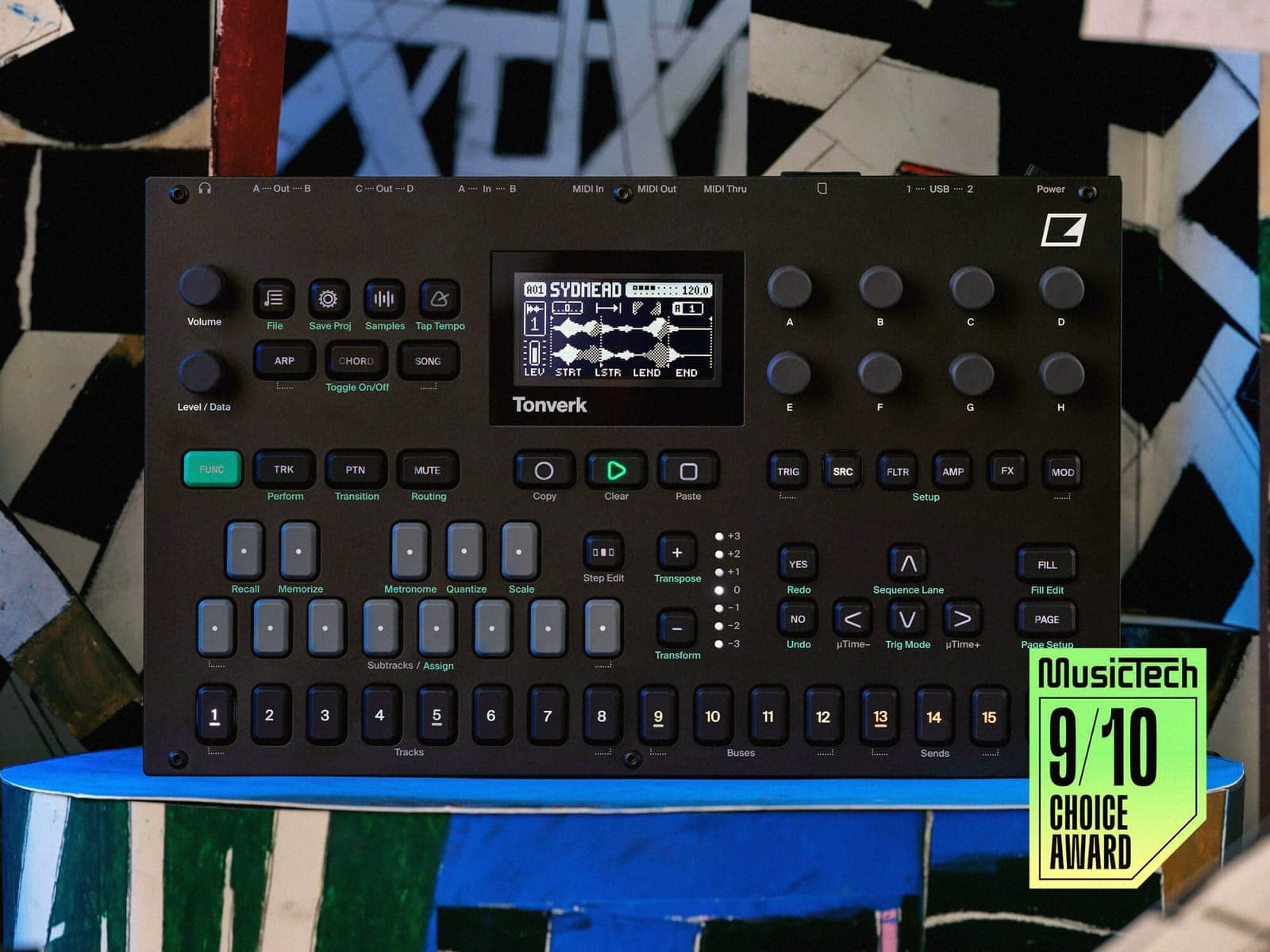
Elektron shipped Elektron Tonverk OS 1.4.0 on August 26, closing the one gap that's followed the multi-sampler since it launched in September 2025: getting audio out of it cleanly. Until now, Overbridge on the Tonverk only handled control and basic transport. Recording a jam meant bouncing it down to a stereo file on the unit itself and hoping the balance was right, because there was no way back in to fix it.
What does Overbridge actually unlock now?
With 1.4.0, Overbridge streams all 16 Tonverk tracks into a DAW over USB at once, each one landing on its own channel. That means a producer can track a full Tonverk performance live into Ableton, Bitwig or Logic and still have every drum, sample layer and audio-in track isolated afterward, ready to remix, re-EQ or resample without ever touching the source hardware again. For anyone building tracks out of hardware jams rather than typing them into a DAW from scratch, that's the difference between a usable session and a print you're stuck with.
What else came with 1.4.0?
The update isn't only about I/O. Velocity and key tracking now work as modulation sources, each driving up to four parameters, which opens up expressive, playing-dependent sound design that Tonverk couldn't do before. Patterns can be transposed in semitones on the fly, and copy, paste and clear now work without leaving the pattern you're in, which matters when you're trying to keep a live set moving. FX slots on audio and bus tracks can be swapped in place, the preset menu finally has search and filtering, and every track can be pointed at its own MIDI channel instead of sharing a fixed map.
"Tonverk continues to grow, and with 1.4.0 it now gets Overbridge multitrack streaming.", Elektron, OS 1.4.0 release notes
Why did this take a year?
Elektron has a pattern of launching hardware with a roadmap rather than a finished feature set, the Digitakt II and Syntakt both got major capability adds well after release, and Tonverk has followed the same path. The Octatrack comparisons that followed Tonverk since its reveal always hinged on workflow depth, not just sound engine, so a firmware cycle that adds real DAW integration is the update that actually earns that comparison rather than just gesturing at it.