FM synthesis spent the last decade as software. The Yamaha DX7 that defined the sound of 80s pop and early house sat mostly in plugins, or in secondhand hardware that was either menu-hell or expensive. In 2026 the pendulum has swung back: affordable FM boxes are suddenly everywhere. The DX7000, from Brazilian maker EMW, picks a very specific lane in that wave.
What does the DX7000 actually do?
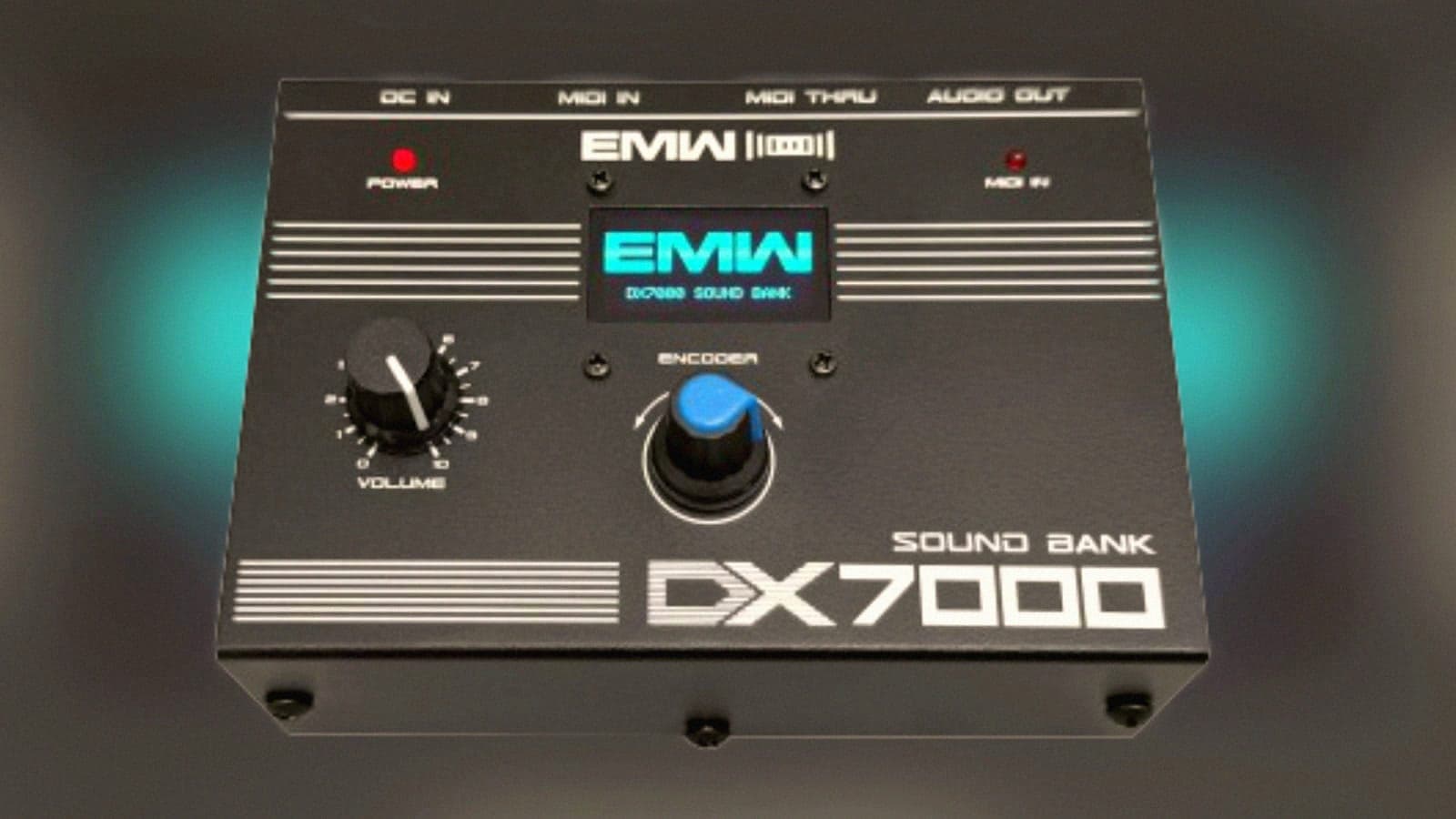
It plays FM, it does not program it. The DX7000 is a 16-voice desktop machine that behaves as a sound player: it ships with 1,110 ready patches across the usual FM staples, pianos, organs, strings, bells, basses, and adds 256 user slots that import Yamaha DX7 SysEx patches, so decades of classic banks and software editors like Dexed load straight in. You drive it from a MIDI controller and browse sounds with a single main encoder, with pitch-bend, mod wheel and sustain pedal all responding and MIDI Program Change for hands-off patch changes. What you do not get is deep editing, and there is no headphone output, just power, MIDI in, MIDI thru and a main audio out.
It doesn't program FM, it serves it, which is exactly what a lot of producers actually want.
Why does the 'made in Brazil' part matter?
Because the cheap-synth renaissance has mostly worn two passports: Chinese mass manufacturing and European boutique. EMW, short for Electronic Music Works, is a Brazilian company that also makes the VPOLY-6X, a six-voice virtual-analog synth modelled on the Korg Polysix, and a line of Eurorack modules. A Brazilian workshop shipping FM hardware worldwide widens the map of who gets to build the gear, not just who buys it. The DX7000 also lands in a busy moment: it is one of several budget FM boxes to surface in 2026, which tells you the demand for the sound is real and the hardware finally exists to meet it.
Is a preset player a real DX7?
Purists will say no. They are half right and missing the point. A machine with no editing is not a synth you sculpt, it is a sound bank you play. But most people never programmed their DX7 either, they rode the presets, and at 365 dollars a dedicated FM box that also swallows original patches is an honest answer to what those players actually do.