What is the Jen SX-1000, and why do producers care?
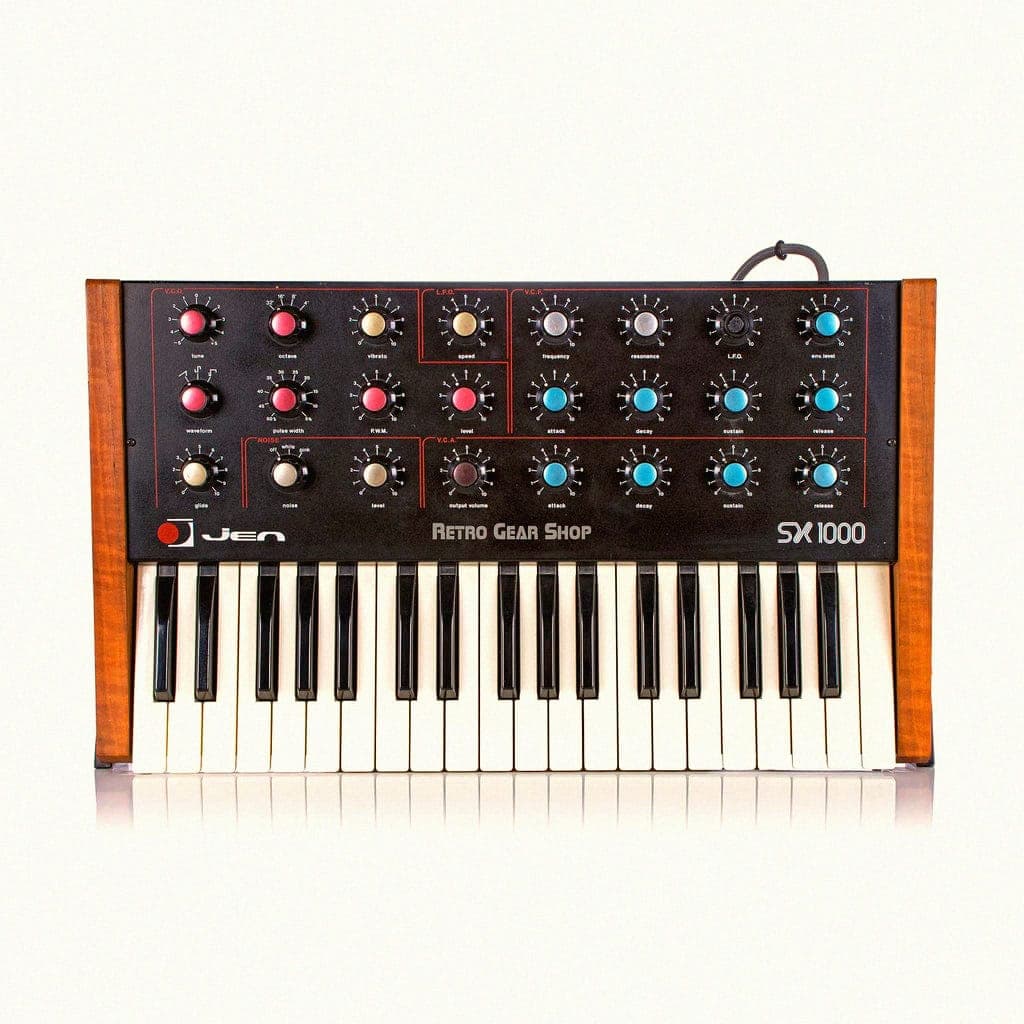
The SX-1000 came out of Jen Elettronica in Italy around 1978, a single-oscillator mono synth with three waveforms, a 12 dB-per-octave filter, an ADSR and a noise source. No MIDI, no patch memory, not much on paper. What it had was a price: it was one of the first synths cheap enough for a teenager to actually own, which is exactly why it ended up under the hands of a generation of electronic acts. According to Vintage Synth Explorer, LFO, Nexus 21, Altern 8, Future Sound of London, Luke Vibert, Broadcast, Ladytron and The Prodigy all ran one, drawn to a raw, slightly unhinged tone that cut through a rig.
What does JenDie actually give you?
JenDie, built by Italian developer Diego Capoccitti under his 34Audiovisuals name, models the oscillator, filter and envelope of the original and then adds the things the 1978 box never had. There are Authentic and Clean modes, automatable waveform morphing, pulse-width control, 46 factory presets with full preset management, a multi-touch keyboard and MIDI. It runs as a standalone app and as an AUv3 plug-in inside GarageBand, Logic Pro for iPad and other hosts, on iPhone, iPad, Apple-silicon Macs and even Apple Vision. The price is 4.99 dollars.
Why emulate a cheap mono synth now?
Because the SX-1000 is having a small moment: AudioThing put out its own emulation in 2025, and now JenDie undercuts the whole conversation by living on a phone for the price of a coffee. A real SX-1000 today is a rare, fragile 45-year-old machine you hunt down on Reverb; JenDie is the same character with recallable patches and no repair bill. That is the quiet trade these micro-emulations keep making: you give up the exact analog drift, and you get back a piece of rave history that any bedroom producer can actually use.