Why would Coachella's own promoter bet against the model that built it?
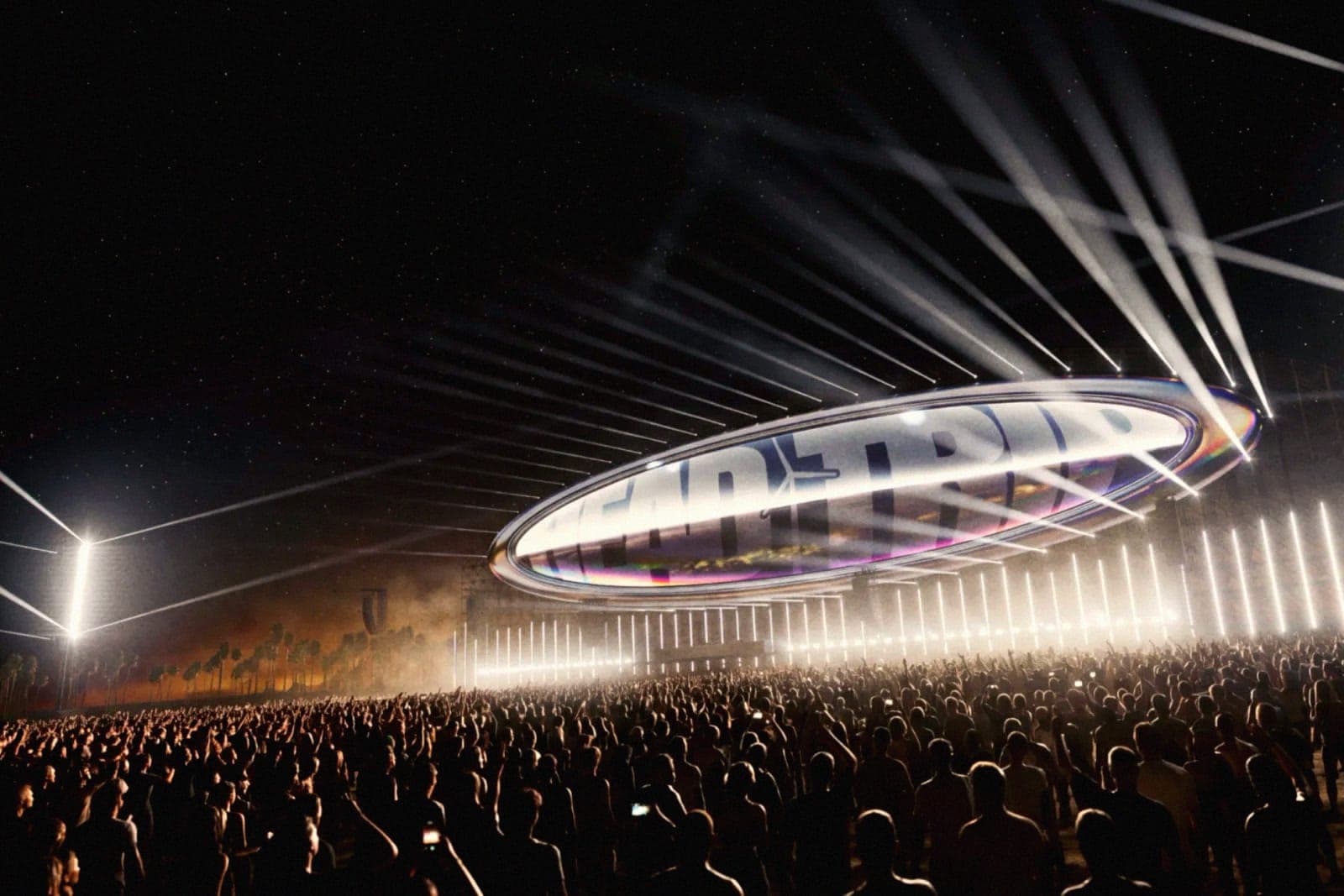
Coachella runs six stages at once on a given afternoon, a grid built so you're always missing something: that tension, the fear of picking wrong, has been baked into the business model since the festival multiplied its stages two decades ago. Goldenvoice now owns a new event, on the same dirt, that throws that model out entirely. Head Trip runs October 10 and 11, 2026 at the Empire Polo Club in Indio, with one stage and, per the official billing, no overlapping sets: whatever is playing is the only thing playing, for the entire crowd, the entire time.
The lineup leans hard on established festival headliners: Calvin Harris closes Saturday, Skrillex and Swedish House Mafia close Sunday. None of those three are acts TTH would normally cover, their records are EDM, not house or techno. What makes Head Trip worth a second look is the rest of the bill built around them: Peggy Gou back to back with Four Tet, Seth Troxler opening Saturday back to back with Ben Sterling, and a solo set from DJ Harvey, the kind of selector whose sets usually get fought over by three competing room schedules at any normal festival.
Does one stage help the underground, or just let the headliners eat the whole night?
That's the actual industry argument here, and it cuts both ways. On one stage, a Seth Troxler b2b doesn't lose half its room to whoever's dropping a bigger name across the field at the same hour. It's the closest a modern festival gets to the old warehouse party idea: one room, one night, everybody watching the same thing. For a crowd that usually treats the back to back as a palate cleanser between headliners, undivided attention is a real gift to the format.
But flip it: a single stage also means Calvin Harris and Skrillex aren't competing with anything either. There's no discovery act quietly building a following in a side tent while the main stage empties out, because there is no side tent. Every slot on a one-stage bill is a main-stage slot, booked and paid for as one, which means the format rewards whoever Goldenvoice already decided matters, not whoever the crowd might have found on their own.
One stage, zero overlap: the same structure can read as a gift to discovery or a monopoly for headliners, and Head Trip is the test case for both arguments at once.
What's new in the production, and does it matter beyond the lineup?
The stage itself is designed by Romain Pissenem, known for Ibiza club production, which signals Goldenvoice wants Head Trip to feel like a nightclub stretched over two days rather than a festival ground with a stage bolted on. Floating Points' Sunflower Sound System, a dome built with mycelium panelling, makes its US debut on site, running continuous sets apart from the main stage program. It's the one concession to the multi-space format Head Trip otherwise rejects, and worth watching: if the dome draws a crowd away from the single stage, Goldenvoice will have effectively built its own overlap problem back in, on a smaller scale, inside year one.