Why does a farewell need twelve hours?
Because the room Atkins built never had a closing time either. Juan Atkins died November 1 in Mexico City at 64, and Detroit has spent the weeks since arguing, correctly, that no single service could hold what he meant to the city. Resident Advisor reports that his family has now set the date: Sunday, November 22, a public celebration of his life at The Lincoln Factory in Detroit, running from 2 p.m. to 2 a.m. Twelve hours is not a typo. It is the length of a proper Detroit night, and it is the family's way of saying this will play out like one.
Confirmed to take part are Milan Ariel Atkins, his daughter, alongside Henry Brooks and Augustus Williams, plus a roster of artists and associates tied to Metroplex Records, the label Atkins started himself.
What does Metroplex have to do with any of this?
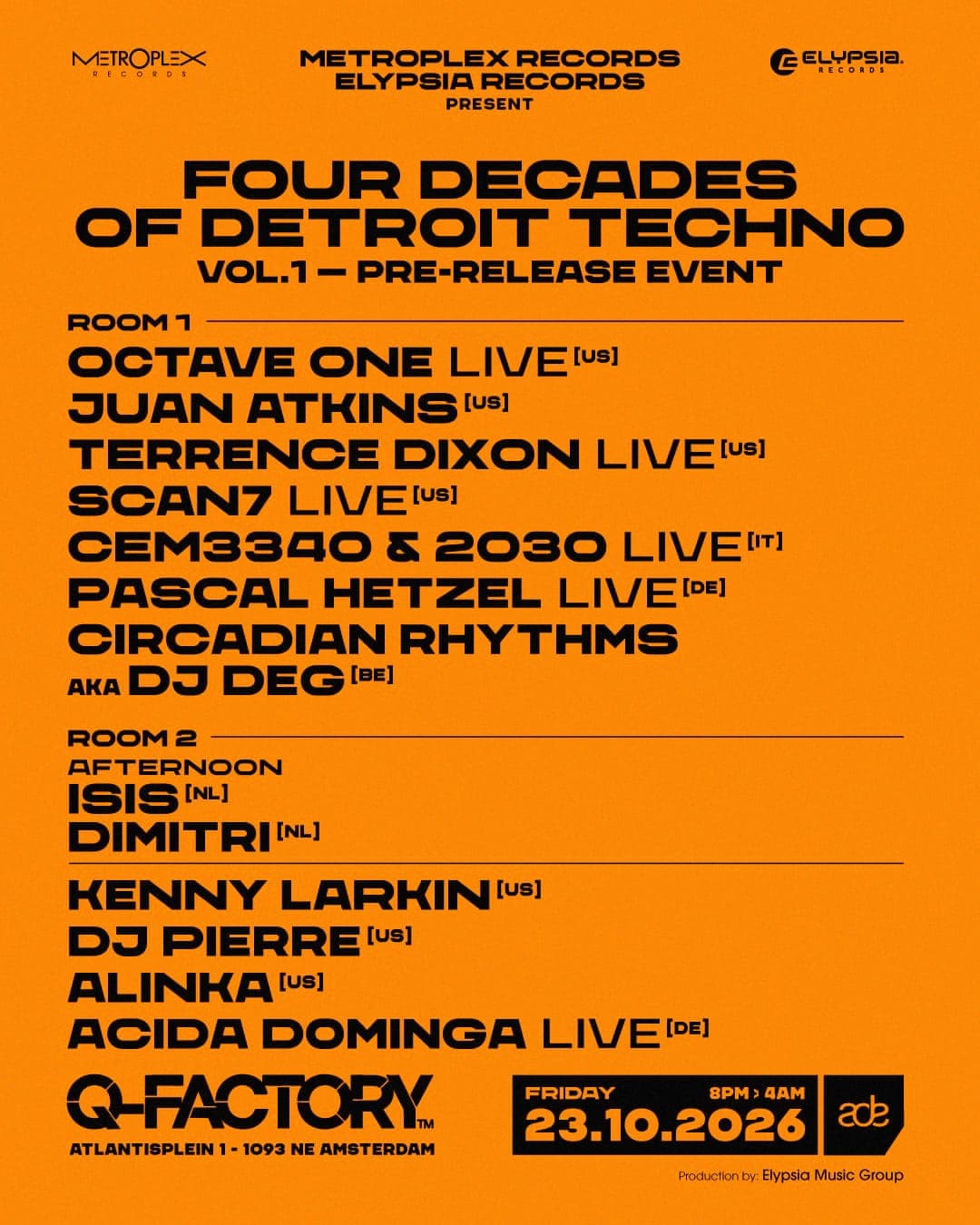
Everything. Atkins founded Metroplex in Detroit in 1985 specifically because nobody else would put his records out the way he heard them. Model 500's "No UFOs," the label's first release, is the record most historians point to when they need a single track to explain where techno actually begins: drum machine, Moog bass, a Detroit kid who had been listening to Kraftwerk and Parliament in the same breath and decided the two belonged together. Atkins made that record with Derrick May and Kevin Saunderson as his running mates, the three of them later canonized as the Belleville Three after the Michigan suburb where they went to high school together. Metroplex is still the clearest line between a bedroom experiment and a genre that now fills festivals from Berlin to Johannesburg, and its associates taking the stage on the 22nd reads less like a tribute act than a continuation of the catalog he spent four decades building.
"He helped create the sound that became Detroit techno and went on to shape electronic music around the world."
What happens after the dancefloor clears?
That is the open question Detroit will be sitting with past 2 a.m. Metroplex survived scene shifts, bootlegs, and the slow bleed of techno's commercial value into other people's hands for forty years because Atkins kept running it himself. Nobody outside the family has said publicly who carries that forward, and nobody should expect an answer at a memorial. What the Lincoln Factory gathering settles instead is smaller and more immediate: that the city that built techno gets to grieve its founder in the one room shape it actually understands, loud, together, until morning.