What actually happened to the track?
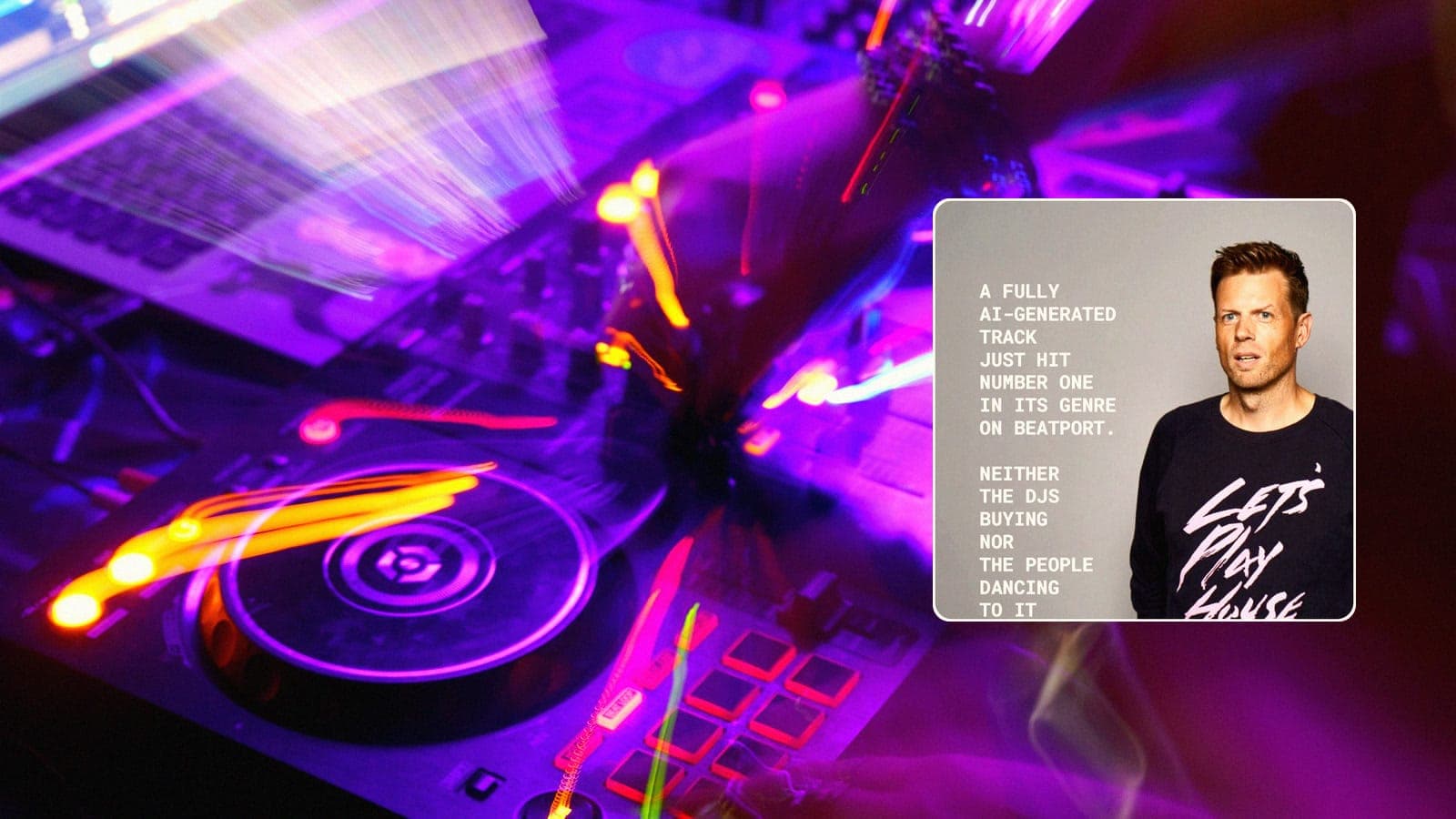
"Movin' to the Sun," credited to Hugel, Ultra Naté and Imael Angel, spent weeks doing something few house records manage anymore: topping both Beatport's chart and Shazam's global chart at the same time. That crossover pull is exactly why the Recording Academy noticed it, and exactly why its removal from Grammy consideration landed hard. The Academy flagged the track over how its vocal came into existence, not its commercial performance, and pulled it from contention while Hugel's camp prepares to appeal.
Where does the AI actually enter the chain?
The vocal on "Movin' to the Sun" traces back to a track Imael Angel released in April called "I'm Moving to the Sun," built with the AI tool Suno. Hugel says he took that seed and rebuilt everything else himself: stock and Splice drums, a Serum and Moog bass, Keyscape piano, Diva strings, the entire instrumental layer. "The AI was just used to do the layer of the vocal, and everything in this session was human made," Hugel said. His team's own estimate puts roughly 95 percent of the finished record as conventionally produced, and they say they kept the session files specifically to prove it if challenged.
"The AI was just used to do the layer of the vocal, and everything in this session was human made."
Can Hugel actually win this appeal?
The Academy's own rule gives him an opening: AI involvement alone doesn't disqualify a submission, the test is whether human authorship is the primary driver of the work. That standard dates to 2023, when the Recording Academy ruled that "Heart on My Sleeve," the viral track that cloned Drake's and The Weeknd's voices, was technically Grammy-eligible because a person wrote it, even though it never got a nomination for an unrelated reason (it was pulled from streaming over a copyright dispute). Hugel's case is different in kind: the AI element sits at the origin of the vocal, not as a voice clone of a named artist, and the rest of the track is, by his account, entirely rebuilt by human hands. Whether the Academy agrees that a human reworking of an AI-generated seed clears its bar will set a real precedent for how AI-assisted vocals get treated across dance music, not just this one song.