Juan Atkins was found unresponsive in his hotel room in Mexico City on November 1, hours before he was due on stage at YuYu Cine Club. He was taken to hospital and pronounced dead there. He was 64. His agency, Greensmith Artists, confirmed the death; as of writing, no cause has been given.
That bare sequence of facts undersells who was in that room. Juan Atkins is not simply another name on techno's long casualty list. He is the reason the word exists. His 1988 track "Techno Music" ran on the Virgin Records compilation that put a label on what he, Derrick May and Kevin Saunderson had been building in Detroit's eastern suburbs since junior high. Before that record, what they were making didn't have an agreed name. After it, the entire planet's dancefloors did.
What did he actually build?
Atkins bought his first synthesizer, a Korg MS-10, at 15. By the early 1980s he and Richard Davis were Cybotron, fusing Kraftwerk-style electro with P-Funk and sci-fi paranoia on tracks like "Clear" and "Alleys of Your Mind". When that partnership split, Atkins kept going alone as Model 500, pressing his own records through Metroplex, the label he started in 1985. "No UFOs", released that year, is the record most historians point to as the actual blueprint for the Detroit sound: the drum machine discipline, the melodic cold, the sense that the music was arriving from somewhere else entirely. The Belleville Three weren't a band, they were three teenagers from the same school who each took that blueprint in a different direction, May toward the emotional and Saunderson toward the pop, with Atkins staying closest to the machine.
Why does a death on tour sting this hard?
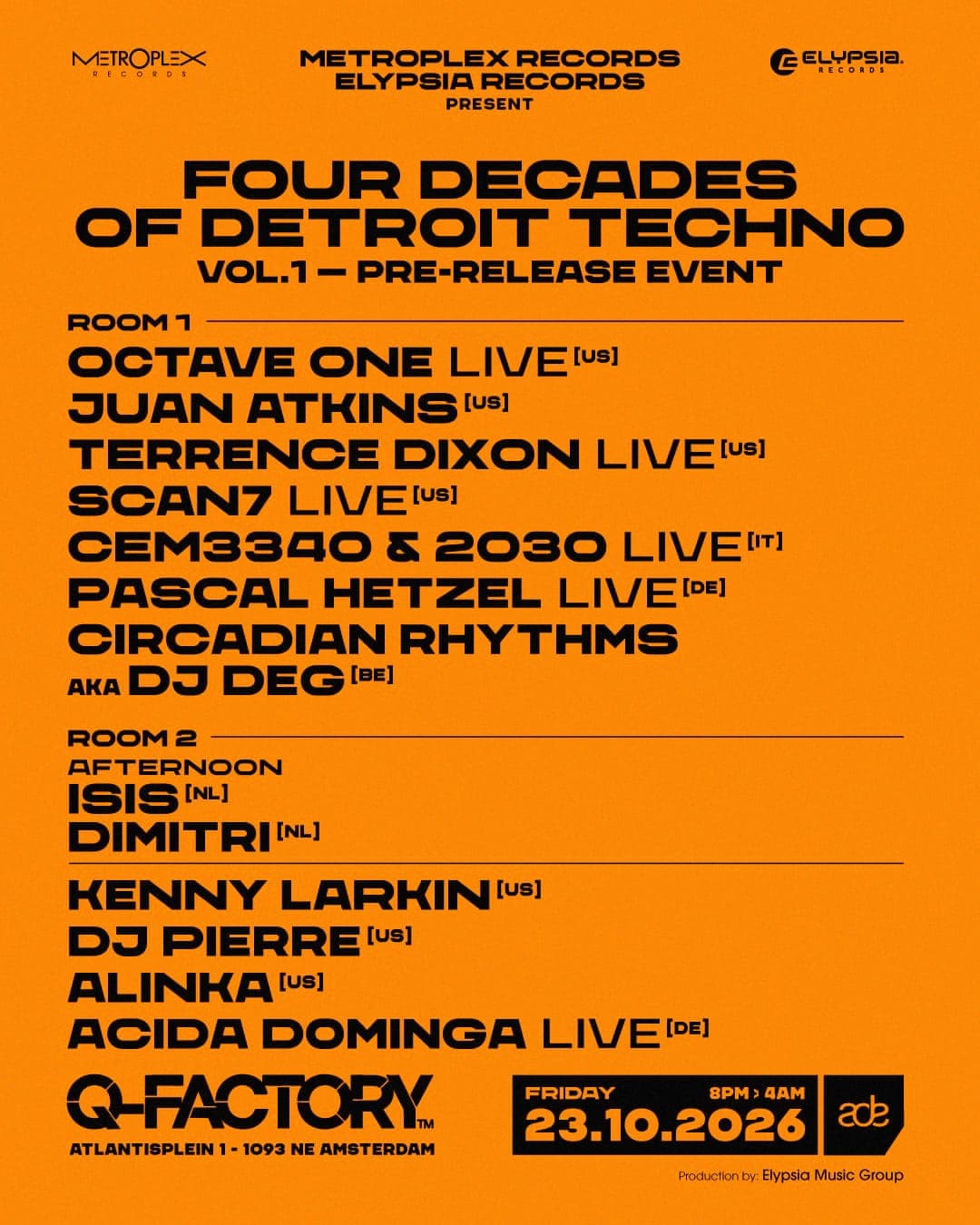
Atkins never stopped working the circuit. He played Amsterdam Dance Event on October 23, sharing stages with the generation of Detroit and European producers who grew up on his records, barely a week before he died thousands of miles away in a hotel room before a gig. That is the part of this story the scene keeps running into: its founding generation is now in its sixties, still flying from city to city, still booked for the next show, and still, too often, dying on the road rather than at home. It happened to Frankie Knuckles' peers, it happens again here.
"Techno Music" didn't just soundtrack a scene. It gave that scene its name.
What happens to his catalogue and his labels now?
Metroplex remains an active Detroit institution, and Model 500's catalogue, from "No UFOs" through decades of Atkins productions, is the closest thing techno has to a founding text. Expect reissues, tributes from the Belleville Three's surviving members, and a wave of festival dedications in the coming weeks. None of that answers the harder question the scene is sitting with tonight: what Detroit loses when the man who named its export is simply gone.