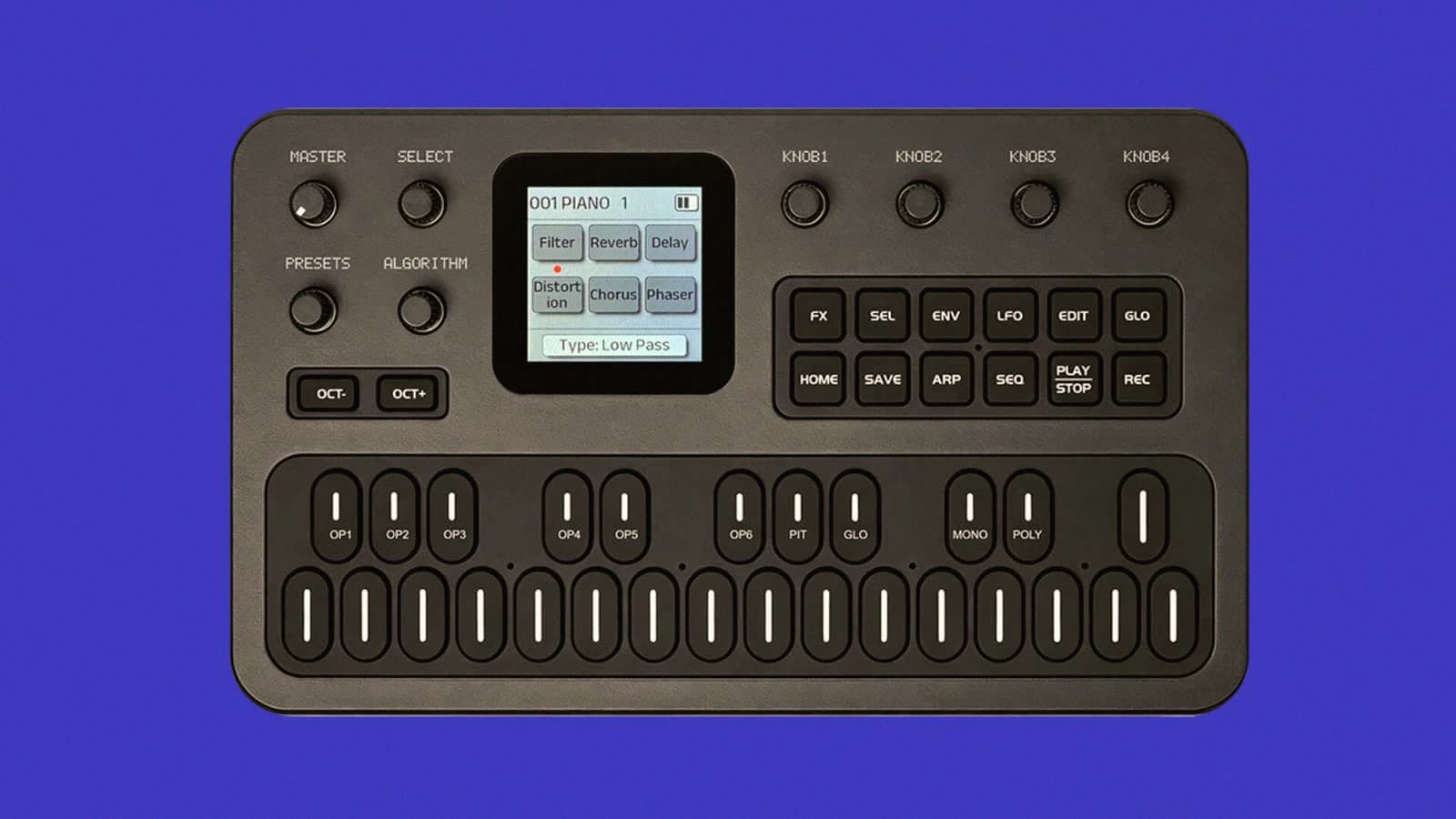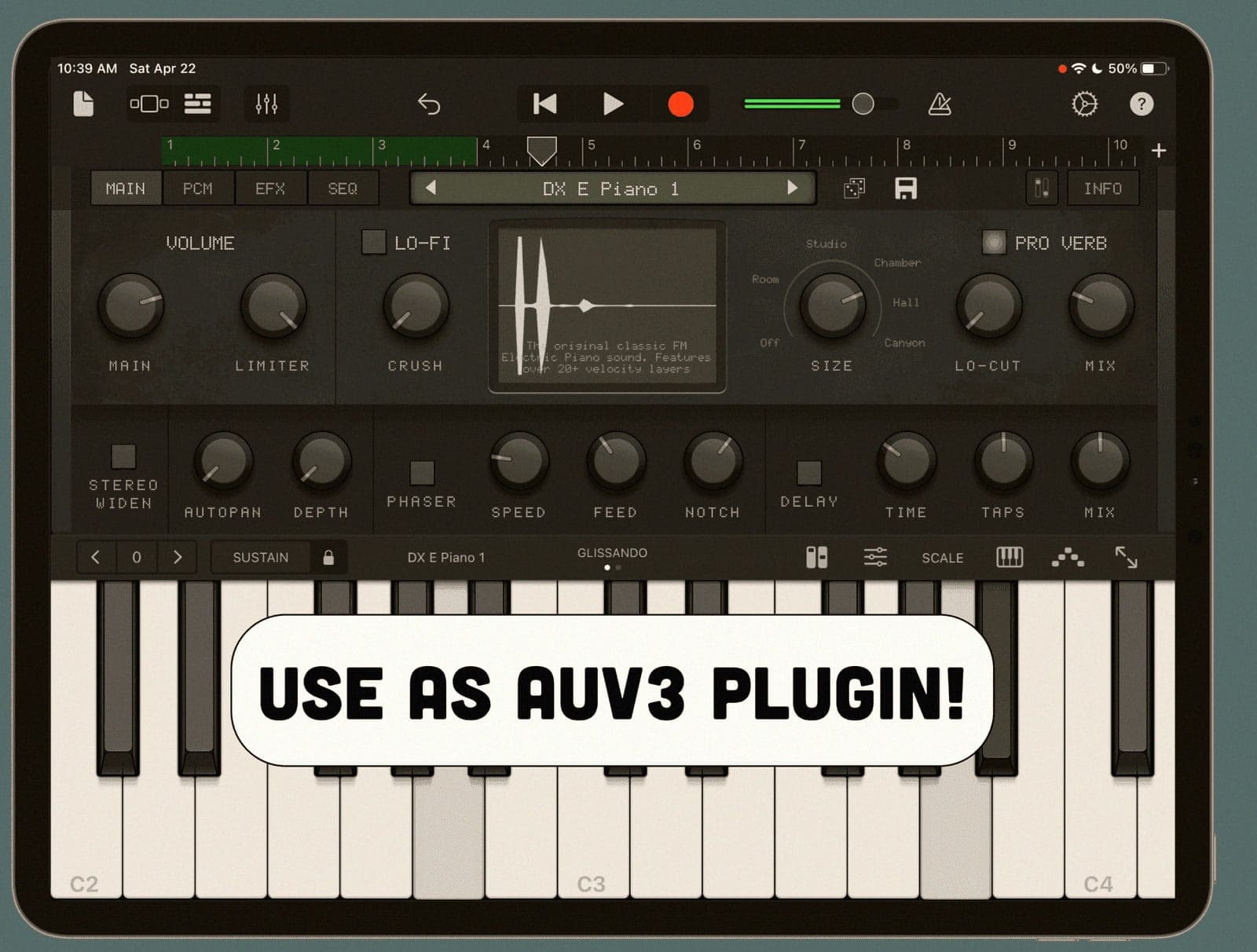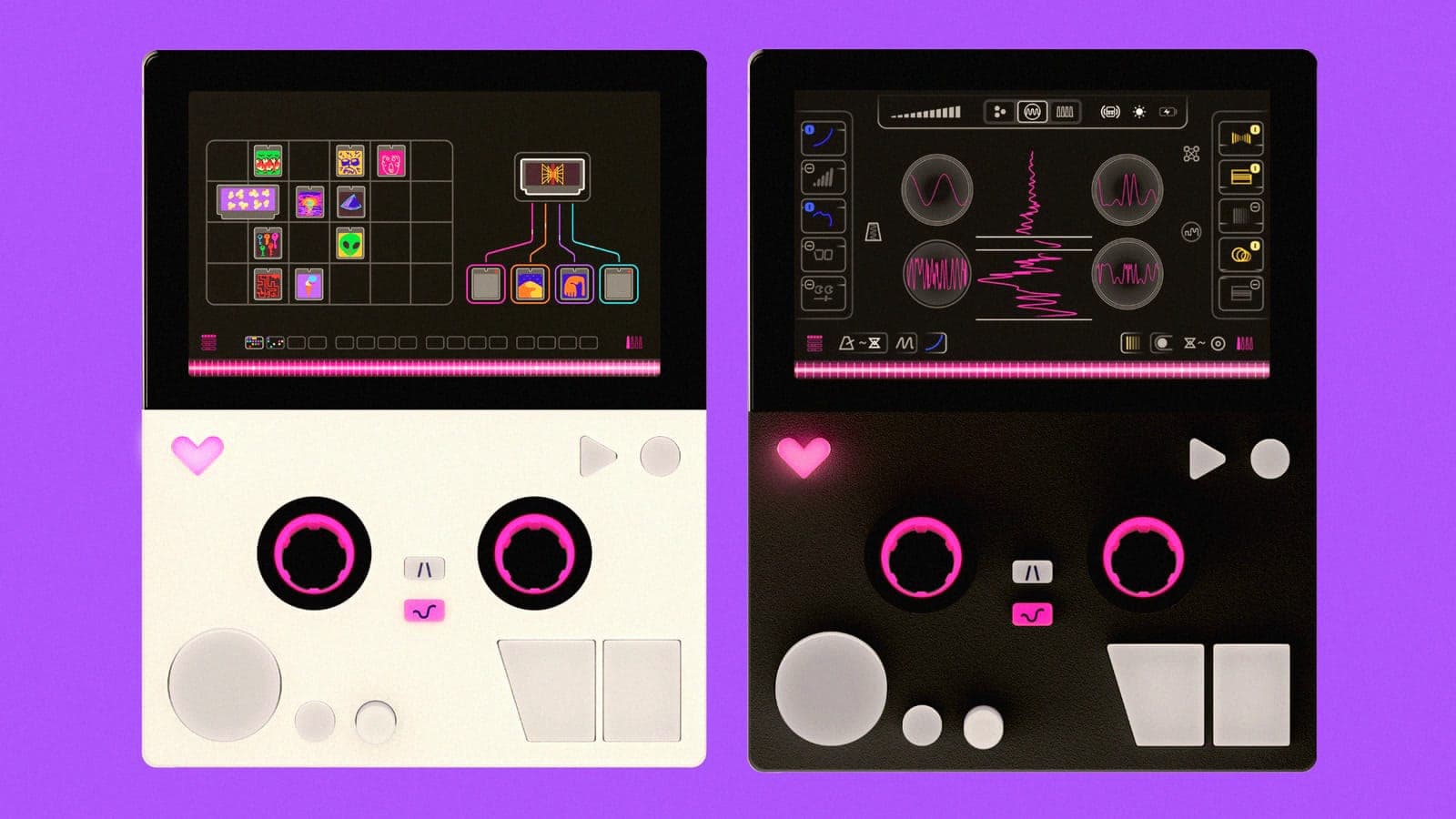
Most FM synths still assume you're sitting at a desk, staring at a menu tree, patch cable or laptop screen within reach. LOVE Synthesizers' debut instrument, FIRST LOVE, is built on the opposite bet: that the best ideas happen on a train, in a park, on a soundcheck break, with nothing plugged in.
The Icelandic company's $699 synth is now shipping after a run through Superbooth and a long preorder queue, and the spec sheet reads like a DJ's travel kit as much as a synthesizer's. It runs on batteries. It has built-in stereo speakers. And its pressure-sensitive pads register velocity and aftertouch, which matters a lot more than it sounds like it should once you've tried to play an expressive FM patch on a flat, dead key.
What's actually inside the box?
FIRST LOVE is a four-part multitimbral engine, meaning you get four independent FM voices running at once, each switchable between polyphonic and monophonic modes depending on whether you want a pad or a lead. Under the hood it's classic FM synthesis, operators modulating operators, but LOVE Synthesizers has wrapped it in wave shaping and morphing envelopes so the sound design doesn't require a manual to approach. Co-founder Markus Bjarnason put it plainly: the instrument is meant to be "both approachable and deep, simple and sonically complex."
That same four-part structure doubles as a performance tool. Live looping and riff sequencing are built in, so a single pass on the pads can turn into a layered groove without ever touching a DAW. Microtonal tuning support pushes it past standard twelve-tone scales for anyone working in Afro house's polyrhythmic textures or deep house's looser modal runs.
Why does the battery matter more than the synthesis engine?
Because portability is the actual pitch. A desktop FM synth with great sound design is still a desktop synth: it needs power, monitors or headphones, and usually a controller to play it properly. FIRST LOVE's built-in speakers and battery power mean it works as a complete, closed instrument. For a bedroom producer sketching a bassline on a commute, or a DJ warming up an idea backstage before a set, that removes every piece of friction between an idea and a sound.
It still plugs into a studio when you want it to: DIN5 MIDI, sync and USB connectivity cover integration with a modular rack, a DAW or a hardware sequencer. The synth is designed to move between "sketch anywhere" and "produce properly" without forcing a choice.
"This instrument is both approachable and deep, simple and sonically complex."
Where does this land in the gear market?
$699 puts FIRST LOVE above entry-level grooveboxes but well under flagship FM hardware, and its multitimbral architecture is closer to a compact performance workstation than a single-voice synth. For the underground house crowd specifically, that mix of serious synthesis depth and zero studio dependency is the rarer combination. Most battery-powered gear trades away sound design for convenience; FIRST LOVE is betting bedroom producers and touring DJs will pay for both.