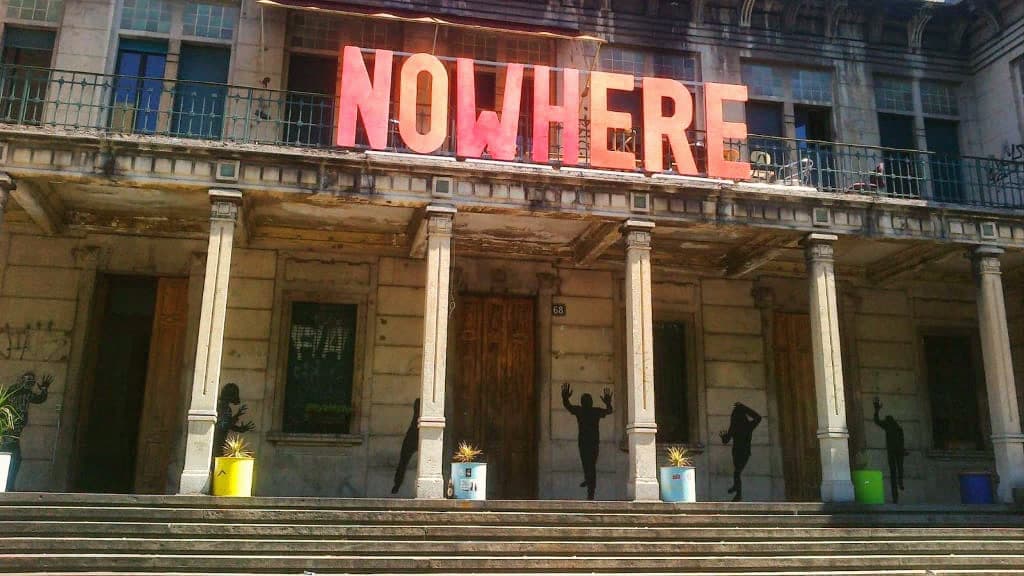
Macao never pretended music and politics were separate things. For nine years, an abandoned slaughterhouse in Milan's Ortomercato district hosted a general assembly on Monday and a packed dancefloor on Saturday, run by the same people, under the same banner: a space nobody landlord could claim, because nobody had legally given it to them in the first place.
That space closed in 2021. Now it gets a book. Macao's archive, including images, posters, essays, statements and notes assembled by multiple generations of the collective's own organizers, becomes "Archiving the Ungovernable," out December 14 in Italian and English through Nero Editions, per Resident Advisor.
What was actually inside Macao?
Macao occupied the former Ortomercato slaughterhouse starting in 2012, without permits, as part of a wave of Italian social-center occupations that treated cultural production and direct action as the same practice. The building hosted the long-running Dance Affliction parties and the Saturnalia festival, drawing a crowd that came for the lineup and stayed, or arrived, for the assemblies. In 2017 the collective pushed to buy the building outright and lobbied for formal recognition as a cultural institution, an attempt to convert nine years of occupation into something a city government couldn't simply switch off. It didn't stick. Macao formally closed in 2021, though Resident Advisor reports the organizers have kept working since to reopen the project in some capacity.
Is a book a substitute for a building?
Nobody publishing an archive thinks it replaces the thing it documents, and that tension is exactly why this book matters. A PDF of old posters can't throw a party or host an assembly; it can't be raided, defunded or sold out from under anyone either. Macao's organizers spent years trying to turn occupation into ownership and failed. What they're left with is the paper trail, and paper trails outlast landlords. For a scene that watches squats and self-managed clubs get evicted across Europe on a semi-regular basis, from Berlin to Rome, that durability is the point: you can lose the room and still keep the record of how you ran it.
Macao proved a dancefloor and a political assembly could share one address for nearly a decade. The archive is the proof that survives after the address doesn't.
Why it matters
Every occupied venue that closes resets the clock on institutional memory: the next collective trying the same move usually starts from zero, without access to how the last one actually organized security, bookings or legal defense. A published archive turns Macao's nine years into something the next occupation can actually consult, not just romanticize.
What we think
Macao's real achievement was never the parties, good as Dance Affliction reportedly was. It was proving that a European city will tolerate an unlicensed, self-governed cultural space for nearly a decade if it keeps producing something the city can't easily replicate. That's a harder case to make from a book than from a warehouse, but it's the only case left to make.


