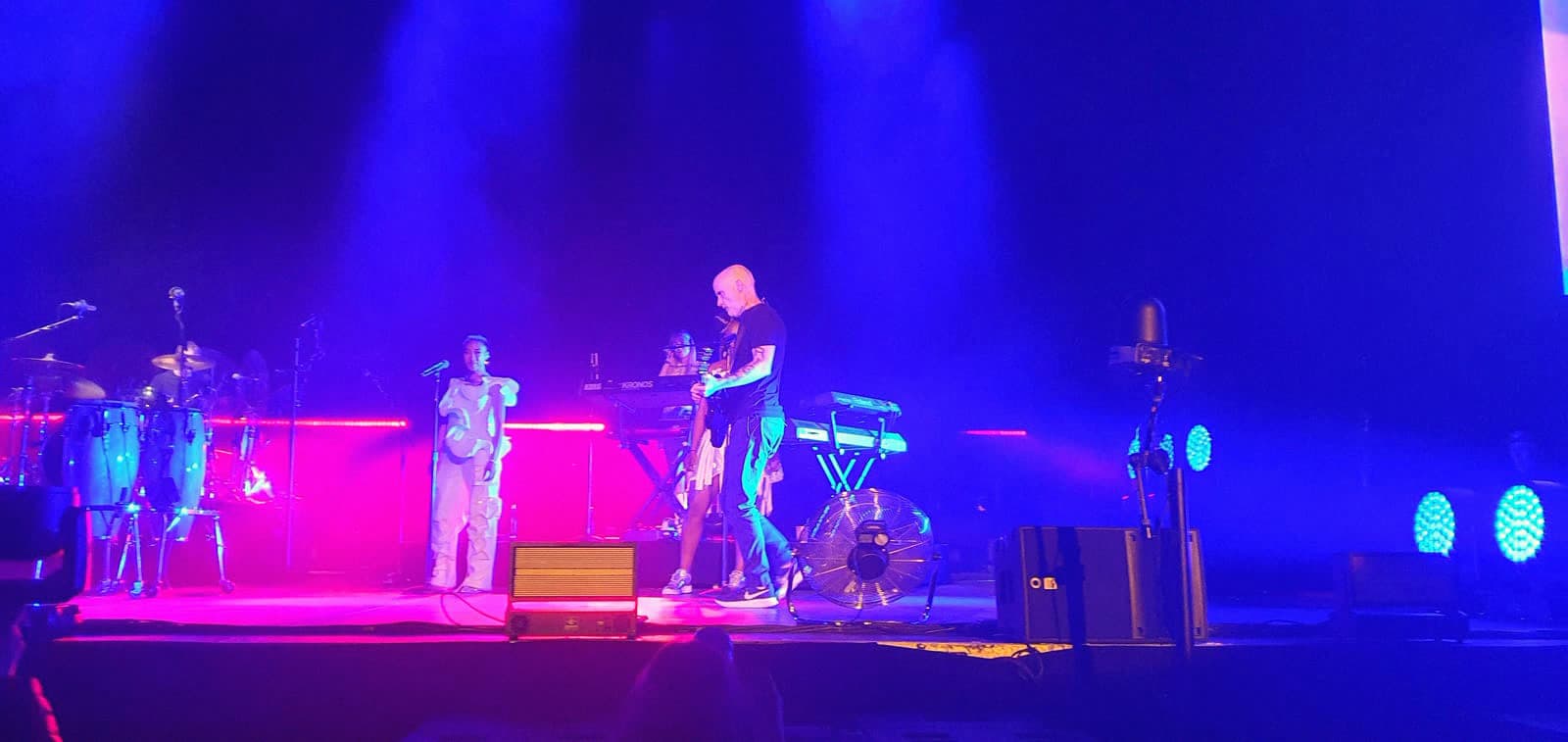
Dance music has been getting faster for decades, and everyone on the floor already knows it. What Moby did on 24 November was give that slow creep a body. Instead of a chart or a think piece, he sat down behind a drum kit, filmed himself, and physically played his way through each era's tempo, decade by decade, letting his own hands do the arguing.
Why does a drummer telling the joke matter more than a chart would?
Anyone can post a graph showing house records climbing from the high 110s toward 140 and beyond. Moby played it instead. He has spent more than three decades moving between house, techno, breakbeat and ambient, so when his sticks visibly speed up from one decade to the next, it is not a stranger's opinion about where the floor has drifted. It is someone who was there for the drift, demonstrating it with his own body. That is what turned a goofy home video into something people actually argued about in the comments.
"A completely unscientific, and most likely ridiculous, cursory overview of dance music tempos through the years."
He undercuts his own authority in the caption, on purpose, and that is exactly why it works. Nobody trusts a lecture. People share a joke that happens to be true.
Is house actually losing its groove to speed?
This is the same fight TTH has been tracking as 140 has pushed into rooms that used to run at 124 to 128: faster does not automatically mean better, and a lot of the pocket, the swing, the thing that makes house feel like house rather than techno with a vocal, gets flattened out above a certain BPM. Moby's video does not resolve that argument. It does something more useful: it makes the tempo creep visible and funny at the same time, in under a minute, without a single word of lecture. A 59-year-old artist who helped soundtrack rave culture's first wave sitting down to physically clock how much faster the music has gotten since is its own kind of data point, even dressed up as a joke.
And the rat friend, present in his little hole throughout, is doing exactly nothing to the tempo argument. It is just a good gag, and part of why thousands of people shared a video about BPM history instead of scrolling past it.
What happens to the debate now?
Nothing is settled by one drummer and one rodent. But the video is already doing the thing TTH's own tempo-war coverage flagged: putting the question of "has dance music outrun its own groove" back in front of people who do not normally think about BPM history at all, dressed as entertainment rather than argument.