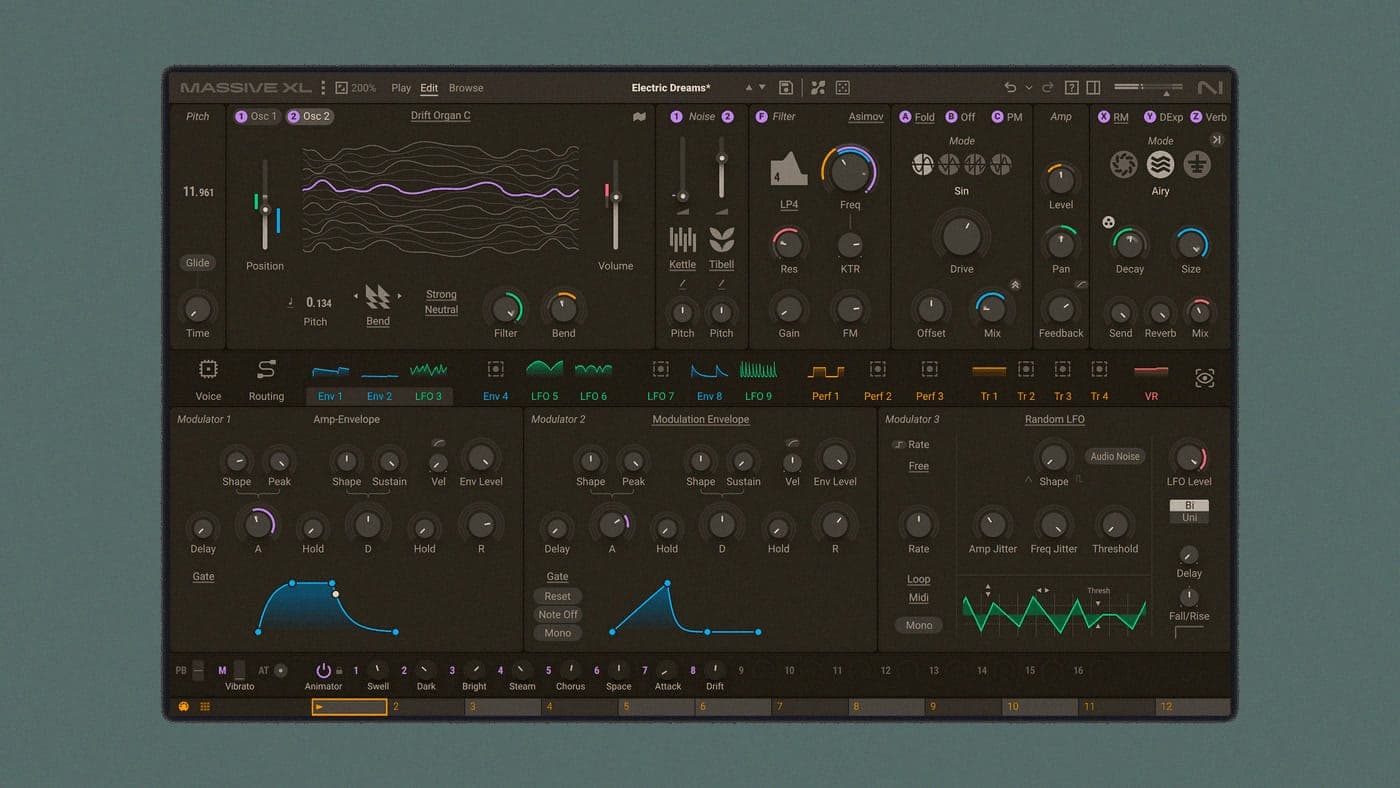
Wavetable synthesis has always demanded a certain patience: you build a sound oscillator by oscillator, filter by filter, until the patch matches what's in your head. Native Instruments just shortened that path considerably. Massive XL, released October 27, 2026 as the successor to Massive X, ships with a Preset Generator that takes a reference audio file and spits out a complete, playable, fully editable patch built to approximate it.
This isn't a one-click preset browser. The generated patch lands in Massive XL's full synthesis engine, oscillators, filters, modulation routing, all exposed and tweakable from the moment it's created. For deep house and tech producers who build original textures rather than reach for factory presets, that's the actual pitch: use an AI pass to get 70 percent of the way to a sound, then do the sound-design work that makes it yours.
What else changed under the hood?
Massive XL adds three new tools built around speed: Mutator, Morpher and Animator, each aimed at reshaping and personalizing a patch fast once you've got a starting point, whether that's from the Preset Generator or built from scratch. The library grows too: more than 100 new wavetables and 100 new noisetables, plus the ability to build custom wavetables directly from your own samples, a meaningful upgrade for producers who sample field recordings or hardware synths into their sound palette.
On the effects side, Native Instruments adds Raum (a reverb), Replika Shimmer (a shimmer-delay variant) and Tape Wobble, rounding out the synth's internal processing without forcing producers into a separate plugin for basic polish. Massive XL also adds polyphonic aftertouch, letting each held note respond independently to post-strike pressure, a detail that matters more for expressive, hands-on performance than for programmed house basslines, but welcome either way.
The Preset Generator doesn't replace sound design. It replaces the blank-page problem.
Is this a shortcut or a real accelerant?
The honest answer is both, depending on how you use it. Feeding in a reference and exporting the result unedited is a shortcut, and a producer doing that will get a patch that sounds like an approximation, not the real thing. But feeding in a reference, then digging into the generated oscillator and modulation setup to push it somewhere new, is closer to how producers already work with sampling and resynthesis tools. Massive XL just makes that first step faster.
Pricing keeps the door open either way. The full version runs $199 / €199 / £179, cut to $99 / €99 / £89 through the end of 2026. Existing Massive X owners upgrade for $69 / €69 / £59, or $49 / €49 / £44 during the intro window. Producers who just want to try the engine without committing can grab the free Massive XL Player bundled into Komplete Start.