What is actually new about a "neural" drum synth?
Most drum plugins, however deep their menus go, are still sample players: you pick a kick, a snare, a hat, and the plugin triggers that same recorded waveform every time, maybe layered with a few round robins to fake variation. Neutone's new plugin Terra skips the sample entirely. Every hit is generated on the spot by a neural network trained on hundreds of thousands of one-shots pulled from drum machines, acoustic percussion, analog synths and Foley recordings, then rendered as audio in milliseconds.
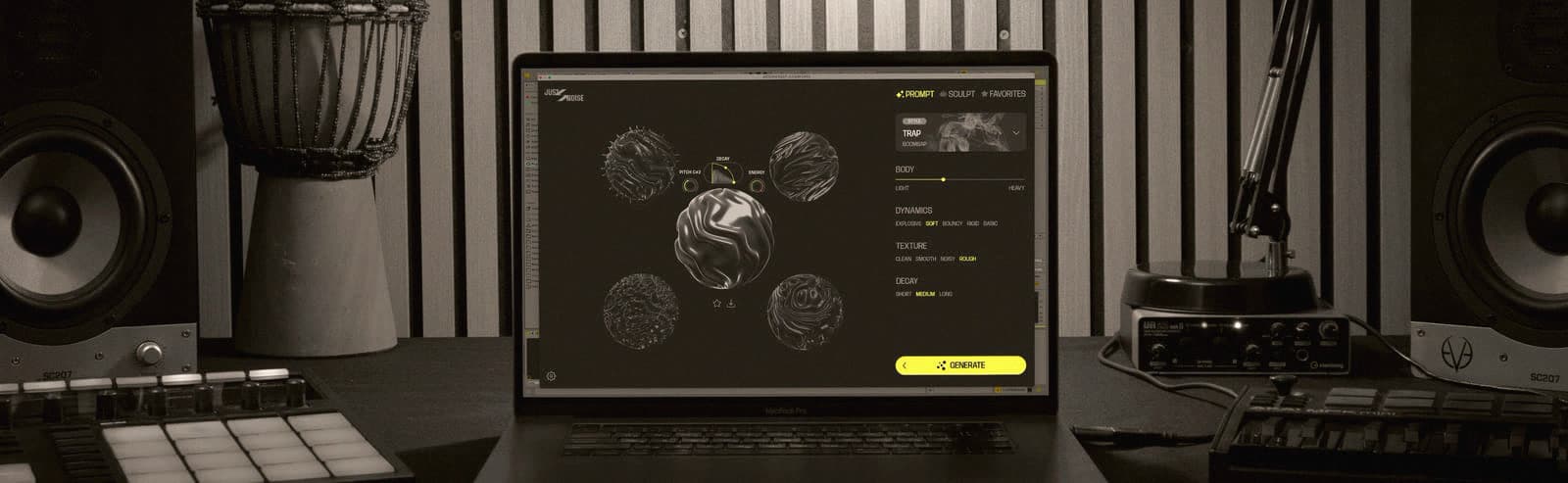
The interface is built around what Neutone calls sound maps: more than 50 of them, each a continuous, explorable space rather than a preset list. A producer can draw a path or an orbit through a map and the engine morphs the sound's character as playback moves, shifting from say a tight digital click toward a looser analog thump without ever repeating a fixed sample. There is also a Drift mode for hands-off generative variation and a button that assembles a fully randomized kit from scratch.
Why would a house or techno producer actually want this?
The practical pitch is about running out of fresh drum sounds. Anyone who has dug through the same three or four drum-machine sample packs that show up in half the afro house, tech house and minimal sessions on a label's demo pile knows the problem: everything starts to sound like everything else. Terra's pitch is that because nothing is pulled from a fixed sample pool, two producers starting from the same sound map will not land on the same hit twice, and a single producer can generate an effectively unlimited number of micro-variations for round robins instead of the usual three or four alternating samples.
That matters specifically for drum programming in four-to-the-floor music, where the kick and hat pattern repeats for minutes at a time and any audible sample repetition becomes obvious fast. A synthesis engine that is designed to never hit the exact same waveform twice is solving a problem that genre produces on its own.
"Multidimensional descriptions of audio, which are decoded into new sounds in milliseconds"
That is how Neutone itself describes what happens when a user moves a cursor across one of Terra's sound maps, per its reporting in Synthtopia.
Does this replace programming your own drums?
Not really, and that is where the friction shows up. Terra still requires a producer to draw the paths, pick the maps and shape the kit, it is a sound-design tool rather than an autopilot. But any AI-trained synthesis engine sits next to a real and ongoing argument in production circles over whether a neural network standing between a producer and the raw waveform changes what counts as programming your own drums versus directing a model to do it for you. Neutone is not claiming otherwise: Terra is positioned as an instrument for sound designers who already know what they are listening for, not a one-click kick generator.
For now Terra is free to try in early access, with Audio Units and VST3 builds on macOS and Windows. The full commercial release is set for December 2026 at $99, and anyone who sticks with the early access period through its feedback survey locks in a 50% discount on that price.