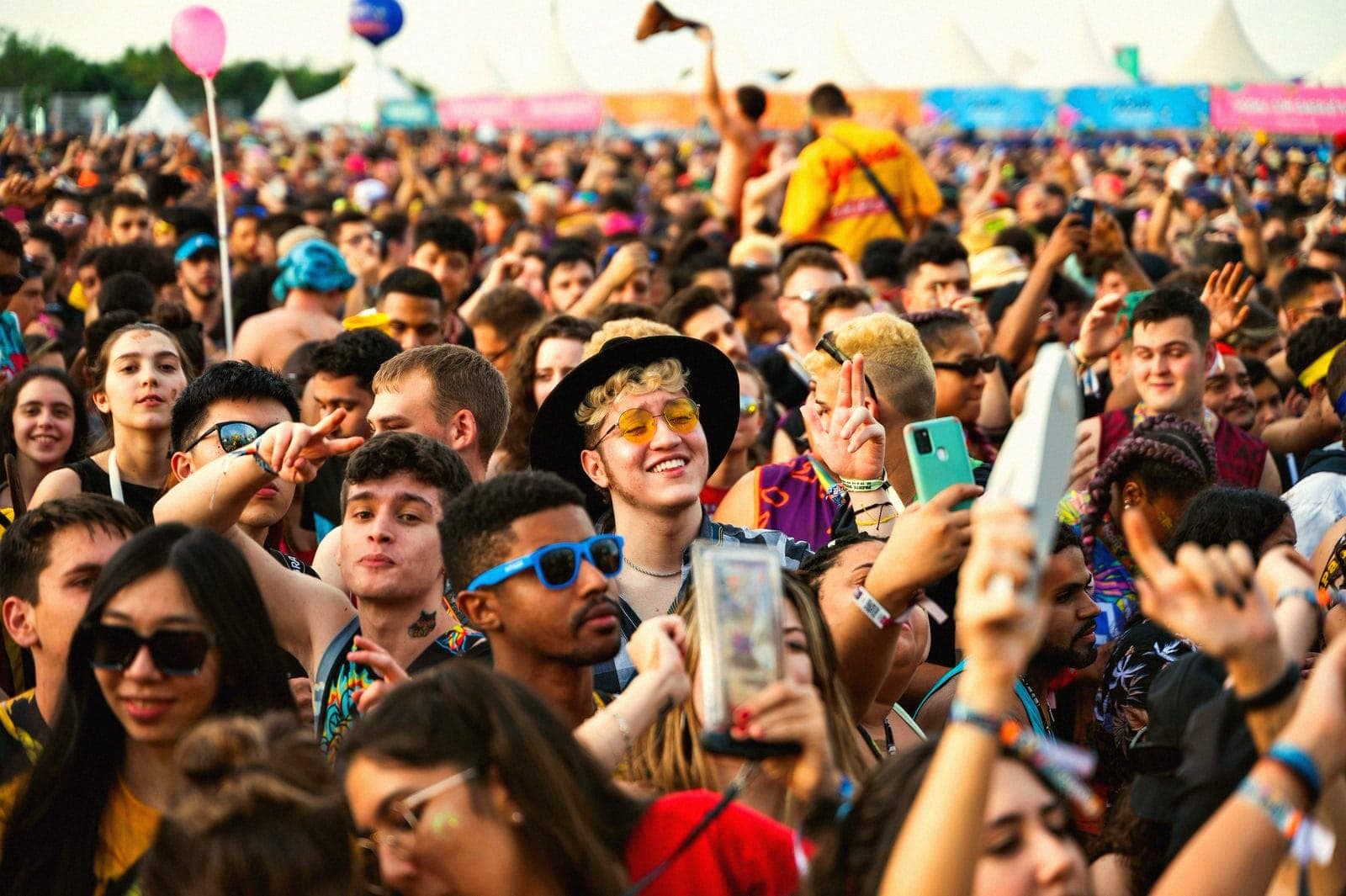
Nous'klaer Audio had a full day-festival built: outdoor stages at Brutus, a lineup drawn from its own dub-techno and deep-tech roster, tickets sold. Then, on 26 June, the city of Rotterdam pulled the permit. Not for noise, not for a licensing dispute. For heat.
The KNMI, the Netherlands' meteorological institute, had just issued the country's first-ever code red heat warning. Hospitals were already under strain. Rotterdam's decision wasn't really about Nous'klaer at all: the municipality cancelled every event at that permit scale across the city, treating an outdoor gathering the same way it would treat a public-health risk, because that's what it had become.
What did the festival actually lose?
A full day's outdoor production, built over months, gone with about 24 hours' notice. Nous'klaer didn't cancel the weekend outright. The label moved what it could indoors, booking smaller rooms at export and Sonoor and keeping Azu Tiwaline, Efdemin and Stevie Cox on the bill. It's a downgrade from a purpose-built festival day to a scaled-back club night, but it kept the weekend from being a total write-off. The label then opened a GoFundMe to cover the difference between what it had already spent on production and what an indoor pivot could recoup; it cleared its €20,000 target within days, which tells you the label's audience understood exactly what had happened and why it wasn't Nous'klaer's fault.
Nous'klaer wasn't alone that weekend. Defqon.1, one of the world's biggest hardstyle and hardcore gatherings, was cut short mid-event at Walibi Holland Grounds. Solidays, the Paris charity festival that funds HIV/AIDS programmes across 21 countries, cancelled outright, costing it roughly 70% of its annual income for the organisation it exists to fund. Three very different events, three different genres, one cause.
Is this actually about climate, or just a bad week?
World Weather Attribution, the scientific network that runs rapid-response studies on extreme weather, published its analysis of the same event on 26 June. Its finding: the overnight heat driving these cancellations is now roughly 100 times more likely than it was during Europe's 2003 heatwave, the one that killed more than 70,000 people. Compared with 20 years ago, it's up to 200 times more likely. Of the nearly 850 European cities the study examined, 45% either broke or were on track to break their all-time heat-stress records that June.
"An event of similar intensity has become tens to hundreds of times more likely because of global warming."
World Weather Attribution published that finding on 26 June 2026. That's not a freak weekend. That's the baseline shifting under an entire outdoor-festival calendar that European clubland has built its summer around for decades, and none of those outdoor formats carry any real insurance against a government pulling the permit for public-health reasons a day out.
Would a smaller promoter have survived this?
Nous'klaer absorbed the hit because its audience showed up for the GoFundMe within days. That's not a given. A promoter without that kind of loyalty, or one running on tighter margins than an independent label's passion project, could easily have eaten the sunk production cost alone and never rebooked the room. The difference between Nous'klaer's overnight pivot and a quiet cancellation that never makes the news is, in the end, whether the crowd shows up twice: once for the tickets, once for the cagnotte.