What does KAZU actually do?
Phase Fiasco built KAZU around a simple loop: stack, randomize, animate, sequence, perform. You pull effects from eight categories into a rack, from lush reverbs and tape echoes to granular glitches and spectral destruction, 50 processors in total including Bitrot, Circuit Bend, Dattorro, Granuverb, Spectral Delay, Vocoder and Formant Shift. Hit Randomise to throw the rack into an unfamiliar combination, then hit Animate and every effect in the chain starts moving together instead of sitting on fixed parameter values.
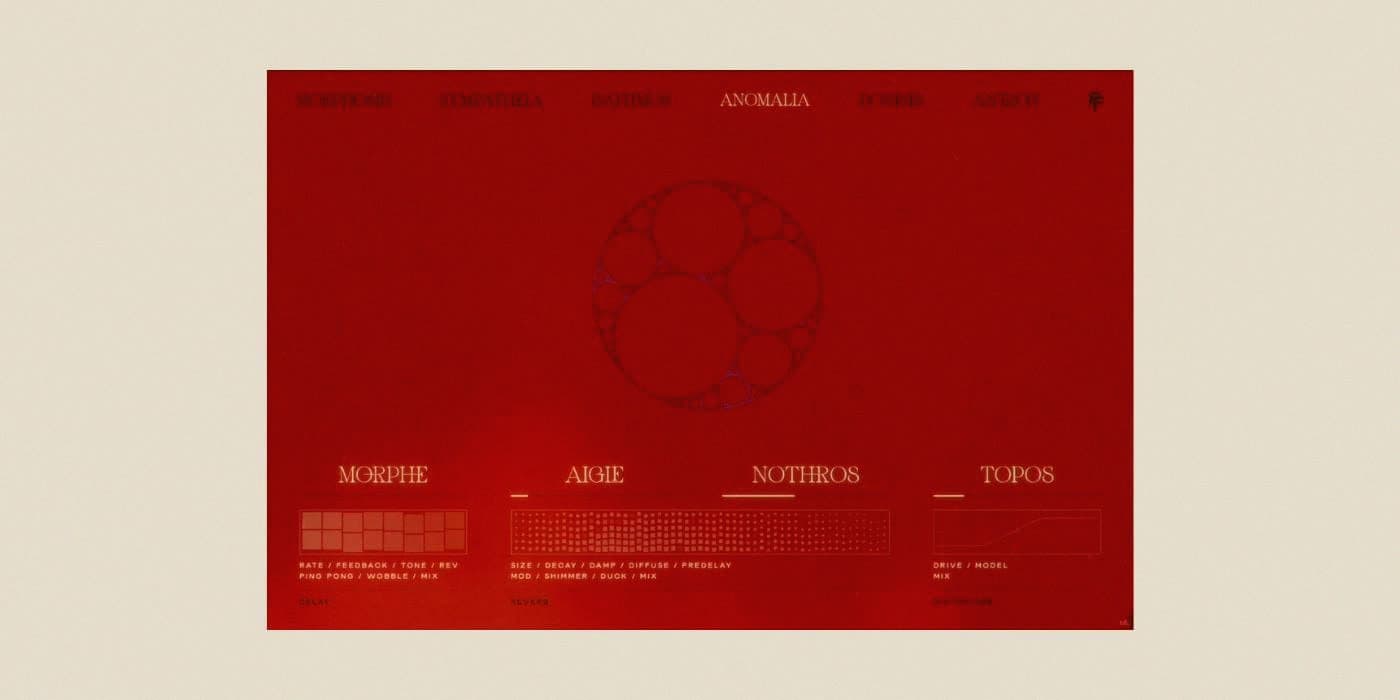
The sequencing side is where it gets useful for actual production work: a color-coded gate sequencer lets you draw on/off patterns per effect rather than programming notes, so a delay can drop in and out on its own rhythm while a granular processor runs a completely different pattern underneath. Underneath all of it sits a modulation engine with generative sequencers, custom curves, LFOs, a pitch follower and audio-reactive sources, so the movement can respond to what's actually happening in the audio, not just a fixed LFO rate. The UI comes from designer Jonas Eriksson, who has previously worked with Moog and Fingerlab.
Why does this matter for house and techno producers specifically?
Most multi-effects racks still ask you to automate every parameter by hand if you want a send to evolve over a build or a breakdown, which is slow and rarely survives being played live. KAZU's pitch is that the animation and sequencing live inside the plugin itself: stack a granular reverb and a spectral delay on a vocal chop or a hi-hat loop, hit Animate, and you get the kind of shifting, semi-random texture that used to take a modular rig or a lot of manual automation to fake. The X/Y pad and four macros push that further into performance territory, useful for anyone running FX sends live on a deep-tech or minimal set where the room needs to hear the sound actually move, not just loop.
"50 effects of happy accidents."
How much does it cost and where can producers get it?
KAZU is $29 plus applicable tax, sold directly through Phase Fiasco's site. It runs as VST3/AU on macOS (Apple Silicon and Intel) and VST3 on Windows, with a Linux build coming later. Phase Fiasco says the plugin will keep getting new effects and features through regular updates, the same studio behind Tape Fiasco 2, Annulus and Modular Fiasco.