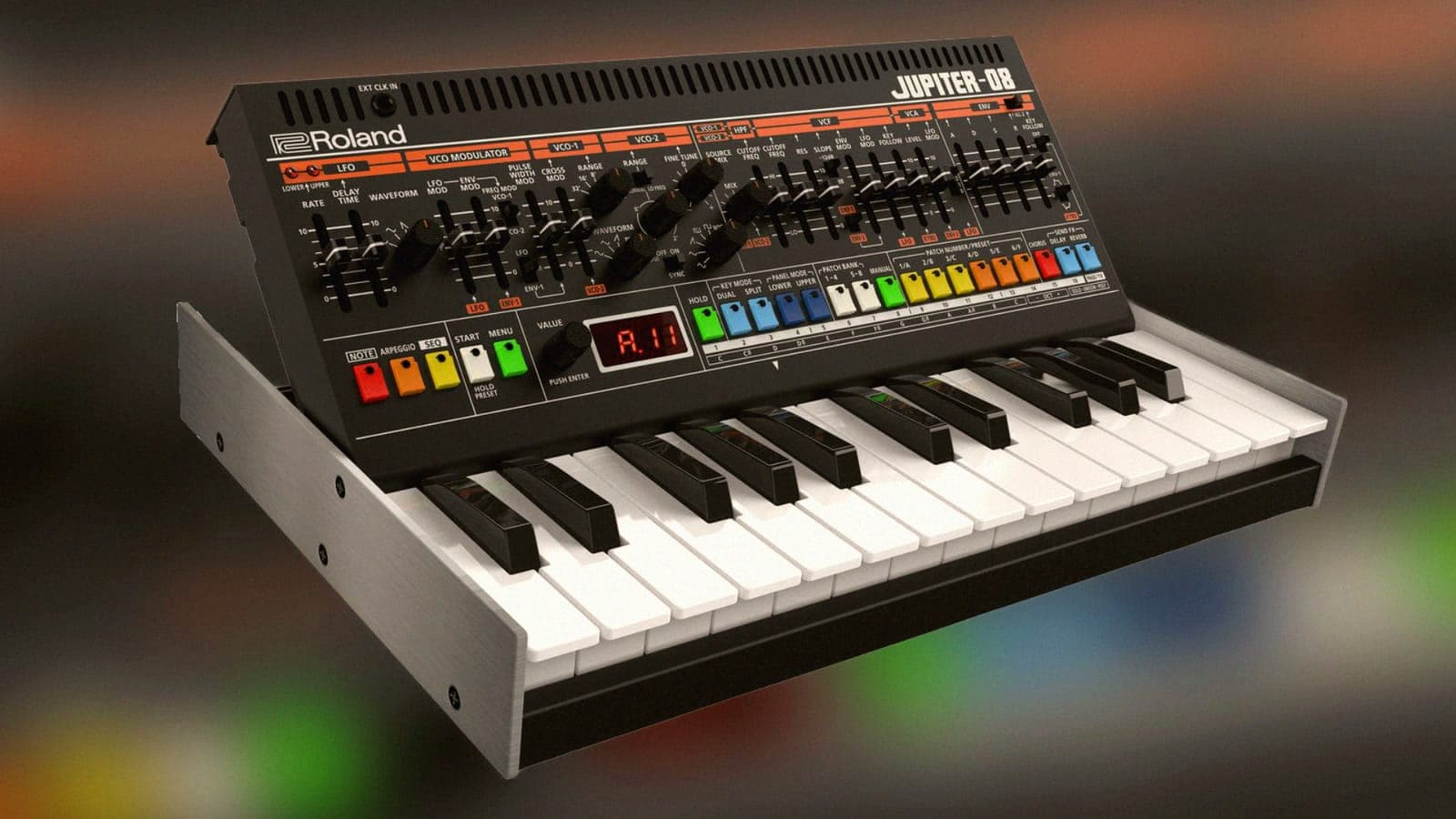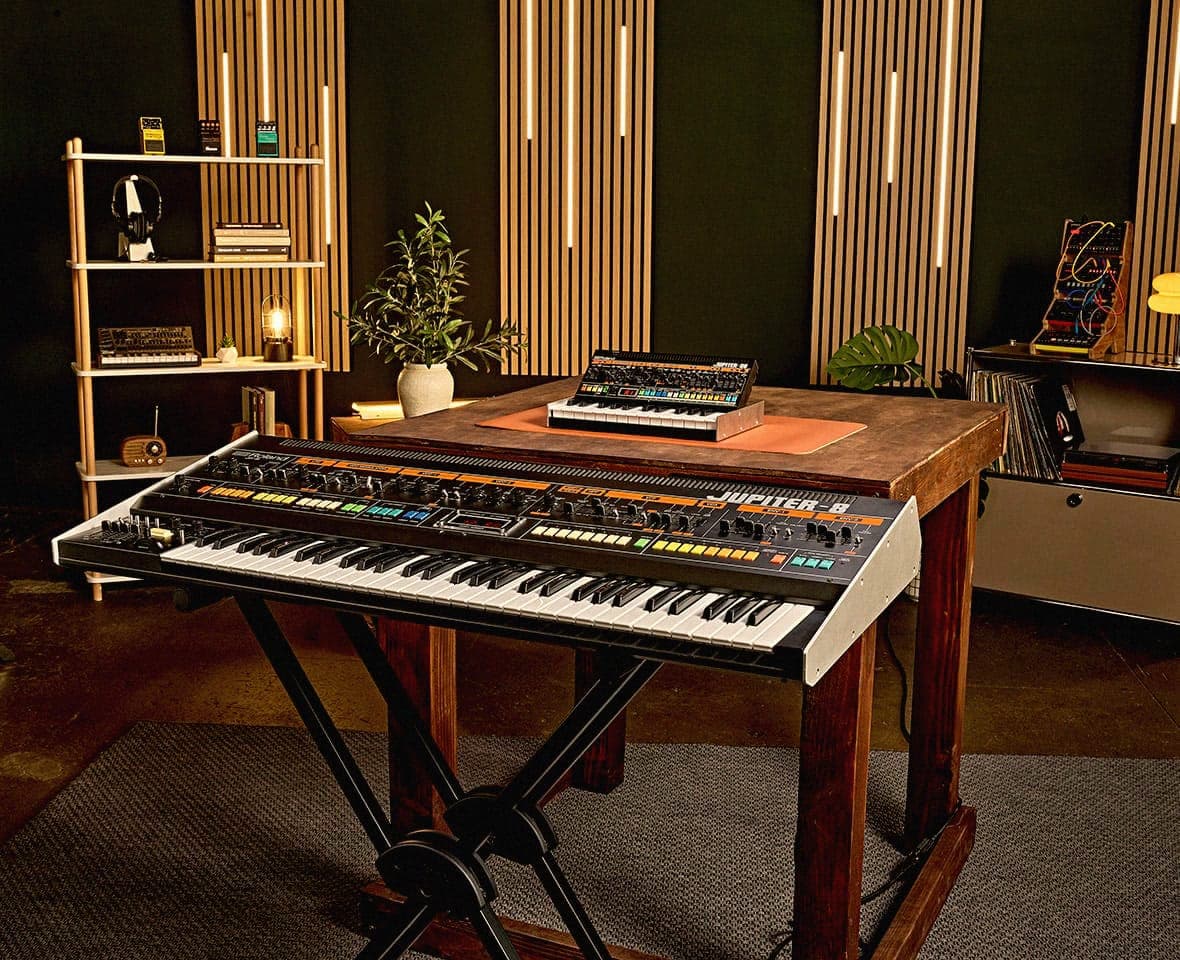
Original [[gear:roland-jupiter-8|Jupiter-8]] units, when they surface for sale, routinely clear $4,000 to $6,000 depending on condition. Roland's answer to that gap, 45 years after the Jupiter-8 first shipped, is a Boutique-format box a tenth the price.
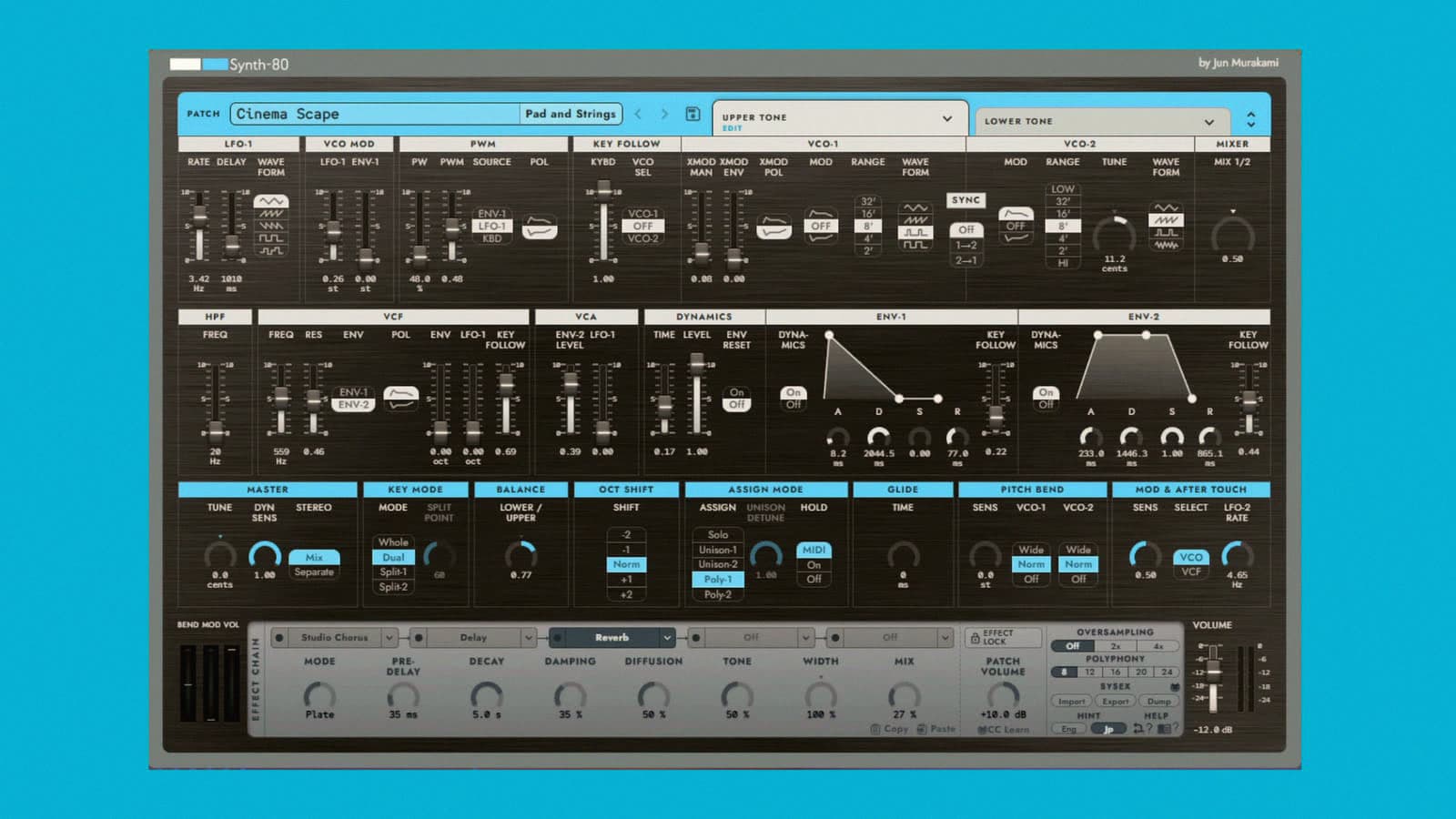
The JUPITER-08, announced October 20 alongside a companion synth called n/vision, packs 32-voice polyphony (expandable beyond that), a two-part 64-step polyphonic sequencer that handles up to 8 notes per step, a built-in arpeggiator, and 17 MFX effect types plus a dedicated delay and a five-mode reverb with a shimmer setting. It ships with the K-25m keyboard dock, runs on four AA batteries or USB-C, and is available immediately at $549.99.
Does Boutique-format modeling actually capture what made the original special?
Here's the catch worth sitting with before anyone calls this a reissue: Roland built the JUPITER-08's voice engine on Analog Behavior Modeling, its own DSP approach to emulating analog circuit behavior, not a recreation of the Jupiter-8's actual 1981 voice architecture, and not even the same circuit as the older JP-08 Boutique that already carried the Jupiter-8 name into the mini format. Roland says voice allocation and pitch behavior have been specifically refined for a more vintage-inspired response this time around, which reads as a tacit admission that the JP-08 fell short on that front.
That distinction matters for anyone who actually played a real Jupiter-8: the character came from component drift, voltage-controlled oscillators that never quite agreed with each other, and an interface built for performance, not menu diving. A modeled engine in a box the size of a lunchbox can get close. It cannot be the same instrument, and Roland isn't claiming it is. What it's selling is accessibility: a Jupiter lineage sound a bedroom producer in Lagos or Manila can actually own, not just sample.
Roland says the JUPITER-08's voice allocation and pitch behavior have been refined for a vintage-inspired response, distinct from both the 1981 original and the older JP-08 Boutique.
What's different about n/vision?
n/vision launched the same day but takes the opposite approach: it's the first Boutique instrument that doesn't recreate a historical Roland synth at all. It runs a two-layer wavetable engine with nonlinear wave shaping, a step LFO and extensive modulation routing, plus a motion-recording system for capturing parameter moves in real time. It shares the JUPITER-08's effects set, the K-25m dock, built-in speakers, and the $549.99 price, but the two instruments are aimed at different workflows: one backward-looking and warm, one built from scratch for wavetable sound design.
Why does $549.99 matter for house producers?
The Jupiter-8 isn't a footnote in house and techno history, it's part of the DNA: that polysynth sound shaped early Italo disco, synth-pop, and plenty of the pads and leads that got sampled straight into house records for decades after. Most producers who want that texture today either pay vintage prices, rent studio time with one, or settle for a plugin emulation. A hardware unit under $600 that gets meaningfully close changes who gets to actually touch that lineage, not just hear it.