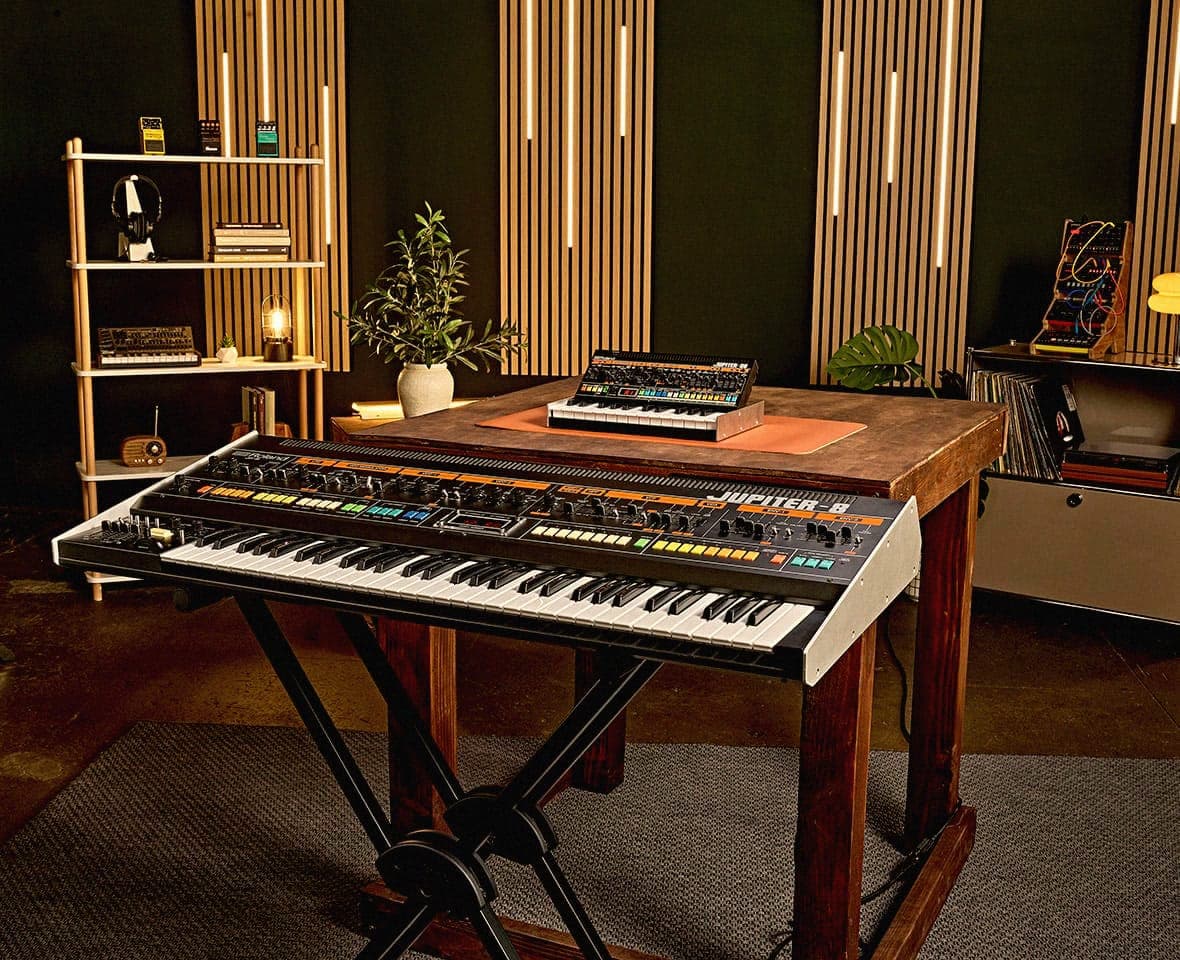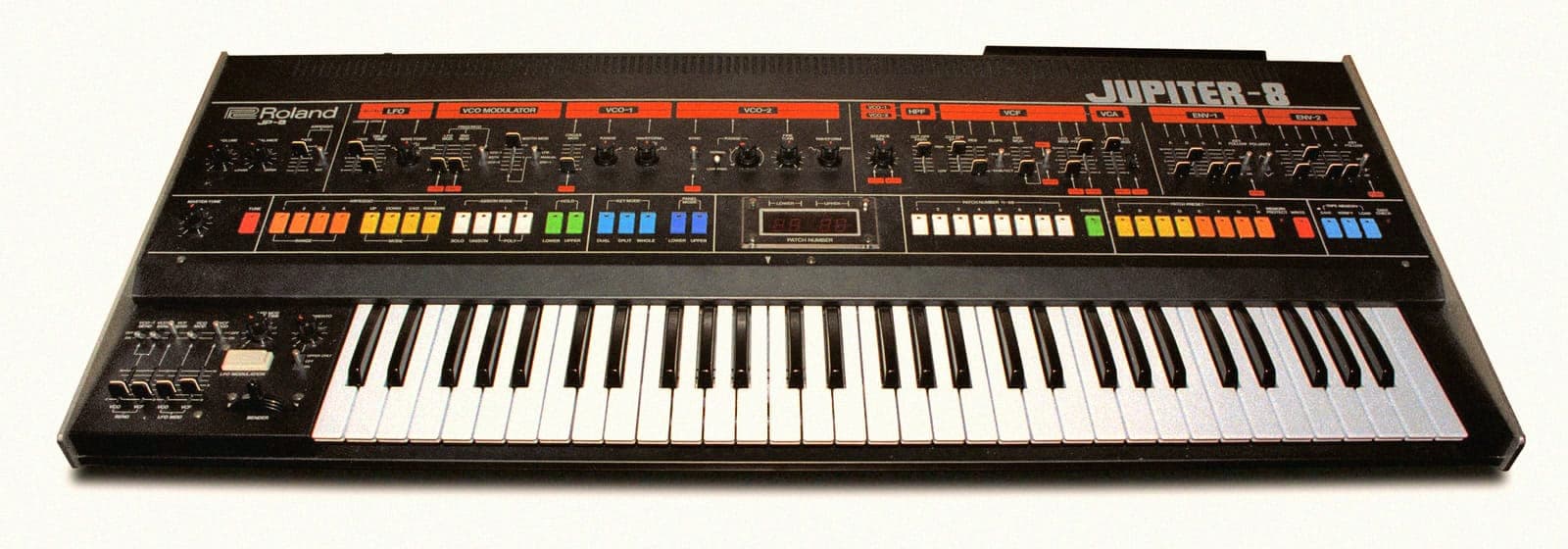
Roland built the original Roland Jupiter-8 in 1981 with eight voices. Forty-five years later, the Boutique remake can run four times that many.
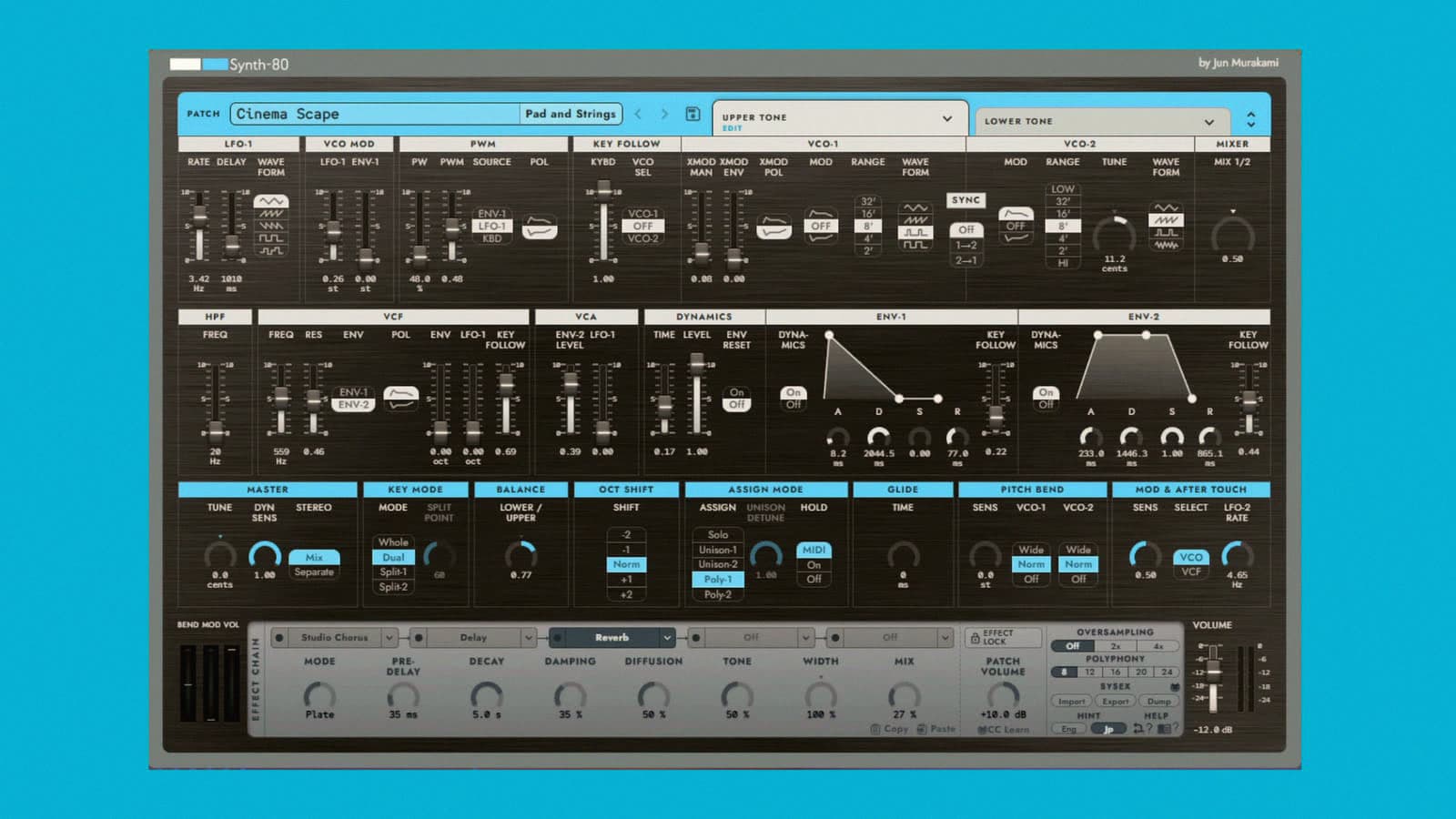
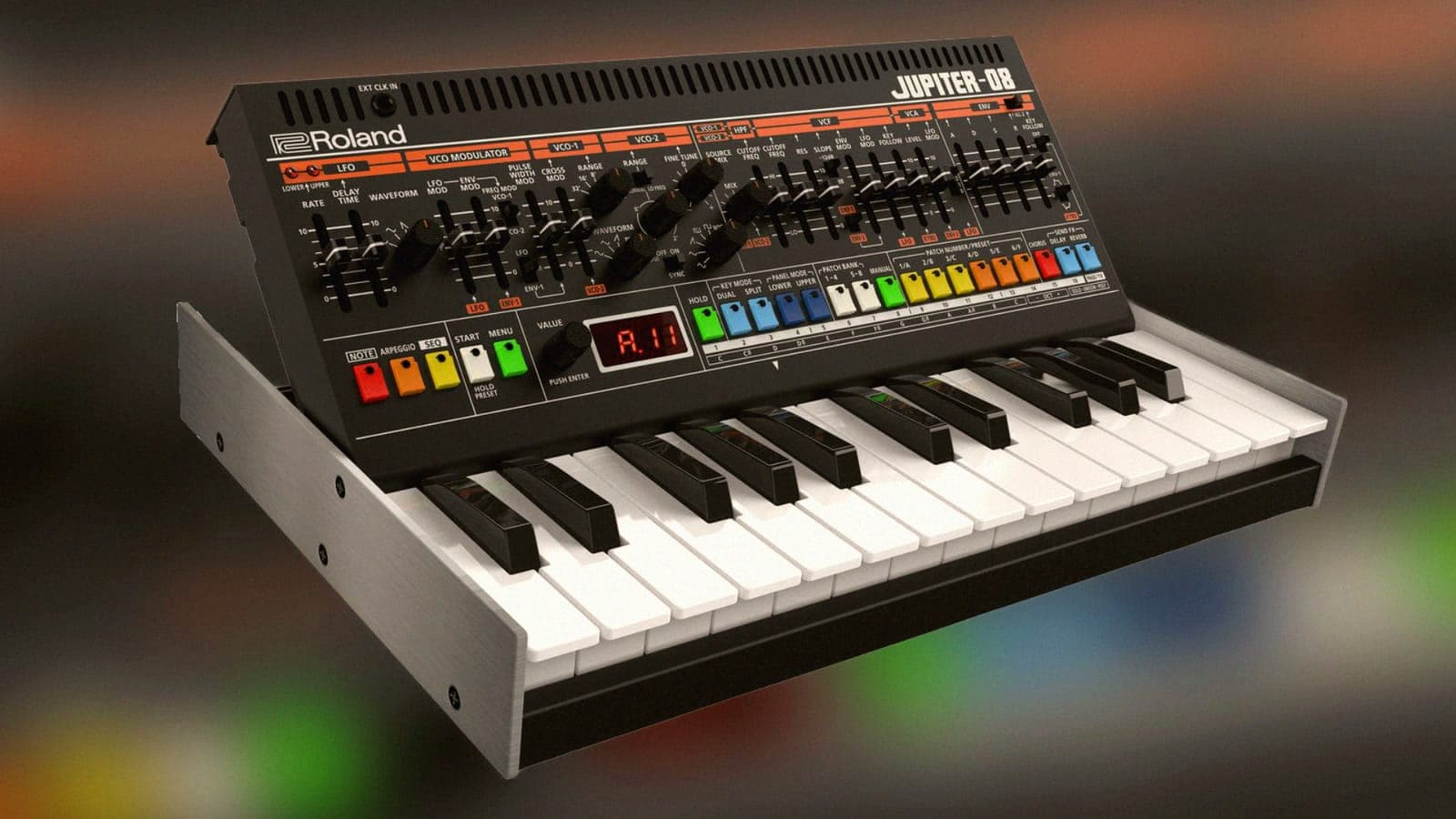
The new JUPITER-08 lands as a direct successor to the discontinued JP-08 Boutique module, but it is not a straight reissue. Roland swapped out ACB (Analog Circuit Behavior), the modeling tech behind the first JP-08, for ABM (Analog Behavior Modeling), the system it already uses in the Jupiter-X and Fantom-EX. According to Roland, the switch came down to one recurring request: customers wanted more polyphony than the original architecture could give them, and ABM handles voice allocation in a way ACB couldn't.
What do you actually get for $549.99?
The JUPITER-08 keeps the Jupiter-8's familiar 8-voice, 2-part layout as the default, with an advanced mode unlocking up to 32 voices. Under the hood it carries two multi-wave oscillators per part with cross-mod, sync and PWM, switchable 12dB/24dB resonant low-pass filtering, 17 effects including shimmer reverb and a dedicated delay, and a 64-step polyphonic sequencer with motion recording and an arpeggiator. It runs on four AA batteries or USB-C, has a built-in speaker, and comes bundled with Roland's K-25m keyboard dock, no separate purchase required. At $549.99 (around €689), it's a serious price jump from entry-level Boutique units, but it's the same bracket Roland has used for its flagship Boutique reissues.
Why launch a wavetable synth alongside a reissue?
n/vision is the bigger structural move: it's the first wavetable instrument Roland has ever put in the Boutique format, and the first Boutique unit finished in white rather than black. It runs two independent wavetable layers pulling from 63 built-in wavetables, each navigable across 127 positions via a dedicated horizontal slider, with up to 56-voice polyphony across its two parts. It shares the same sequencer, arpeggiator and effects architecture as the JUPITER-08, plus wave-shaping and multiple filter models drawn from classic Roland synths. It ships at the same $549.99 price point, with the white K-25m dock included.
According to Roland, the biggest customer request behind the new Boutique generation was simply more polyphony, which is exactly what both new units deliver.
Pairing a nostalgia reissue with a genuinely new synth engine on the same release day is a statement: Roland isn't just milking the Jupiter name, it's using the attention to push a new instrument type into a format that's spent a decade recreating other people's vintage circuits.
What's next for the Boutique line?
Both units are available now, shipping through Roland's usual retail network.