Can a swimsuit really cost you 750 euros in San Antonio?
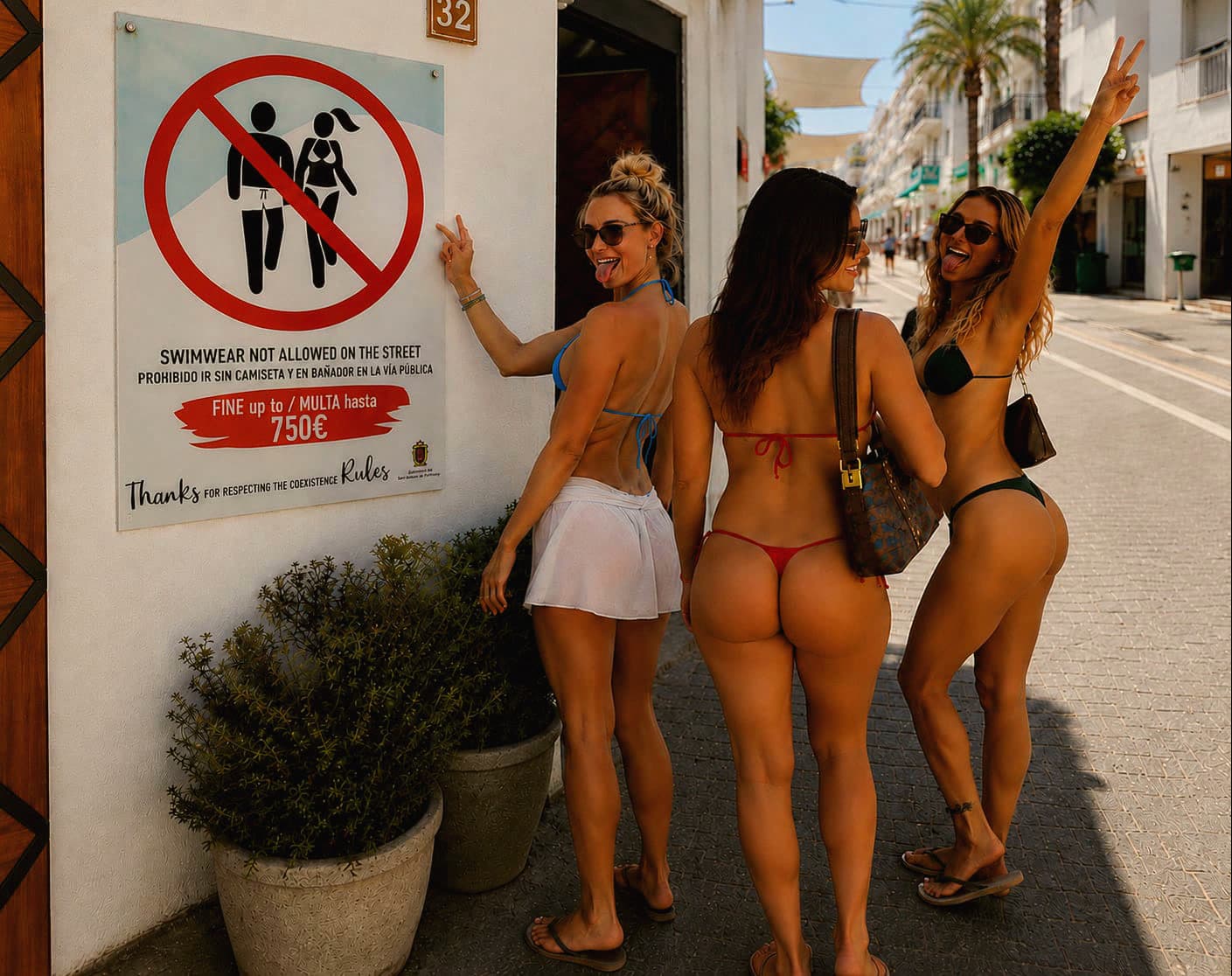
Yes, on paper. Sant Antoni de Portmany has a civic-coexistence ordinance that bars people from walking its streets, plazas and shops dressed only in swimwear or shirtless, and the signs spelling it out are now everywhere: bright bilingual notices, a couple in beachwear crossed out with a red circle, Multa hasta 750 euros stamped in orange, stuck in the windows of bars and shops across town. In practice the number is a ceiling, not a starting point. It sits at the top of a tiered scale, applied at the discretion of the Local Police and reserved for the worst or repeat cases. On the strip, hospitality staff describe the signs as a scarecrow more than a dragnet. "I have not yet seen anyone stopped from coming in without a shirt," one told local press; the notices mostly give staff a reason to ask a shirtless customer to cover up. Beaches, promenades and the direct routes to them are exempt.
Why is the party island suddenly enforcing a dress code?
The swimwear signs are one piece of a much wider tightening. Across Spain, resort towns have spent the last few summers writing beachwear out of their centres: 120 to 300 euros in Barcelona, up to 500 in Mallorca, 300 to 750 in Málaga, Marbella and Alicante. In the Balearics the clampdown goes further than clothing. San Antonio, alongside Magaluf and Playa de Palma, falls under a regional decree against drunken tourism that has already banned happy hours, open bars, two-for-one deals, organised pub crawls and booze cruises. The official language is always the same, about restoring balance and coexistence between a resort economy and the people who live there year round. When La Voz de Ibiza posted the 750 euro sign to a residents' group, the thread filled with disbelief: is this real, who even likes this.
So who does the crackdown actually target?
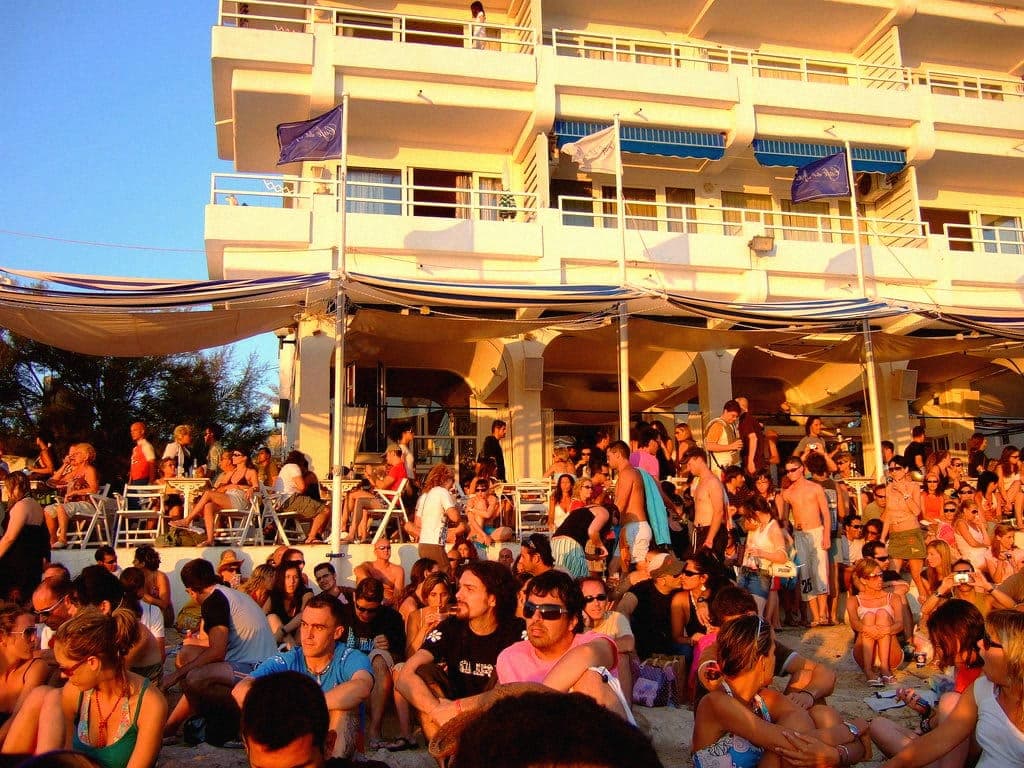
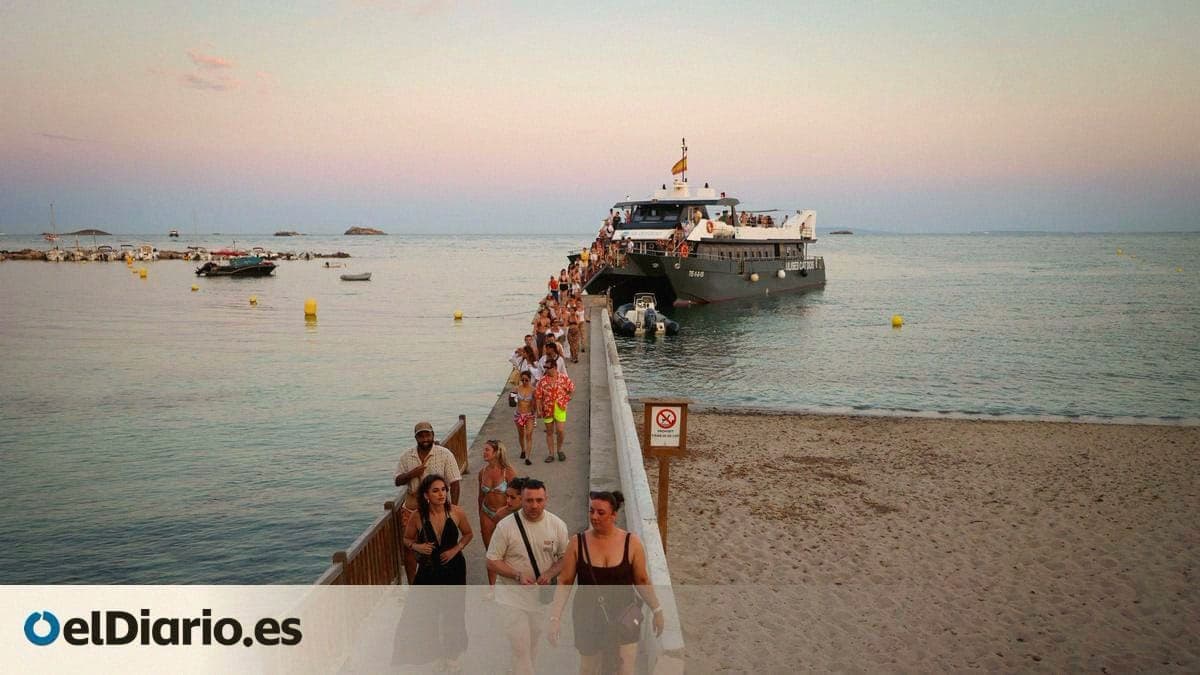
Here is the part the press releases skip. A bikini top and a pair of trunks are the uniform of one specific crowd: the young, low-budget, mostly British party tourist who made San Antonio's West End and Sunset Strip famous, the same crowd that fills cheap bars, day clubs and boat parties rather than the island's high-margin rooms. The behaviour being fined, the beachwear, the pre-drinking, the pub crawl, is the behaviour of the visitor who spends least. Meanwhile the model Ibiza is openly steering toward, the 150-euro-plus superclub ticket, the bottle-service table, the members-only pool, is the target of no civic ordinance at all. Nobody gets fined for what they wear inside Ushuaïa or Hï. The dress code lands on the street, not the guest list.
So what should you actually wear to Ibiza's clubs?
Here is the irony the street signs make plain: every serious room on the island already runs a dress code, and none of them let you in dressed for the beach. Smart casual is the baseline almost everywhere, and the same swimwear, flip-flops, bare torsos and football shirts that get you fined outside will get you turned away at the door. What changes from club to club is the register.
- Hï Ibiza and UNVRS are the two indoor superclubs of the Ushuaïa group. Smart casual, leaning trend-forward: clean streetwear, fitted trousers, statement trainers. UNVRS, the island's newest hyperclub, rewards metallic and reflective, festival-style pieces under its light rig. No swimwear, no sportswear; VIP tables push it dressier.
- Pacha is the island's most style-conscious club, the dress-to-impress room: a dress and heels, or a shirt and clean shoes, and no beachwear, flip-flops or jerseys. Themed nights like Flower Power invite full '60s costume.
- Ushuaïa and Destino are open-air and daytime, so more relaxed, but relaxed is not the beach. Ushuaïa is a poolside, sun-drenched party where elegant-casual is the line: no swimwear, bare chests or flip-flops even beside the water. Destino, Pacha's polished daytime sibling, runs to white linen and resort chic.
- DC10 is the deliberate outlier. Circoloco's home is proudly anti-glam, a hot, no-frills, come-as-you-are room where dressing down is the culture: a T-shirt, shorts and trainers are the uniform and nobody is checking your label.
- Amnesia is casual, come as you are, but still no bikinis, flip-flops or tracksuits, and its VIP is stricter, refusing sneakers and sleeveless tops.
- Cova Santa and Pikes are the boutique, bohemian end. Cova Santa's crowd dresses up, stylish and bohemian-chic, a notch above casual. Pikes rewards the eccentric: costume, colour and personality over any label.
The short version: on the street of San Antonio, showing skin can cost you 750 euros. Inside the clubs, showing up in the same outfit just costs you the door, and, first, the price of the ticket.
A bikini on the pavement is a 750 euro problem. A 150 euro door price never is.